One of the most common religious worker green card questions is whether the case is strong enough to file. Many workers and religious organizations want to know whether the denomination membership is documented clearly enough, whether the role is religious enough, whether the organization is strong enough as a sponsor, and whether the case fits the minister, religious vocation, or religious occupation standard. A strong filing depends on the full record, not just the job title.
The religious role should be clearly defined
A strong case should make it easy to understand the worker’s role. The filing should explain whether the worker is a minister, in a religious vocation, or in a religious occupation and should describe the duties in practical terms.
The organization should be clearly explained
A strong filing should make the sponsoring organization easy to understand. The petition should clearly describe the organization’s nonprofit religious nature, the denomination relationship, the mission, and the role the worker will hold in the United States.
Denomination membership should be well documented
A common weakness in religious worker green card cases is unclear documentation of denomination membership. A strong filing should explain the membership history clearly and should connect the worker to the same religious denomination as the sponsoring organization.
The role should look truly religious
A strong case should not make the position sound mainly administrative, technical, or secular. The filing should clearly explain the religious character of the work and how it fits the beliefs, practices, and mission of the denomination.
Full-time work should be explained clearly
A strong petition should show that the worker will be employed in full-time religious work in the United States. The filing should explain the schedule, duties, and structure of the role in a way that makes the full-time nature of the position easy to understand.
There is no single approved religious worker profile
There is no one approved template for a religious worker green card case. Some strong filings involve ministers with clear ordination and religious authority. Others involve religious vocations or occupations supported by strong organizational records and a clearly religious full-time role. The key issue is whether the full case fits the legal standard and is documented well.
Timing and processing concerns are common
Many applicants want to know about the religious worker green card processing time, I-360 timing, and related case-planning issues. The page should mention these concerns because timing is often a major practical issue even when the worker and organization clearly qualify.
Common strength and timing questions
Common questions include:
- Is my religious worker green card case strong enough?
- Is denomination membership documented clearly enough?
- Is the role religious enough for this category?
- Is the sponsoring organization strong enough?
- How long does a religious worker green card take?
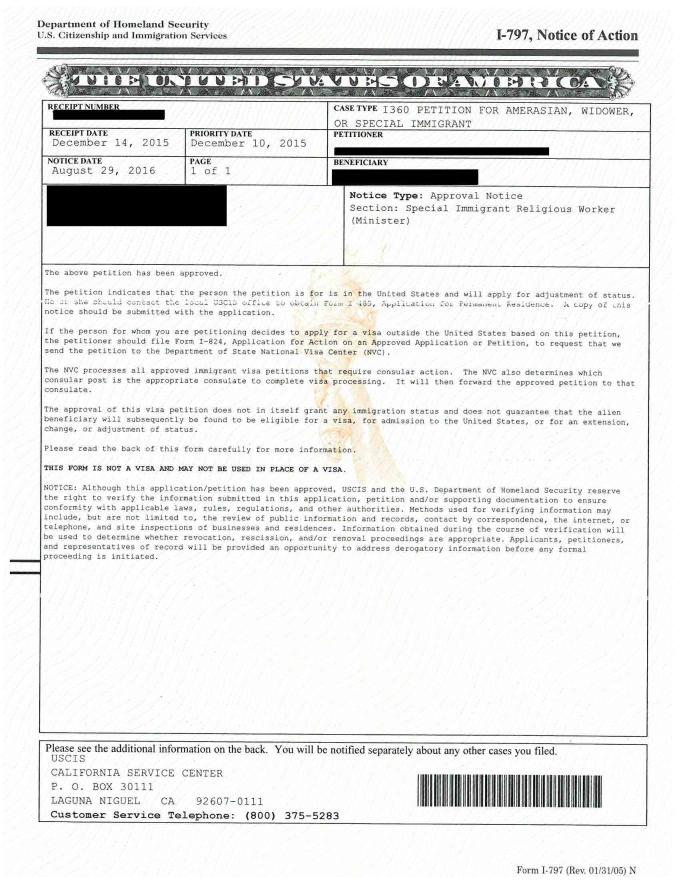
- How long does an I-360 religious worker case take?
- Does the worker need ordination?
- Does the role fit minister, religious vocation, or religious occupation?
Common patterns in stronger religious worker green card cases
Stronger cases often involve:
- a clearly defined religious role
- well-documented denomination membership
- a bona fide nonprofit religious sponsor
- a full-time religious position
- consistent I-360 evidence
- a filing structure that clearly matches the minister, vocation, or occupation theory being used