EB1B Green Card — Outstanding Professors and Researchers

EB1B Green Card — Outstanding Professors and Researchers

EB1B Green Card — Outstanding Professors and Researchers

People often search for this issue as EB1B, EB1B green card, outstanding professor green card, outstanding researcher green card, EB1B requirements, EB1B criteria, EB1B employer sponsorship, or EB1B permanent job offer. The EB1B green card is for outstanding professors and researchers who are recognized internationally in a specific academic field, have at least 3 years of teaching or research experience, and are coming to the United States for a tenure, tenure-track, or comparable permanent research position with a qualifying employer. A strong EB1B case is employer-sponsored and usually depends on the applicant’s international recognition, academic field, experience, and the nature of the offered position.

EB1B cases often involve university faculty, tenure-track professors, research scientists, permanent research staff, and certain researchers hired by private employers with documented research accomplishments.

EB1B Details

The EB1B green card is for outstanding professors and researchers (a Ph.D. is not a requirement). An EB1B petition may be filed simultaneously with another green card application. One petition may be approved faster than the other and can offer additional protection if one petition is denied while another is approved.

In order to qualify for the EB1B, the applicant must:

  • Be internationally recognized as outstanding in a specific academic field;
  • Have a minimum of three years of experience in teaching and/or research in that field; and
  • Enter the US in a tenure or tenure-track teaching or comparable research position at a university or other institution of higher education, or in a comparable research position with a private employer under certain circumstances.

For Whom Is an EB1B Green Card Appropriate?

Outstanding professors and researchers who have at least three years experience in teaching or research in their field and received international recognition for their work and their immediate family members.

EB1B Green Card Requirements

Outstanding professors and researchers are recognized internationally for their outstanding academic achievements in a particular field. In addition, an outstanding professor or researcher must have at least three years experience in teaching or research in that academic area, and enter the US. in a tenure or tenure track teaching or comparable research position at a university or other institution of higher education. If the employer is a private company rather than a university or educational institution, the department, division, or institute of the private employer must employ at least three persons full time in research activities and have achieved documented accomplishments in an academic field.

EB1B requirements

To qualify for an EB1B green card, the petition must show that the applicant is an outstanding professor or researcher, is recognized internationally in a specific academic field, has at least 3 years of teaching or research experience in that field, and is coming to the United States for a qualifying permanent academic or research position with a qualifying employer. A strong EB1B case usually depends on the quality of the evidence, the applicant’s standing in the field, and the structure of the offered position.

International recognition

The applicant must be recognized internationally as outstanding in a specific academic field. A strong filing should explain the field clearly, show how the applicant is known beyond a single employer or institution, and present evidence of recognition at a high level.

Specific academic field

The petition should define the academic field carefully. The field should be specific enough to make the applicant’s accomplishments understandable, but not so narrow that it appears artificial. A clear field definition helps the rest of the evidence make sense.

Three years of teaching or research experience

The applicant must have at least 3 years of teaching or research experience in the academic field. The filing should document the experience clearly and explain how the applicant’s work fits within the claimed field of expertise.

Qualifying position in the United States

EB1B requires a qualifying U.S. position. The petition should explain whether the role is:

  • a tenured position
  • a tenure-track teaching position
  • or a comparable permanent research position

The filing should show that the offered role is permanent in the way required for EB1B and is not just temporary or short-term.

Employer sponsorship is required

EB1B is an employer-sponsored green card category. The petition must be filed by the qualifying employer. Unlike EB1A, this is not a self-petition category.

Qualifying university employer

A university or institution of higher education may sponsor an EB1B case for a tenured or tenure-track teaching position or for a qualifying permanent research position. The petition should describe the employer, the department, and the offered role clearly.

Qualifying private employer

Certain private employers may also sponsor EB1B cases if the position is a permanent research position and the employer meets the required research-related standards. The filing should explain the employer’s research activity and why the position qualifies.

Evidence under the EB1B criteria

Most EB1B cases are built through the regulatory criteria rather than one single award. The filing should use the strongest available evidence and organize it clearly around the applicant’s international recognition and outstanding standing in the field.

Final merits review

Meeting the minimum number of criteria is not enough by itself. The petition should show through the total record that the applicant is truly outstanding in the academic field and that the evidence supports approval when viewed as a whole.

Common evidence in EB1B cases

Strong EB1B filings often include:

  • major prizes or awards
  • membership in associations that require outstanding achievement
  • published material about the applicant’s work
  • participation as a judge of the work of others
  • original scientific or scholarly research contributions
  • authorship of scholarly books or articles
  • evidence of the permanent job offer
  • evidence of teaching or research experience

Common EB1B case types

EB1B cases often involve:

  • tenure-track faculty
  • tenured professors
  • university researchers
  • research scientists
  • research staff in permanent roles
  • private-employer research positions that meet the EB1B standard

EB1B for university faculty, research institutions, and private employers

The EB1B green card is often used by universities, research institutions, and certain private employers seeking permanent residence for outstanding professors and researchers. A strong EB1B case does not depend only on the applicant’s credentials. It also depends on the employer, the offered position, and whether the job structure fits the legal standard for this category.

EB1B for tenure-track professors

Many EB1B cases involve professors hired into tenure-track positions. The petition should clearly describe the academic appointment, the department, the teaching and research responsibilities, and the permanent nature of the role.

EB1B for tenured professors

Some EB1B filings involve already tenured faculty or equivalent long-term academic appointments. These cases should explain the applicant’s standing in the field and the university’s decision to place the beneficiary into a permanent academic role.

EB1B for permanent research positions

EB1B may also be used for qualifying permanent research positions. The petition should explain the research role clearly, describe the long-term nature of the position, and show that the job is not temporary, project-limited, or short-term in a way that would undermine the category.

EB1B for university researchers

University-based research cases often involve principal investigators, research faculty, senior research staff, or other long-term research roles. The petition should explain the applicant’s field, the research duties, the institutional setting, and the permanent nature of the offered position.

EB1B for private employers

Certain private employers can also use EB1B when the case fits the category requirements. These filings should explain the employer’s research history, the number of researchers employed, the organization’s research accomplishments, and the permanent nature of the research position being offered.

Employer sponsorship and the permanent job offer

EB1B is an employer-sponsored category, so the petition should clearly describe the sponsoring employer and the offered position. A strong filing should make it easy to understand:

  • who the employer is
  • what the applicant will do
  • why the role is permanent
  • why the employer qualifies to sponsor the case

The offered job should match the applicant’s field

The position in the United States should fit the same academic field in which the applicant is internationally recognized as outstanding. The filing should connect the offered role to the applicant’s prior research or teaching record so the case reads as one coherent professional path.

Common employer-side questions in EB1B cases

Common questions include:

  • Does EB1B require employer sponsorship?
  • Does EB1B require a permanent job offer?
  • What counts as a permanent research position?
  • Can a private employer sponsor EB1B?
  • Can a university sponsor EB1B for a non-tenure-track role?
  • What documents should the employer provide?

Common employer documents in stronger EB1B cases

Strong filings often include:

  • employer support letters
  • offer letters
  • job descriptions
  • institutional information
  • evidence of tenure-track or permanent research status
  • proof of the employer’s research program or academic structure
  • documents confirming the applicant’s role and field

Why the job structure matters in EB1B

A strong EB1B petition should not treat the job offer as an afterthought. The employer and position are a central part of the case. Even a very strong researcher or professor record can run into problems if the filing does not clearly explain why the offered U.S. role fits the EB1B category.

How strong should an EB1B profile be?

One of the most common EB1B questions is whether a professor or researcher has a strong enough profile to file. Many applicants want to know how many papers, citations, reviews, awards, or other achievements are needed before an employer files the petition. EB1B does not use a fixed minimum number of publications or citations. A strong case depends on the total record, the quality of the evidence, the applicant’s international recognition, and whether the filing shows that the applicant is outstanding in the academic field.

There is no fixed number of papers or citations

EB1B does not require a specific number of scholarly articles, citations, reviews, or awards. A case with more publications or citations is not automatically approved, and a case with fewer numbers is not automatically weak. The filing should explain what the numbers mean in the context of the field, the applicant’s career stage, the impact of the work, and the significance of the overall record.

Strong EB1B cases usually show a combination of evidence

A strong filing often includes several different forms of evidence working together, such as:

  • scholarly publications
  • citation impact
  • peer review or judging activity
  • original scientific or scholarly contributions
  • awards or honors
  • published material about the applicant’s work
  • memberships requiring outstanding achievement
  • a strong permanent job offer
  • a clear employer sponsorship structure

The strongest cases usually do not rely on only one metric. They present a broader record showing recognition, influence, and distinction in the academic field.

Publications matter, but quality and impact matter more than raw count alone

Publication count can help, but the filing should explain the importance of the work, the role of the applicant in the publications, and the influence of the research or scholarship on the field. A smaller number of highly significant publications can be stronger than a larger number of lower-impact publications if the evidence is presented clearly.

Citations matter, but they should be explained in context

Citation evidence can be useful, but it should not be presented as just a number. A strong petition explains how the citation record compares within the field, how the work has been used by others, and why the citation pattern supports a finding that the applicant is outstanding.

Peer review and judging can strengthen the case

Peer review is often an important part of EB1B filings because it shows that journals, conferences, or other organizations trusted the applicant to evaluate the work of others. The petition should explain the level of responsibility involved and the recognition reflected by that role.

Original contributions are often one of the most important parts of the case

For many professors and researchers, the key issue is not just how much they published, but whether their work changed the field in a meaningful way. A strong petition should explain why the contributions matter, who relied on them, what changed because of them, and why they rise above ordinary academic work.

Career stage matters

A strong profile should be evaluated in light of the applicant’s field, subfield, and career stage. Early-career faculty, postdoctoral researchers moving into permanent roles, research scientists, senior investigators, and tenured professors may present different types of evidence. The filing should explain the applicant’s position in the field and why the record is strong for that level and discipline.

The employer and the position also matter

EB1B is not only about the applicant’s record. The case also depends on the employer sponsorship and the offered position. A strong filing should show that the applicant has a qualifying permanent academic or research role and that the employer fits the EB1B requirements.

There is no single approved EB1B profile

There is no one approved template for EB1B. Some strong cases are publication-heavy. Others are stronger because of major original contributions, reviewing, awards, leadership, or a powerful employer-supported job structure. The strongest petitions present a complete record that works together clearly.

Common profile-strength questions

Common questions include:

  • How many papers are enough for EB1B?
  • How many citations are enough for EB1B?
  • Is peer review enough for EB1B?
  • Do I need major awards for EB1B?
  • Is my profile strong enough for EB1B as a professor or researcher?
  • What does an approved EB1B profile look like?
  • How much does the permanent job offer matter in EB1B?

Frequently asked questions about EB1B for outstanding professors and researchers

What is the EB1B green card?

EB1B is an employment-based green card category for outstanding professors and researchers who are recognized internationally in a specific academic field and who have a qualifying permanent academic or research position in the United States.

Who qualifies for EB1B?
A qualifying EB1B case must show that the applicant is internationally recognized as outstanding in a specific academic field, has at least 3 years of teaching or research experience in that field, and is coming to the United States for a qualifying permanent academic or research position with a qualifying employer.

Does EB1B require employer sponsorship?

Yes. EB1B is an employer-sponsored category. The petition must be filed by the qualifying employer.

Does EB1B require a permanent job offer?

Yes. EB1B requires a qualifying permanent academic or research position in the United States.

What counts as a permanent job offer for EB1B?
A permanent job offer usually means a tenured position, a tenure-track teaching position, or a comparable permanent research position. The filing should clearly explain the nature of the role.

Does EB1B require labor certification?

No. EB1B does not require PERM labor certification.

What is the difference between EB1A and EB1B?
EB1A is for individuals with extraordinary ability and may be self-petitioned without a permanent job offer. EB1B is for outstanding professors and researchers and requires employer sponsorship plus a qualifying permanent academic or research position.

What is the difference between EB1B and NIW?

EB1B is for outstanding professors and researchers with employer sponsorship and a permanent qualifying position. NIW is a national interest waiver category within EB2 and uses a different legal standard focused on the value of the proposed work and the national interest.

What kinds of employers can sponsor EB1B?
Qualifying universities, institutions of higher education, and certain private employers with qualifying research activity may sponsor EB1B cases.

Can a private employer sponsor EB1B?
Yes, in some cases. A private employer may sponsor EB1B if the employer meets the required standards for research activity and the offered position is a qualifying permanent research position.

Can a university sponsor EB1B?
Yes. Universities and other institutions of higher education are common EB1B sponsors for qualifying teaching and research roles.

Does EB1B require 3 years of teaching or research experience?

Yes. The applicant must generally have at least 3 years of teaching or research experience in the academic field.

Do postdoctoral years count for EB1B?

They can count in some situations if the experience meets the legal standard and is documented properly. The filing should explain the nature of the work and how it fits within the required teaching or research experience.

How many papers are enough for EB1B?

There is no fixed minimum number of papers for EB1B. A strong case depends on the total record, the significance of the work, and the evidence showing that the applicant is outstanding in the field.

How many citations are enough for EB1B?

There is no fixed minimum number of citations for EB1B. Citation evidence should be explained in context, including field norms, career stage, and the impact of the work.

Does peer review help an EB1B case?

Yes. Peer review can be strong evidence because it shows that journals, conferences, or other organizations trusted the applicant to evaluate the work of others in the field.

What does international recognition mean for EB1B?

International recognition means the applicant is known and respected beyond a single institution or local setting and has a record of recognition in the academic field at a high level.

What does original scientific or scholarly research contributions mean for EB1B?

It means the applicant’s work made important contributions to the field. The petition should explain why the work matters, what changed because of it, and how others in the field recognized or relied on it.

Is an early-career professor or researcher automatically too weak for EB1B?

No. Some earlier-career applicants may still qualify if the record is strong enough and the evidence clearly shows outstanding standing in the field together with a qualifying permanent position.

What does an approved EB1B profile look like?

There is no single approved profile. Strong EB1B cases can look different depending on the field, career stage, publication record, citation impact, peer review history, awards, original contributions, and the structure of the employer-sponsored position.

Do I need major awards for EB1B?

No. A case may still be strong without major awards if the overall evidence shows outstanding standing in the field through other qualifying criteria.

How important is the job offer in an EB1B case?

The job offer is very important because EB1B requires employer sponsorship and a qualifying permanent academic or research position. Even a strong researcher profile can have problems if the job structure does not fit the category.

Can EB1B lead to a green card without waiting for PERM?

Yes. EB1B is itself an immigrant category and does not require PERM labor certification.

How do I know if my EB1B profile is strong enough?

The best way to evaluate profile strength is to look at the full record, the field, the employer, the offered position, and how well the evidence shows that the applicant is outstanding in the academic field rather than relying on one metric alone.

Top Notch Immigration Services

You will receive top notch immigration services at The Messersmith Law Firm. We guarantee personalized legal services, a high rate of success, and very reasonable fees. At The Messersmith Law Firm, you will always get more than what you pay for. While the majority of our clients are referred to our law firm, we are open to take new cases if we feel we can help you achieve your goals. We have no doubt that you will refer everyone you know to us once your case is approved! Our goal is to get your case approved in the shortest amount of time possible yet strive to keep our fees reasonable!

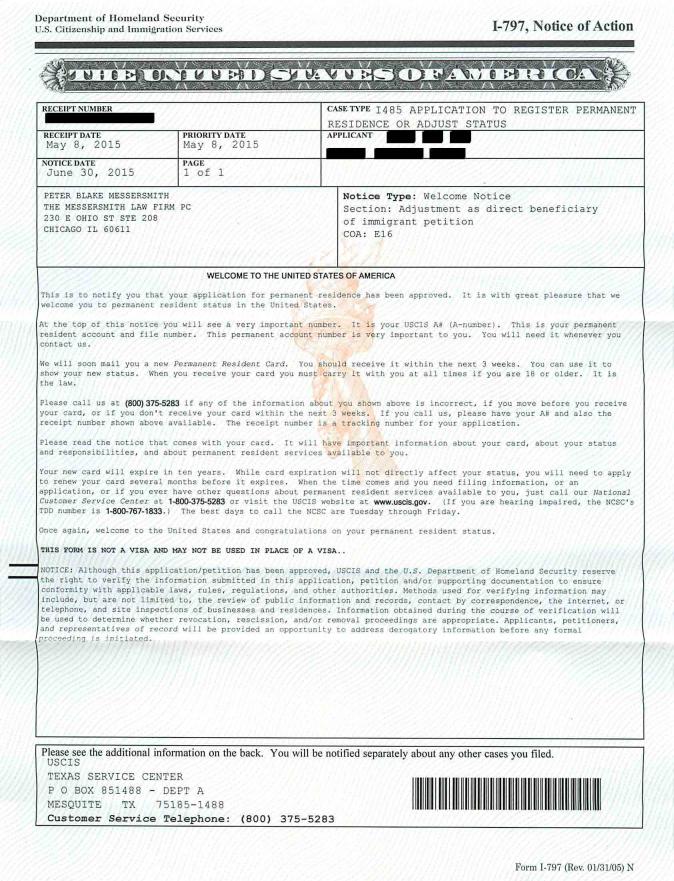
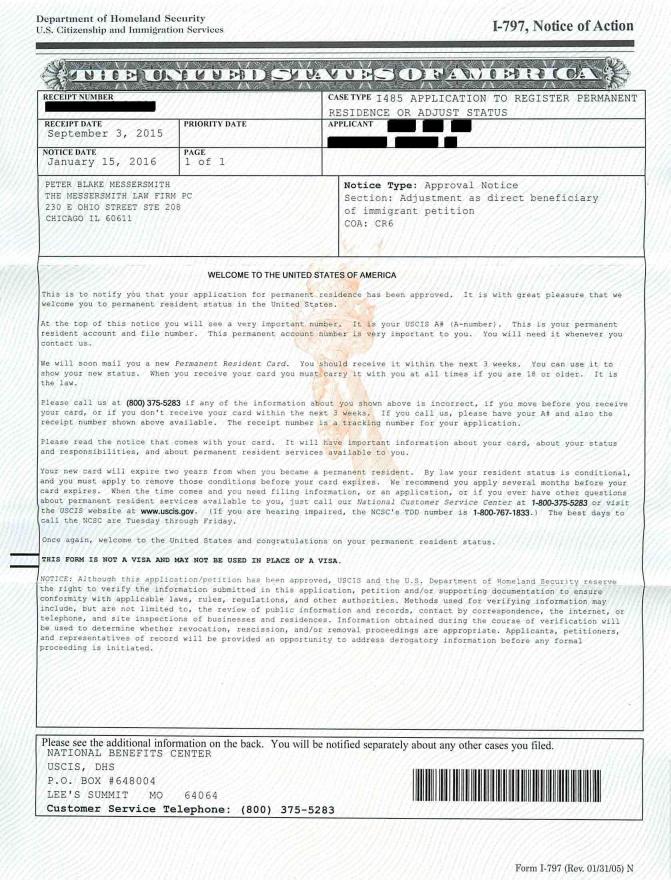
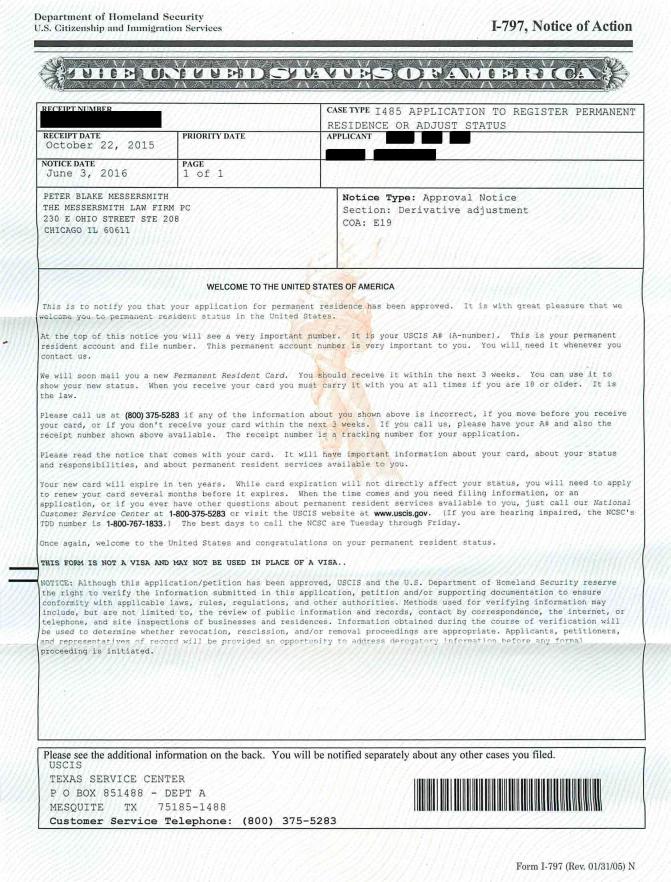
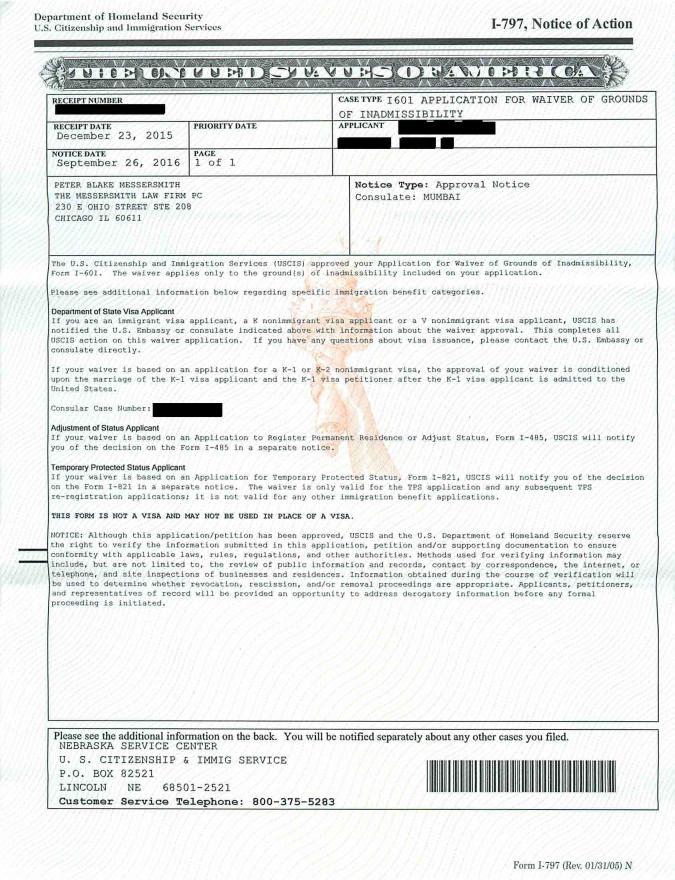
Thousands of Approved Cases

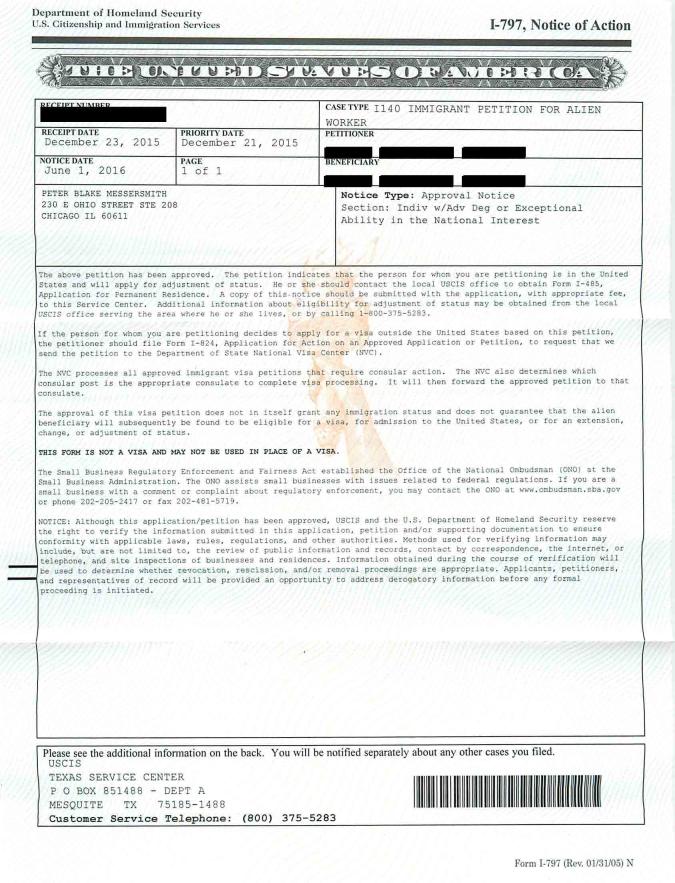
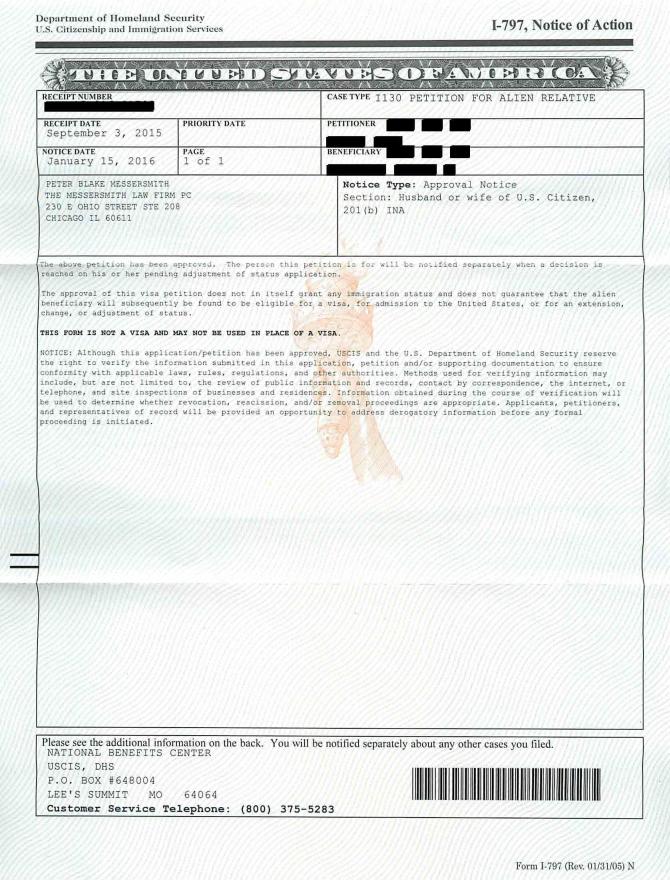
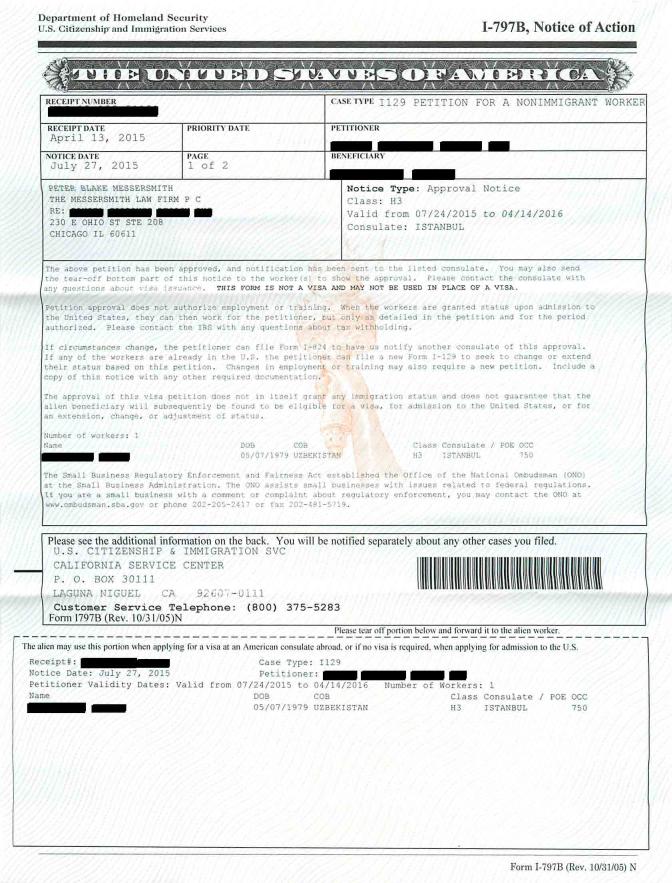
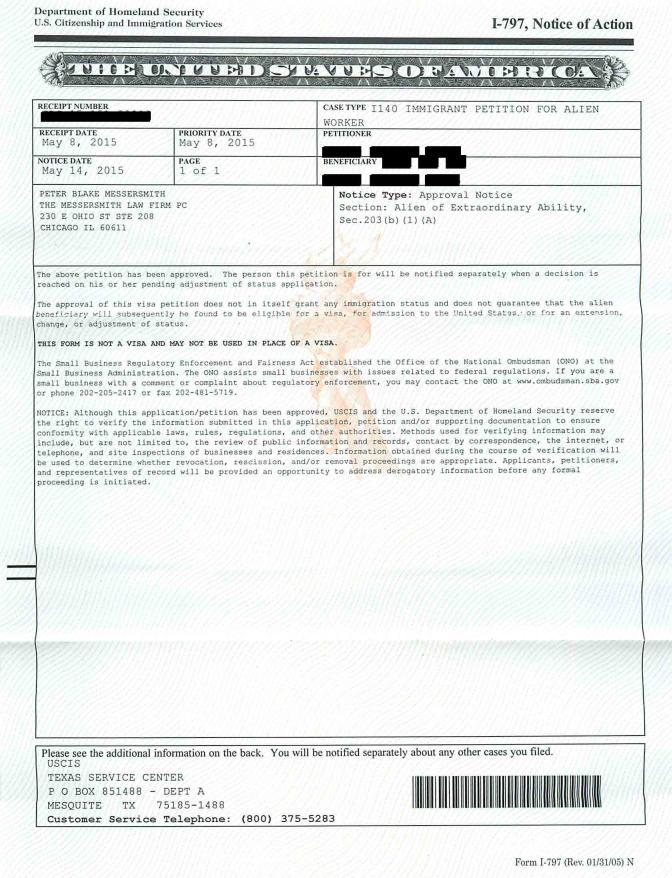
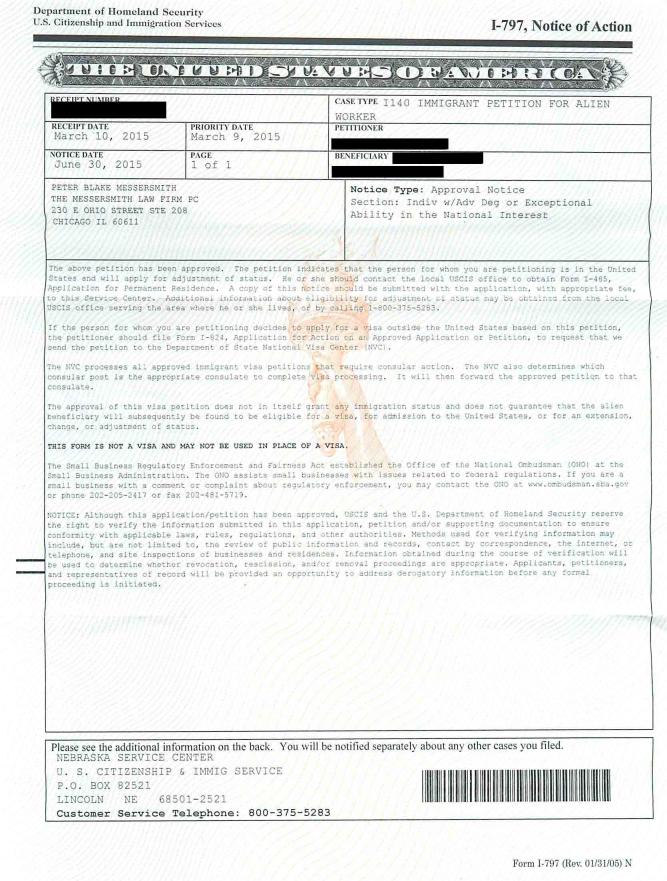
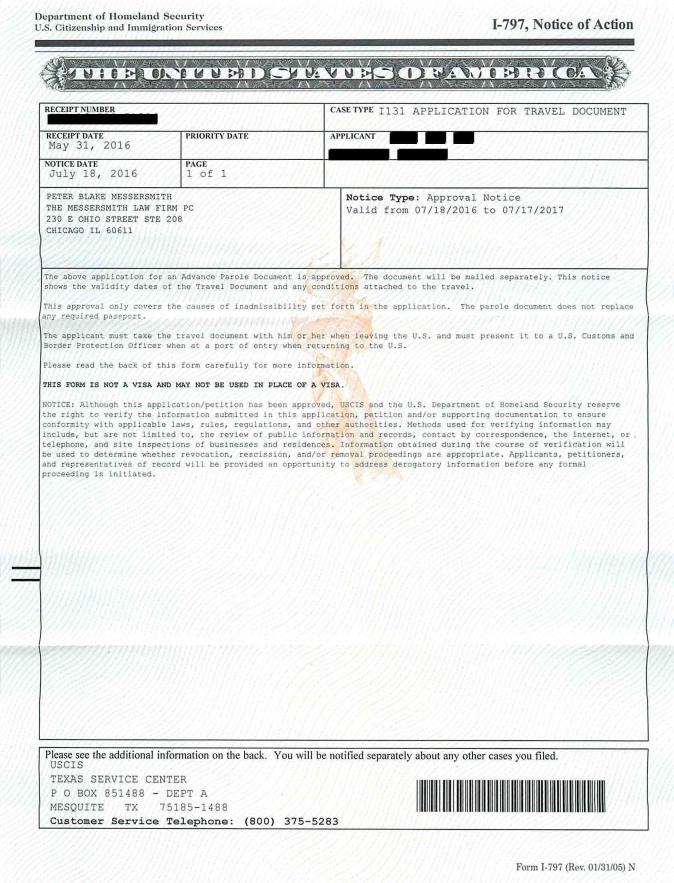
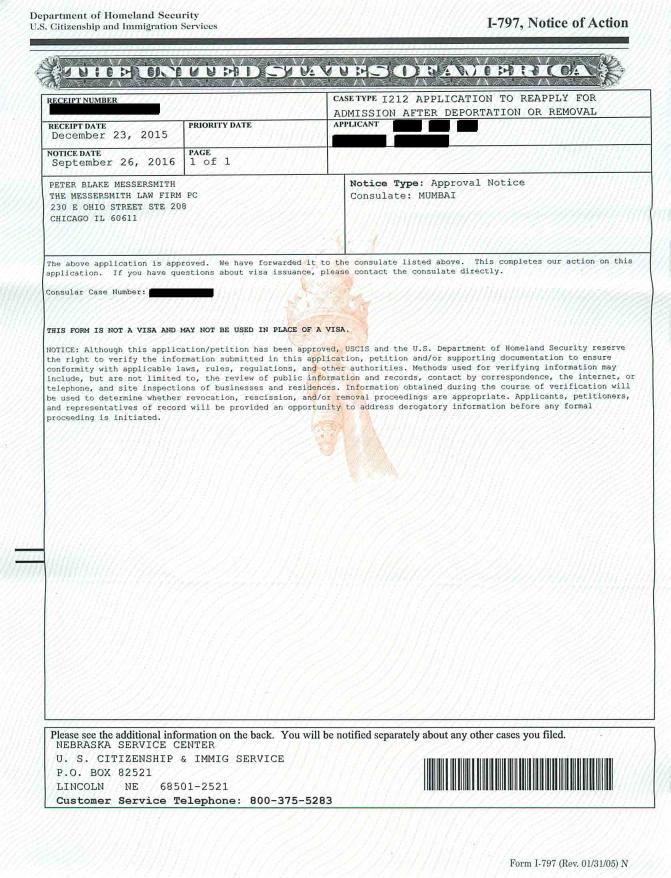
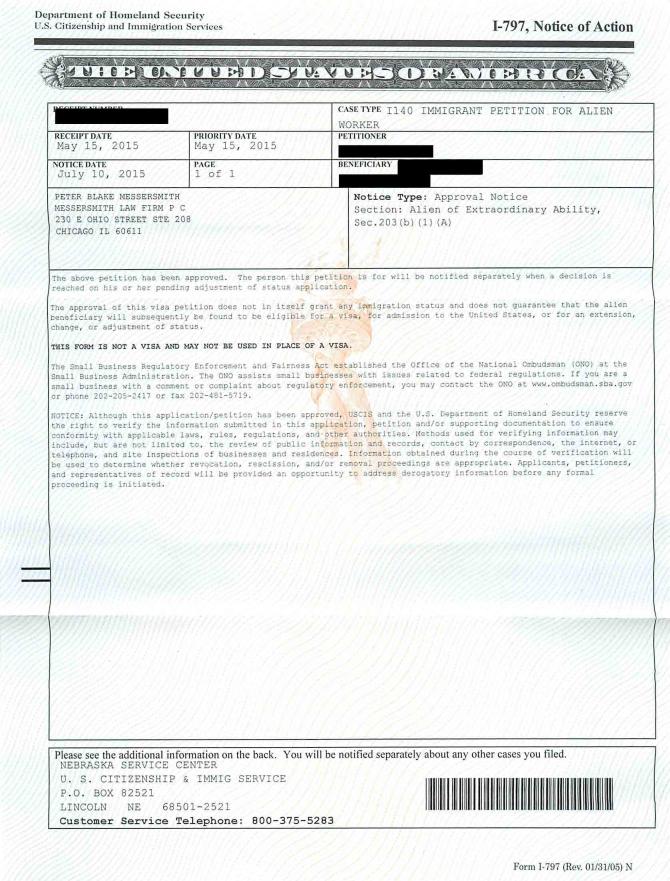
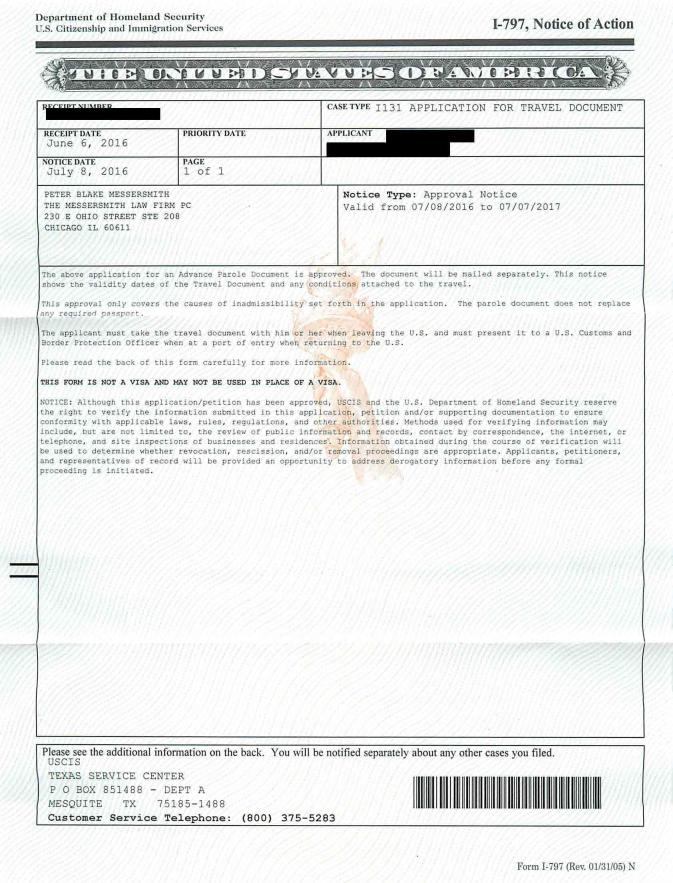
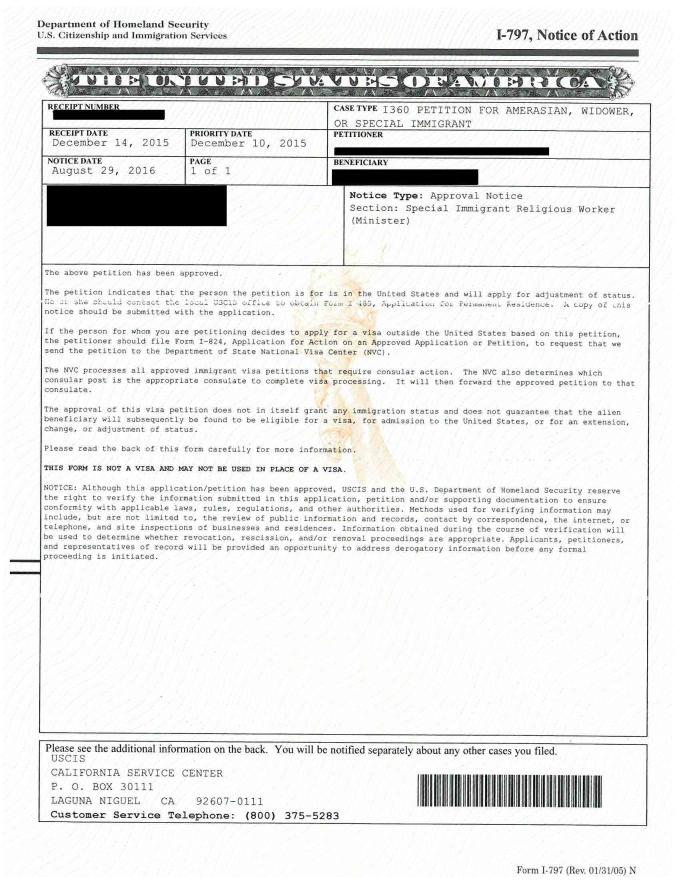
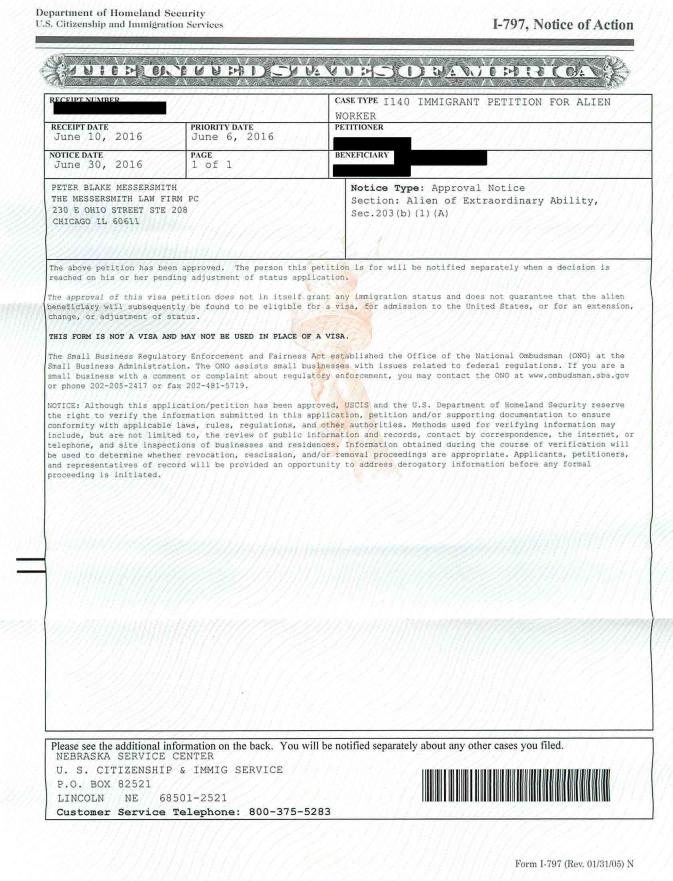
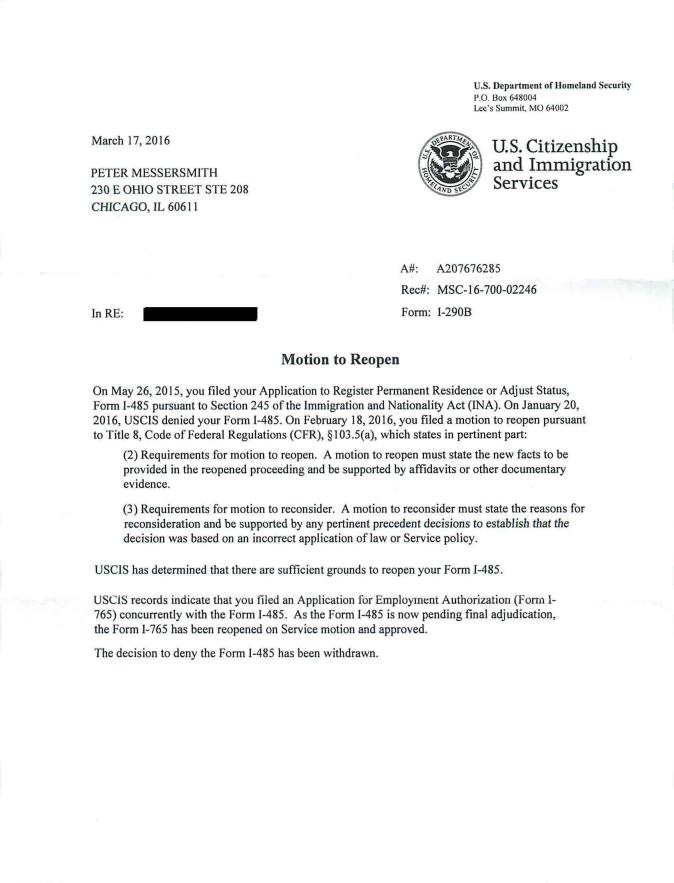
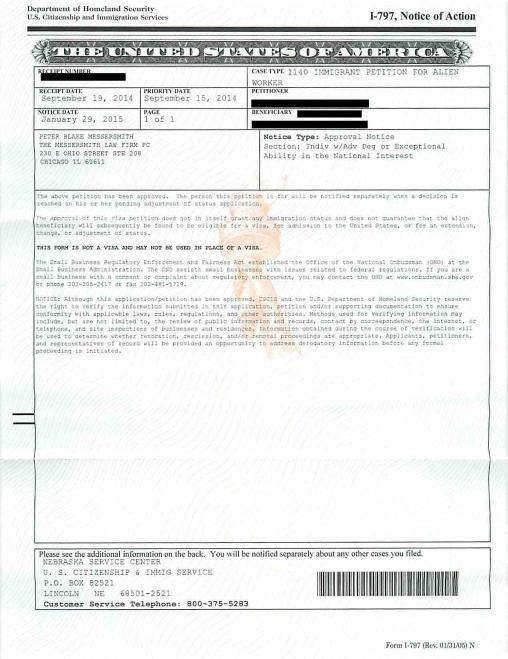
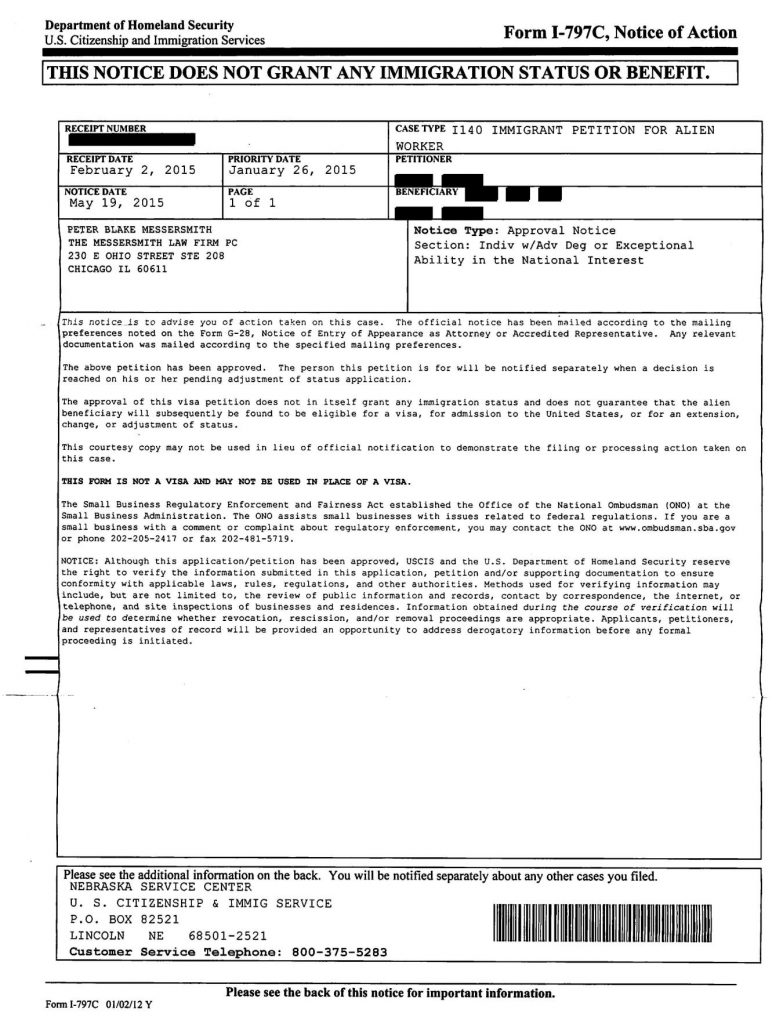
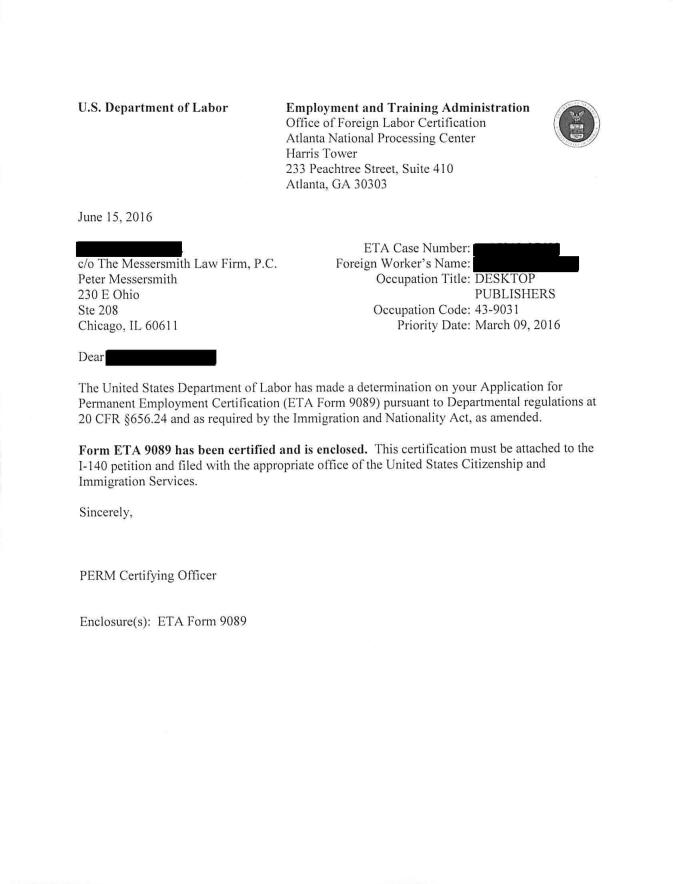
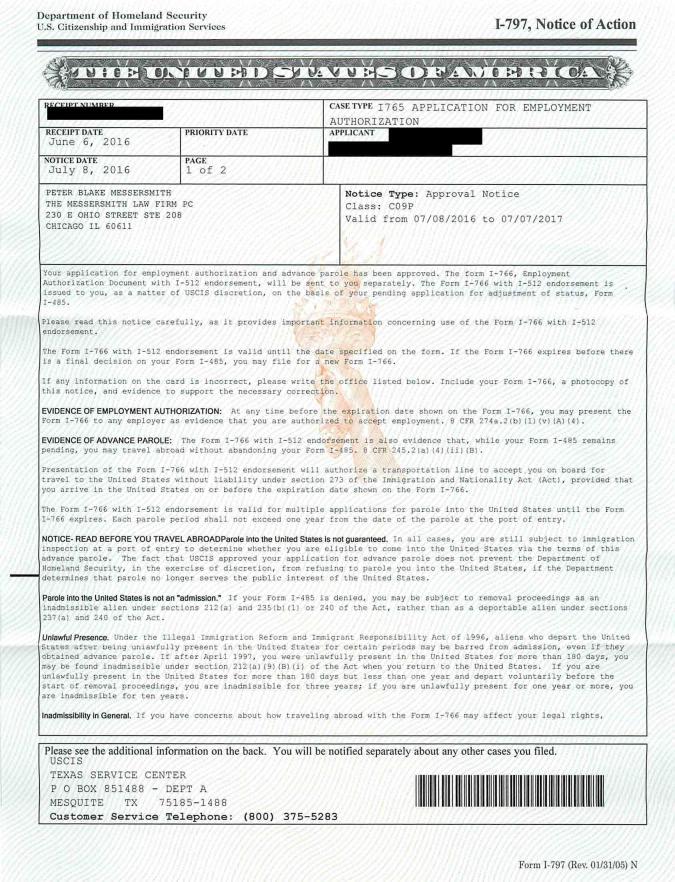
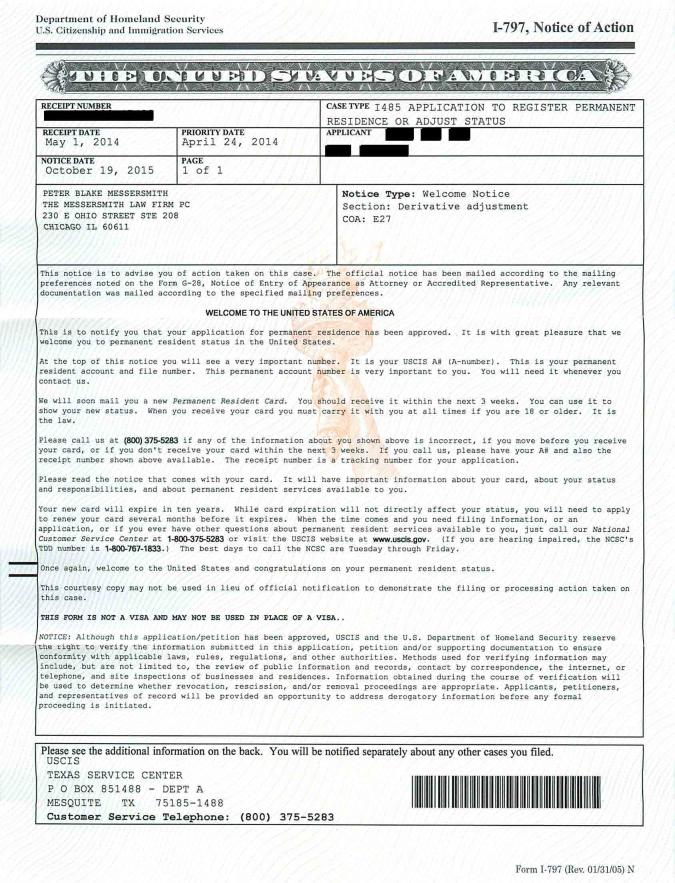
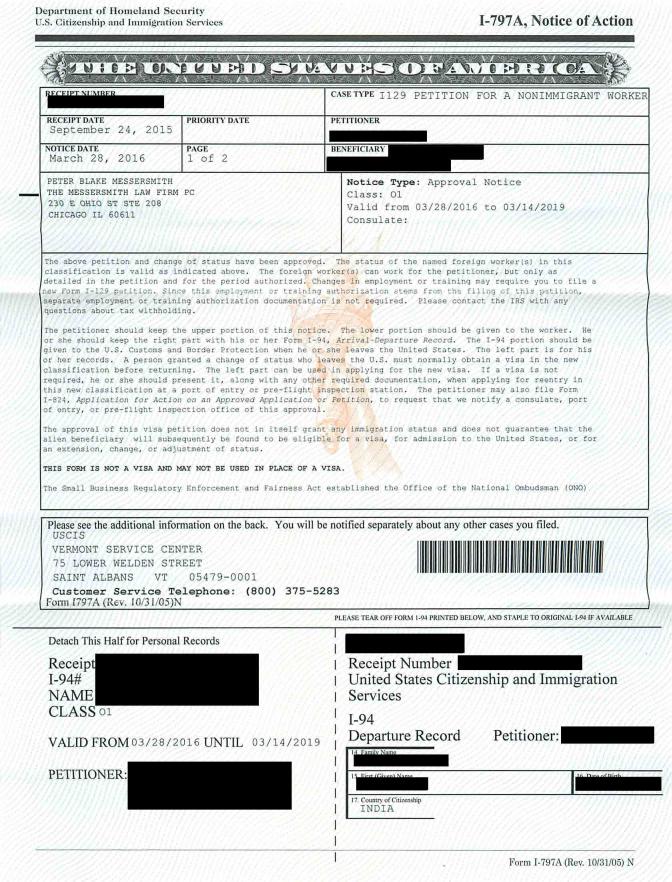
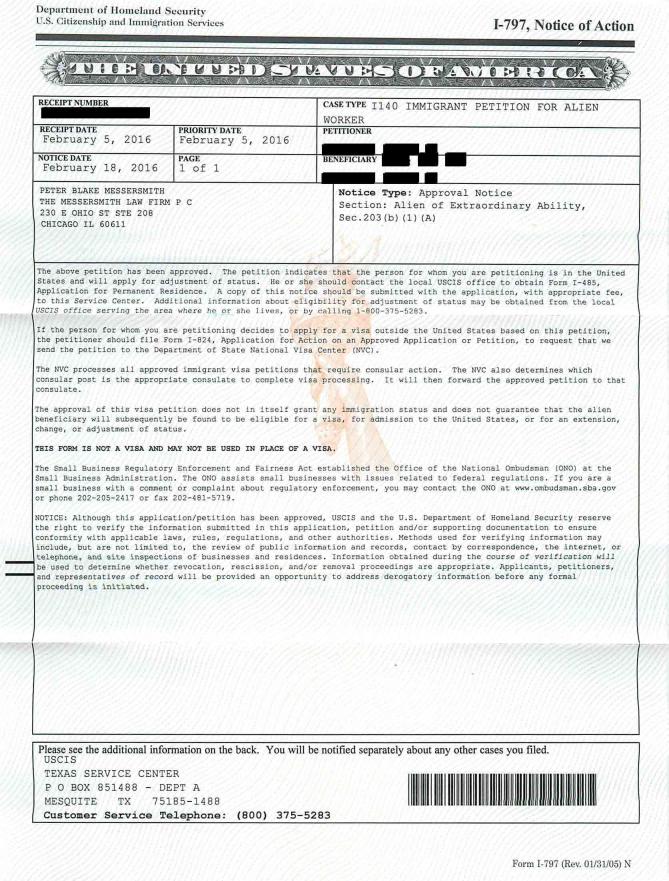
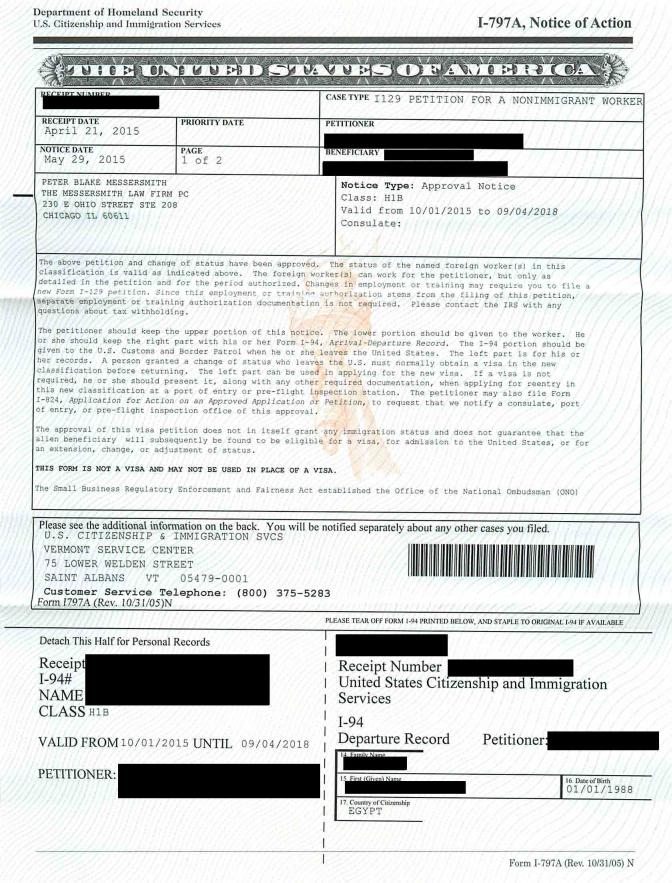
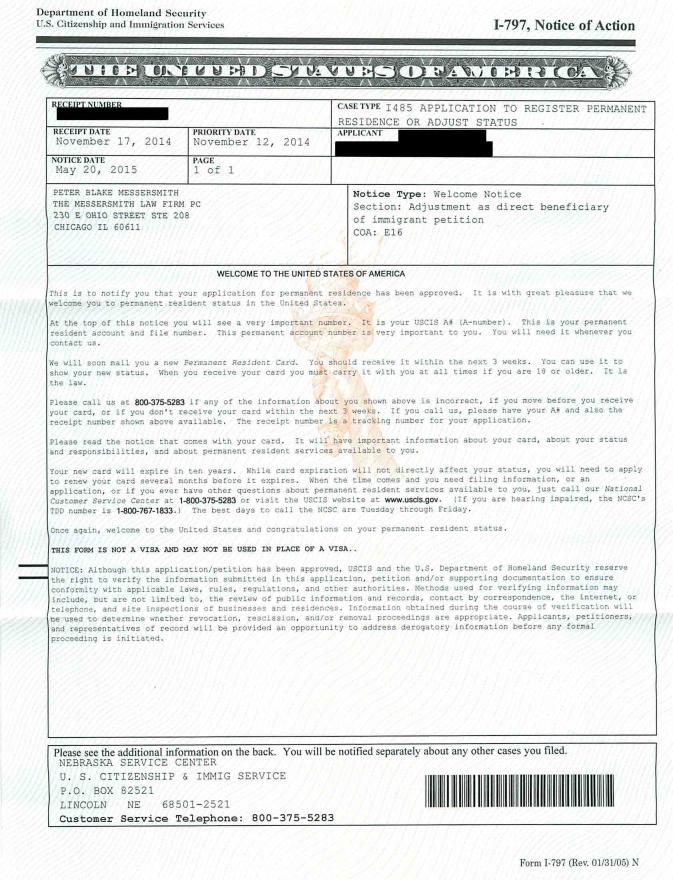
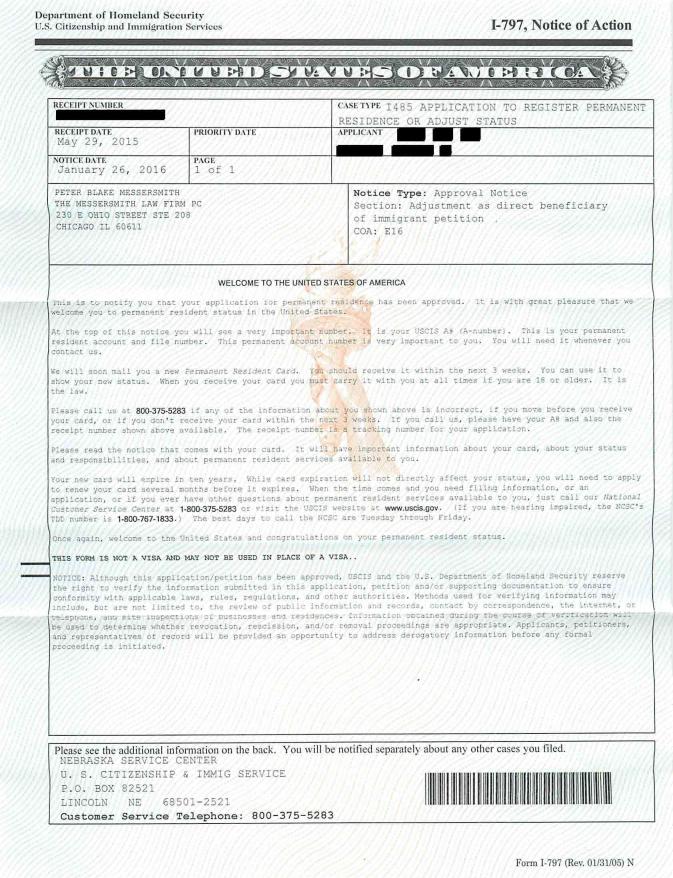
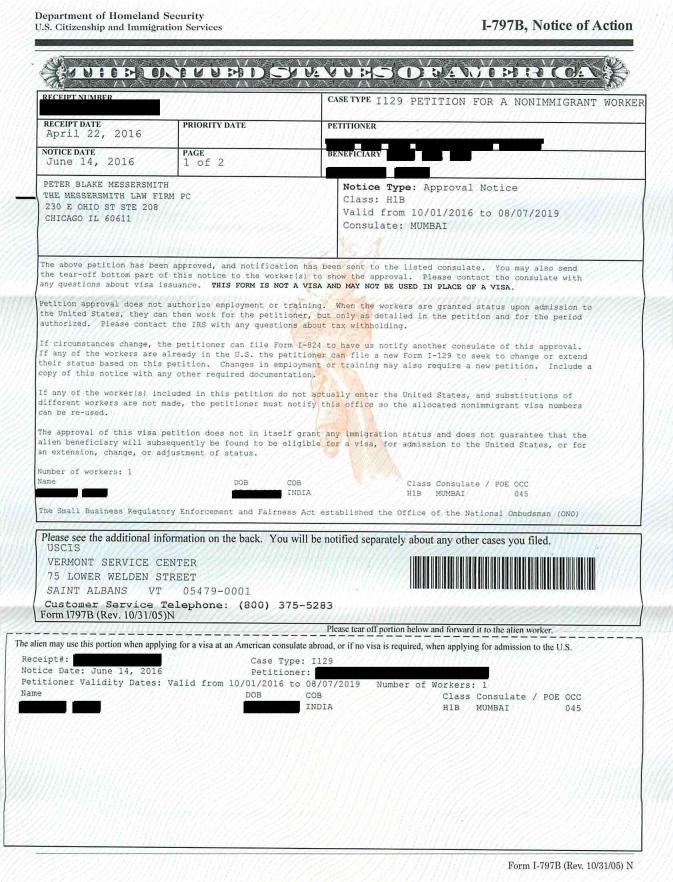
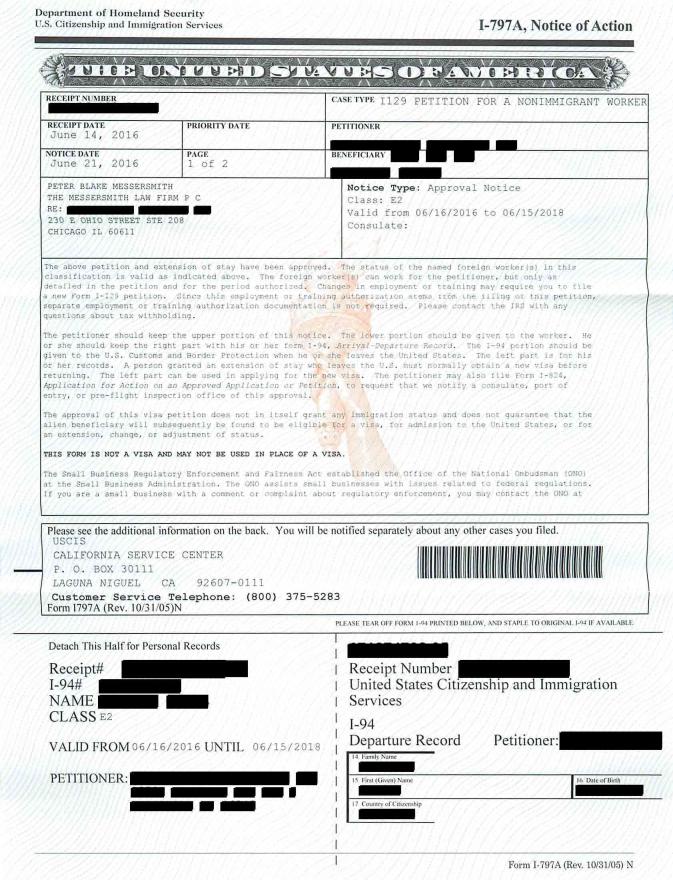
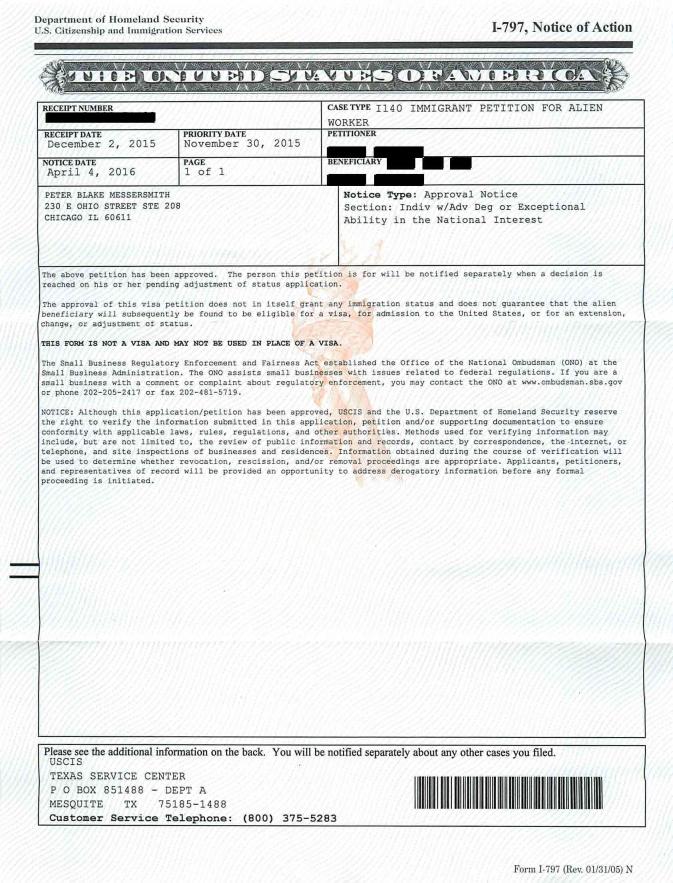
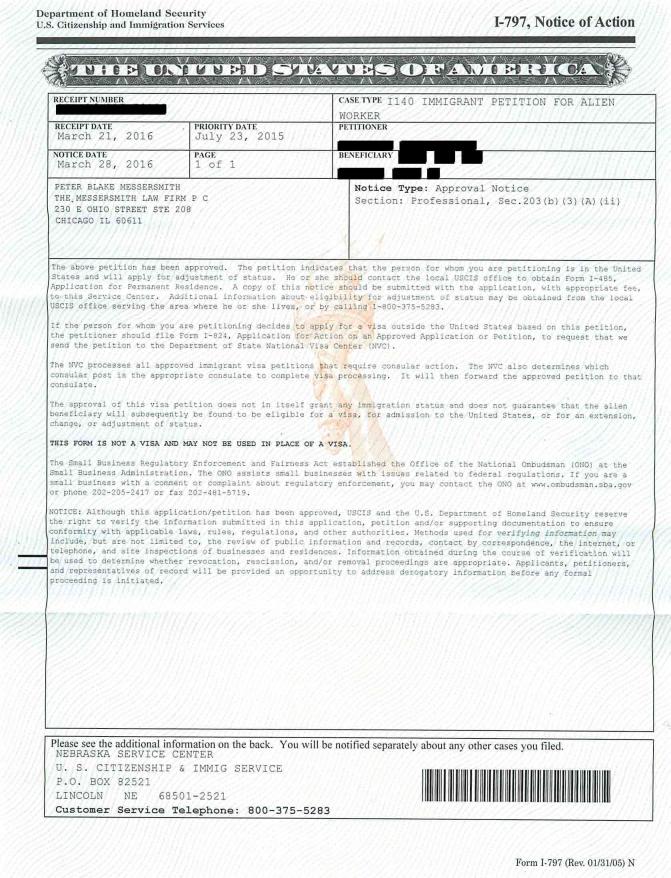
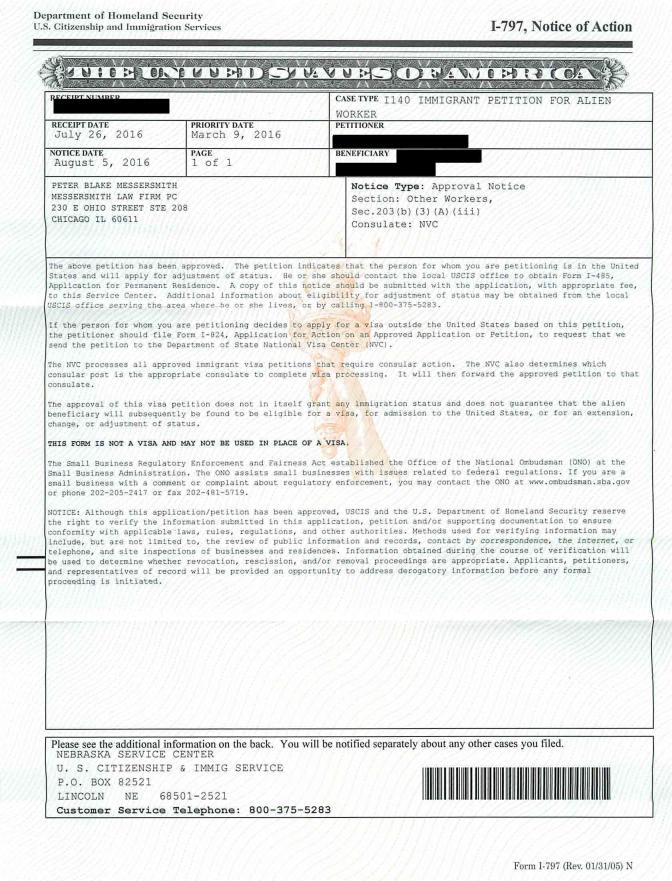
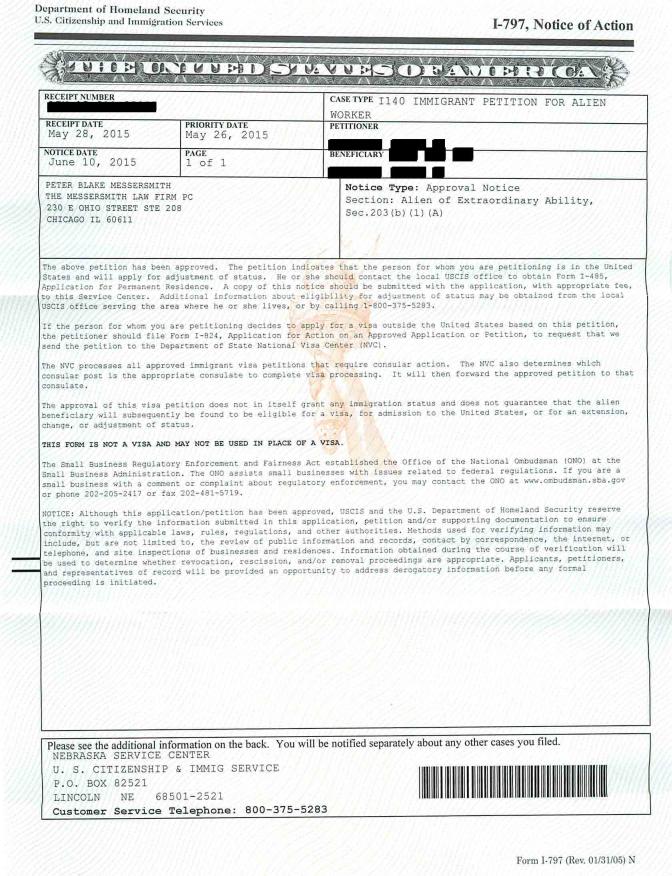
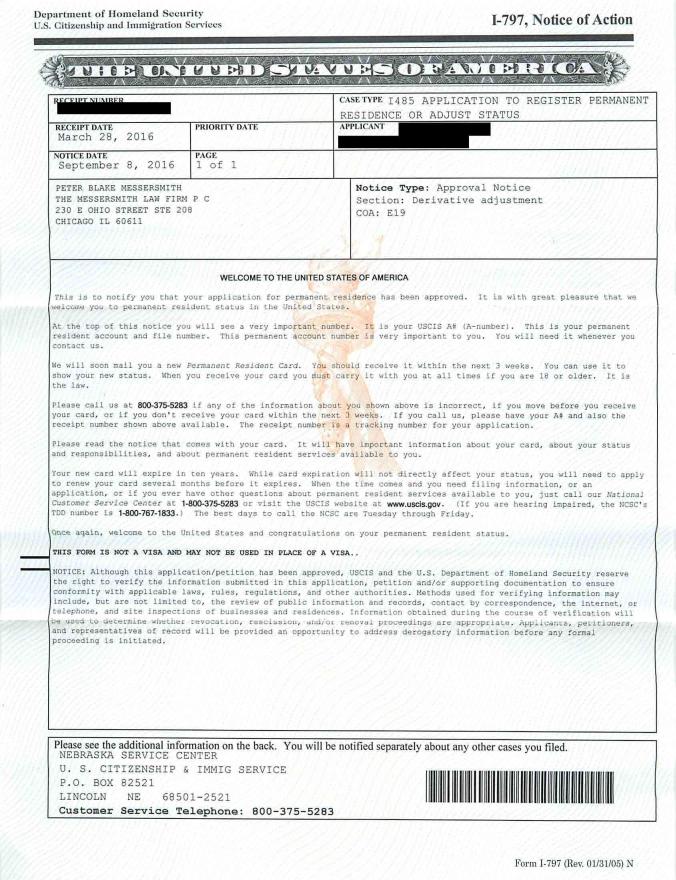
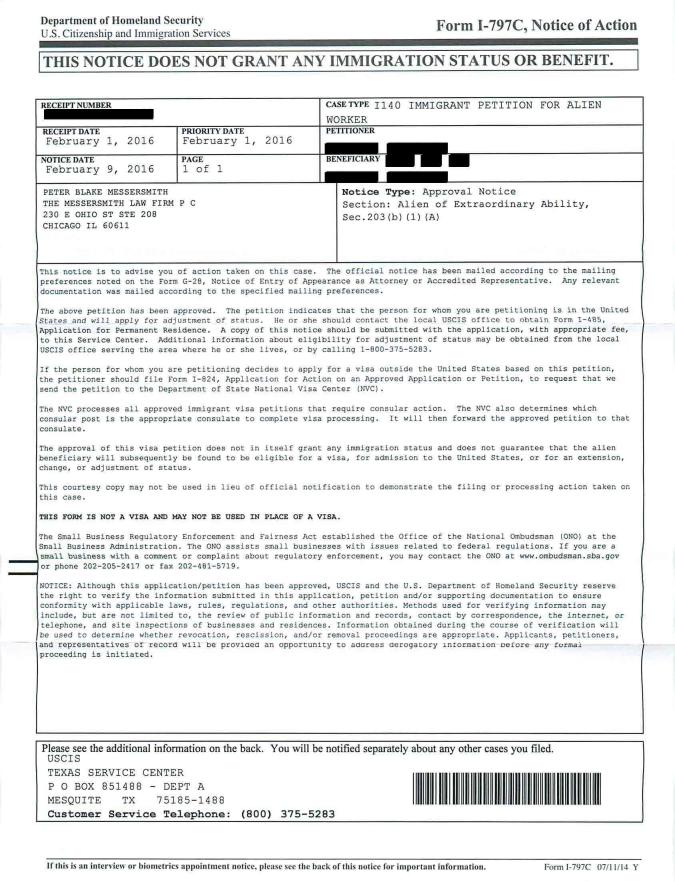
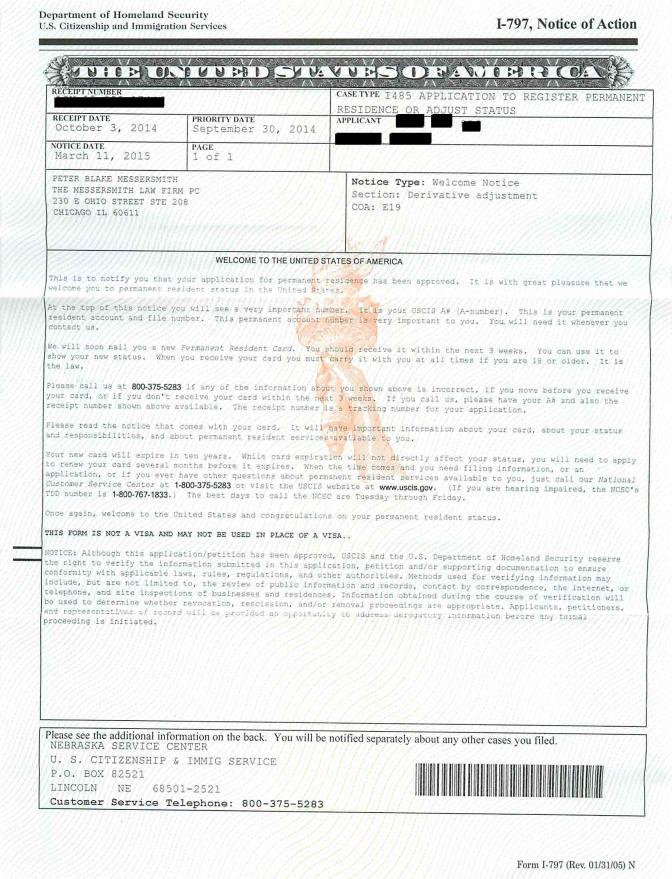
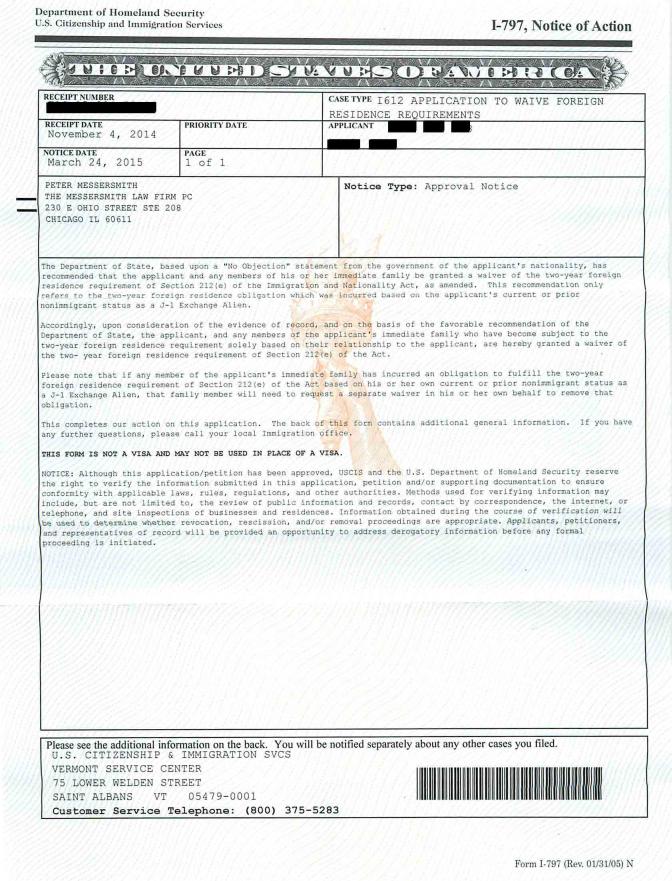
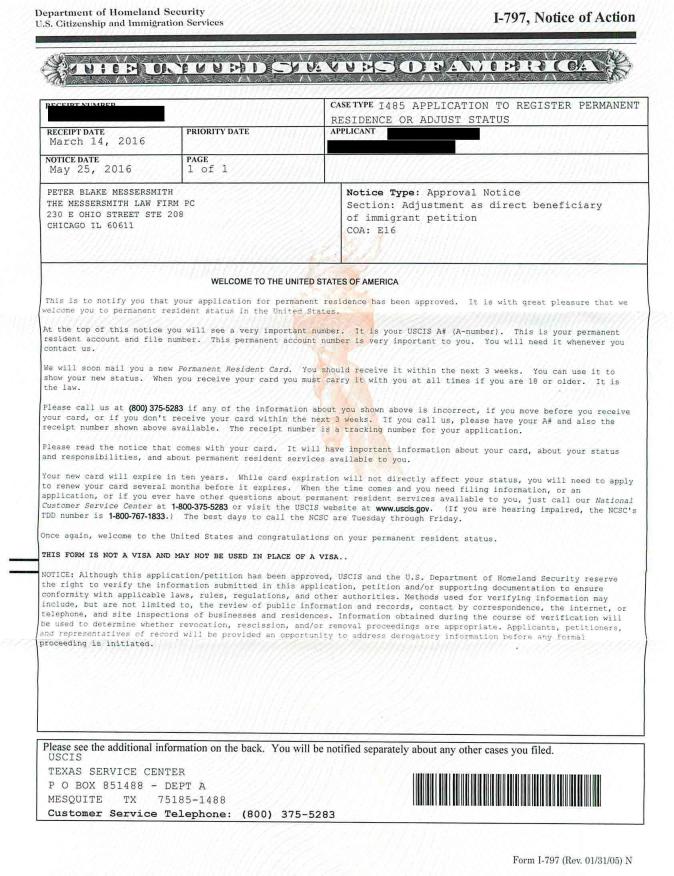
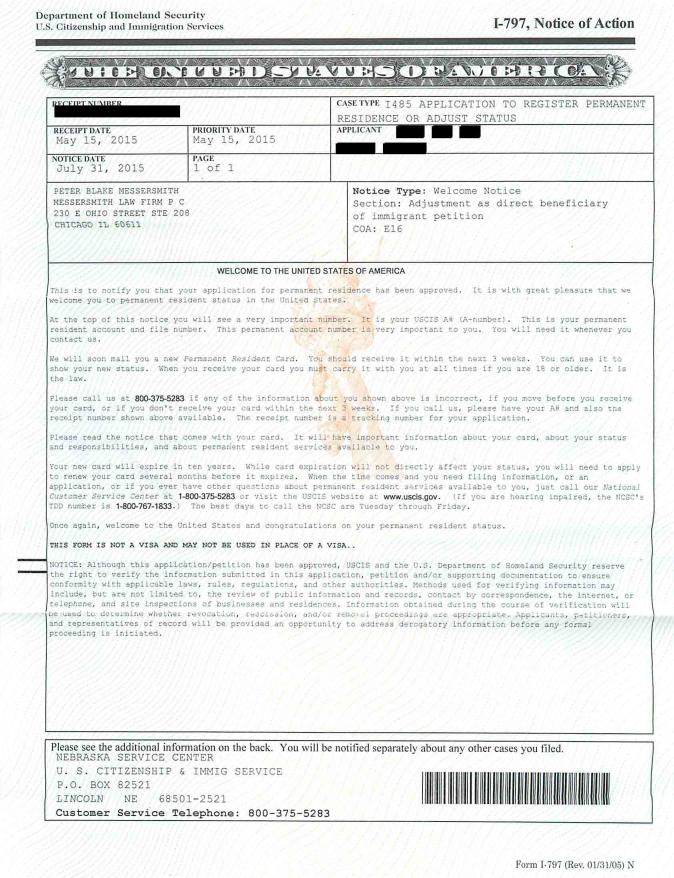
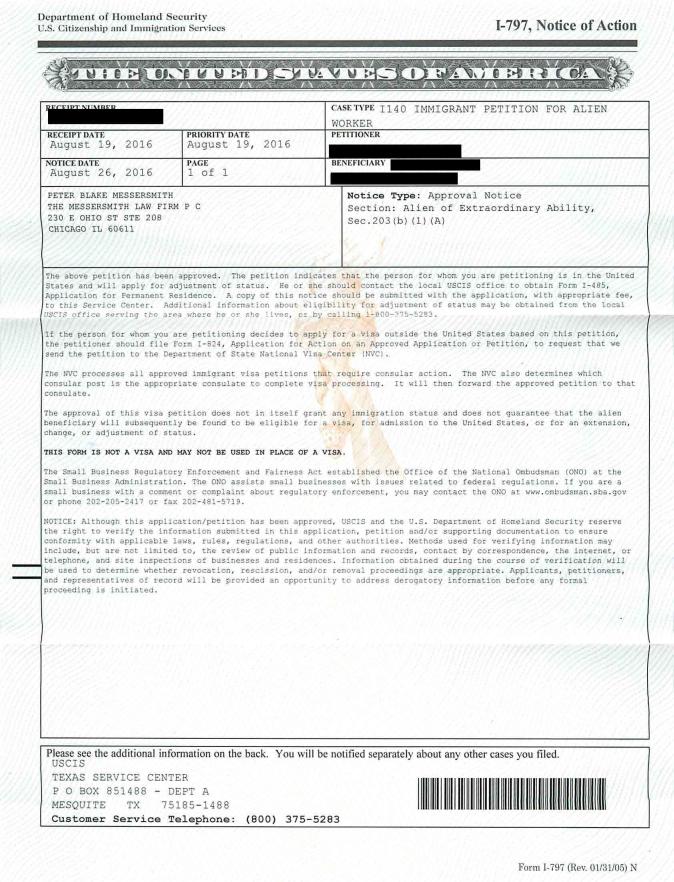
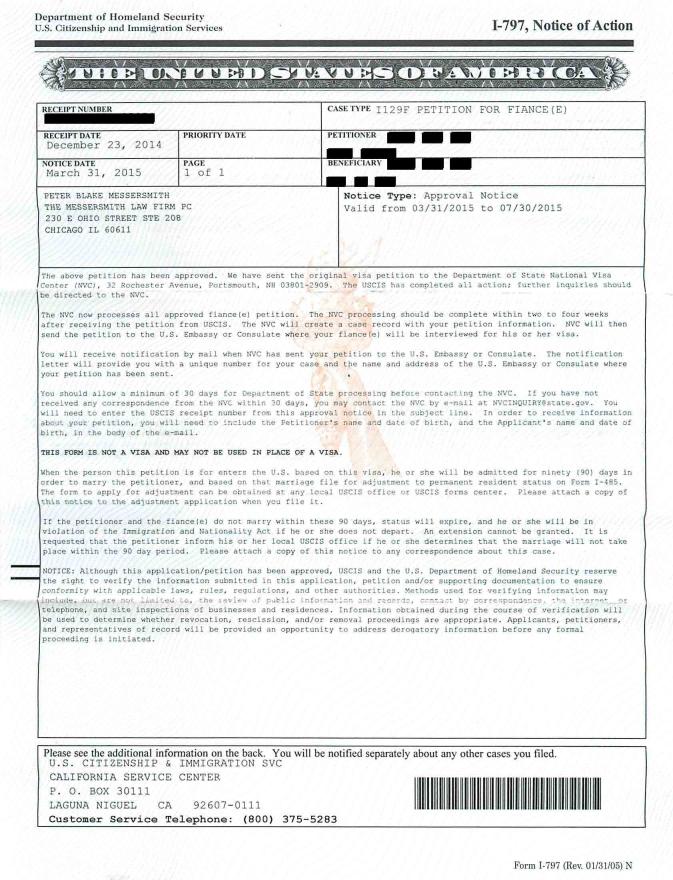
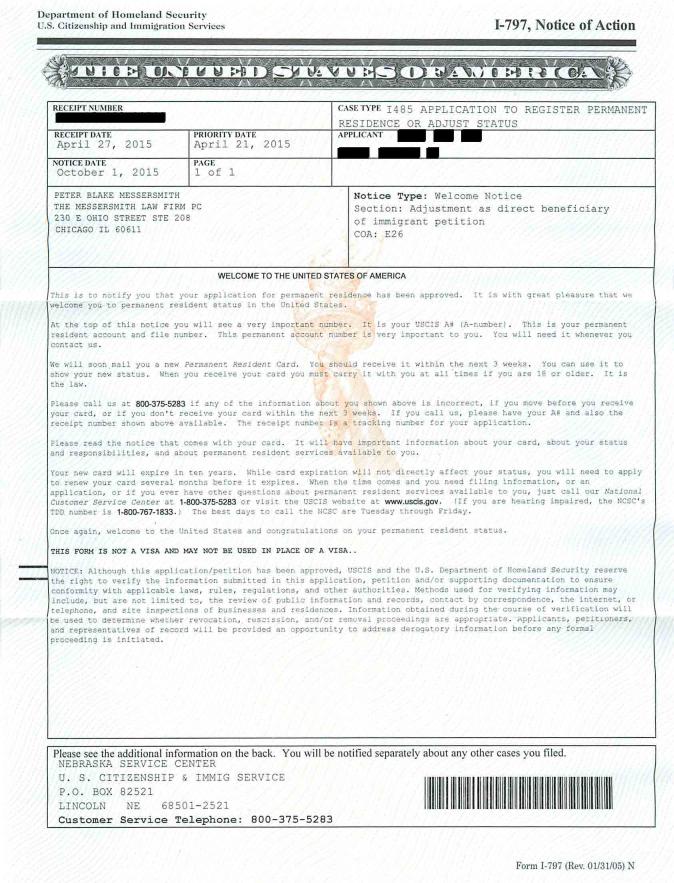
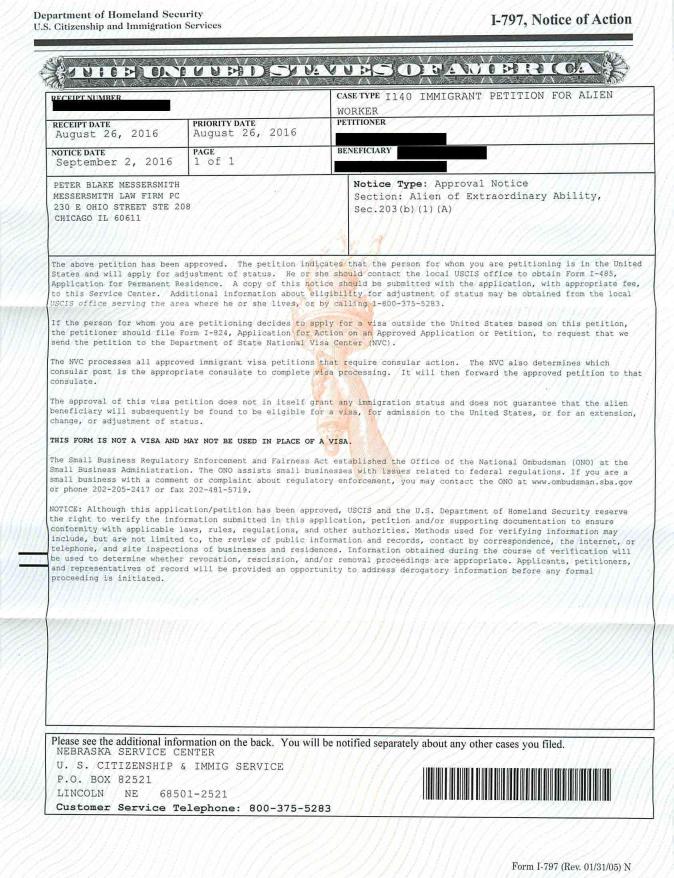
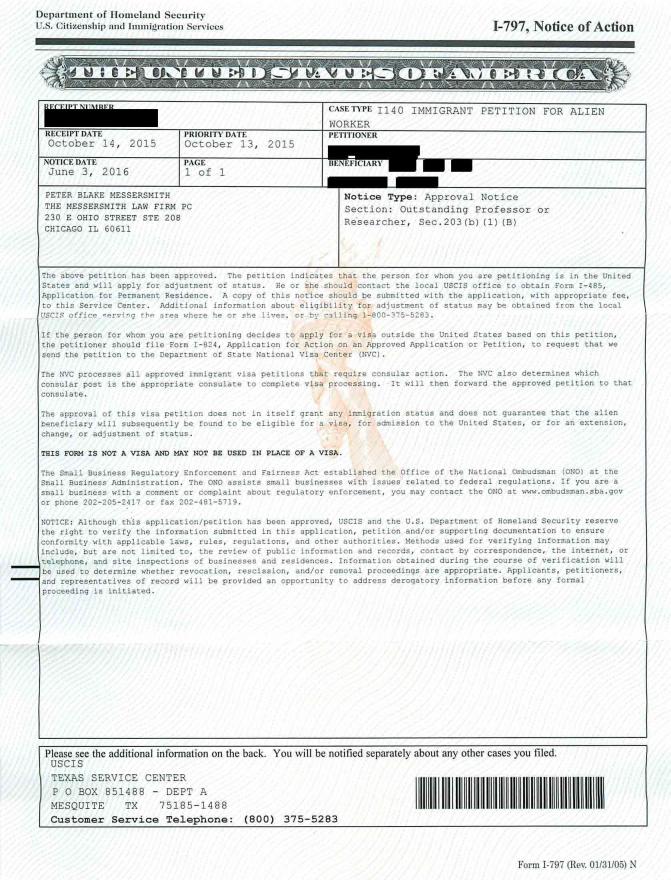
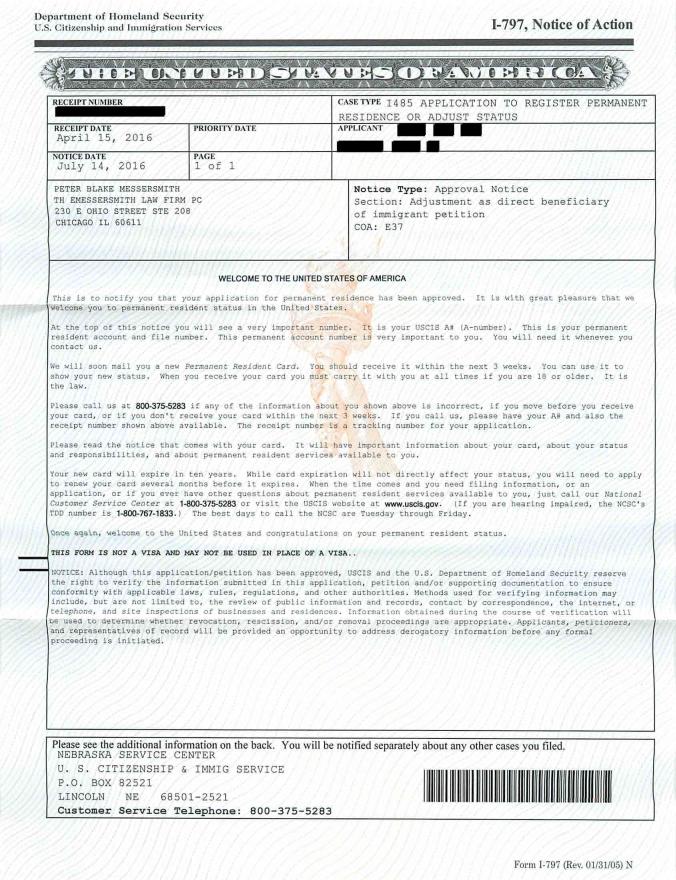
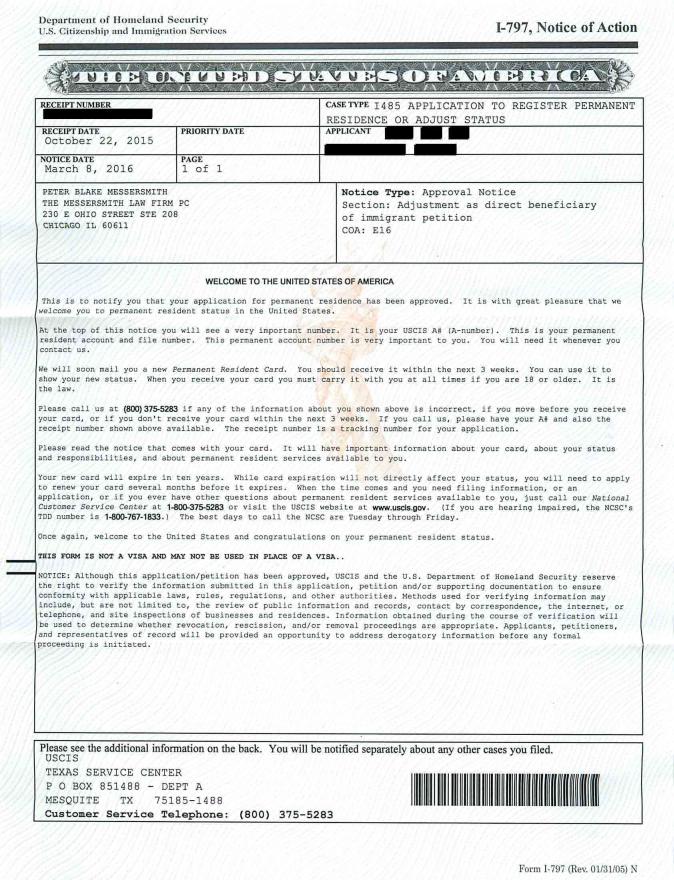
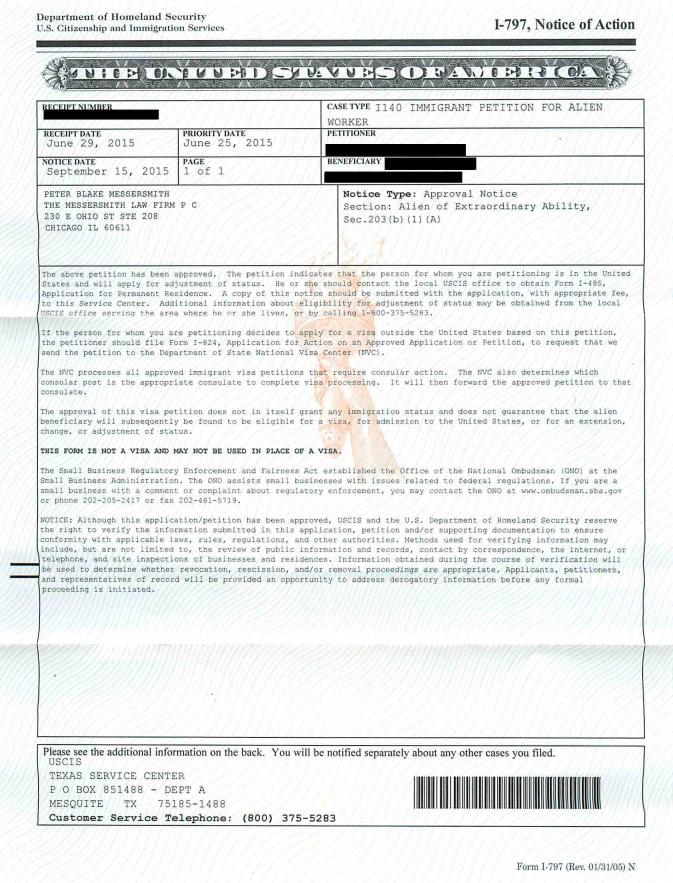
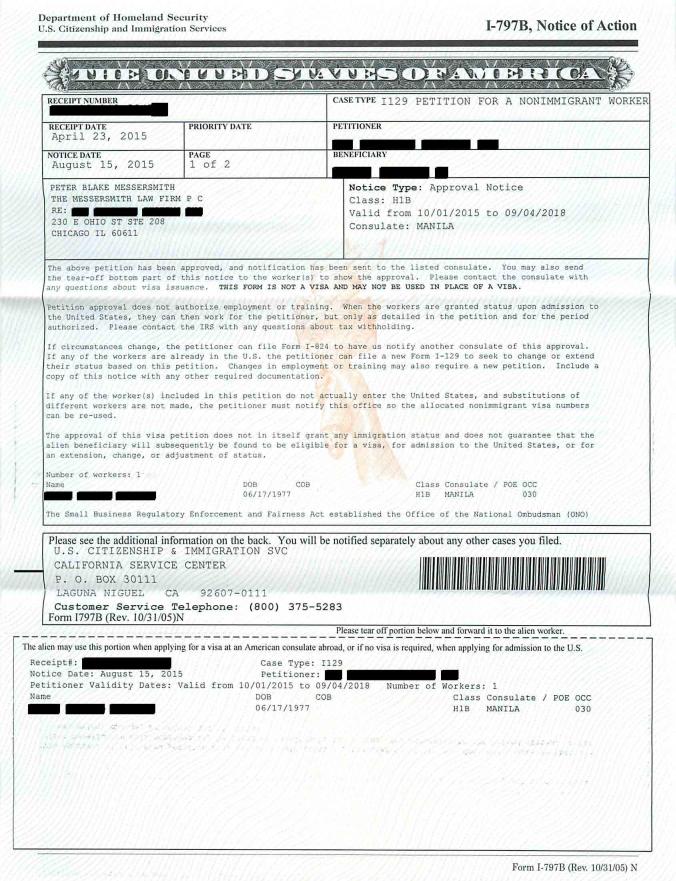
Scroll through fifty recent approval notices below or click here to view thousands.

Customer Testimonials

Real Testimonials from Past Clients