EB1C Green Card — Multinational Managers and Executives

EB1C Green Card — Multinational Managers and Executives

EB1C Green Card — Multinational Managers and Executives

People often search for this issue as EB1C, EB1C green card, multinational manager green card, multinational executive green card, EB1C requirements, EB1C qualifying relationship, EB1C one year abroad, or L1A to EB1C. The EB1C green card is for multinational managers and executives who have worked abroad for a qualifying related company and who are coming to the United States, or are already in the United States, to work in a permanent managerial or executive position for a qualifying U.S. employer. A strong EB1C case usually depends on employer sponsorship, a qualifying corporate relationship, one year of qualifying foreign employment, the structure of the U.S. company, and whether the offered role truly fits managerial or executive capacity.

EB1C cases often involve parent companies, subsidiaries, affiliates, and branches transferring executives and managers to permanent leadership roles in the United States.

EB1C Details

The EB1C green card is for multinational executives and managers. A multinational executive or manager may qualify for the EB1C green card if he or she has been employed outside the US in a managerial or executive capacity for at least one of the three years immediately preceding the filing of the petition, or, if already in the US, one of the three years preceding entry to the US as a nonimmigrant. Other green card applications may be filed simultaneously.

For Whom Is an EB1C Green Card Appropriate?

Executives of multinational companies in a managerial or executive capacity and their immediate family members.

EB1C Green Card Requirements

A multinational manager or executive is eligible for priority worker status if he or she has been employed outside the US. in the three years preceding the petition for at least one year by a firm or corporation and seeks to enter the US to continue service to that firm or organization. The employment must have been outside the United States in a managerial or executive capacity and with the same employer, an affiliate, or a subsidiary of the employer.

The petitioner must be a US. employer, doing business for at least one year, that is an affiliate, a subsidiary, or the same employer as the firm, corporation or other legal entity that employed the foreign national abroad.

EB1C requirements

To qualify for an EB1C green card, the petition must show that the applicant worked abroad for a qualifying related company in a managerial or executive capacity for at least one year in the required period, that the U.S. employer has a qualifying relationship with the foreign company, and that the applicant is coming to the United States for a permanent managerial or executive position with the sponsoring employer.

One year of qualifying employment abroad

A strong EB1C case must show at least one year of qualifying foreign employment in a managerial or executive role. The filing should explain the foreign position clearly, describe the level of authority, and document the period of qualifying employment in a way that is easy to follow.

Qualifying relationship between the U.S. and foreign companies

The petition should clearly show the qualifying relationship between the U.S. employer and the foreign entity. The case should explain whether the companies are a parent, subsidiary, affiliate, or branch and should present the ownership and control structure clearly.

Managerial capacity

If the case is based on managerial capacity, the filing should explain how the applicant manages the organization, a department, a subdivision, or an essential function. The petition should describe authority, reporting lines, staffing structure, and the level of responsibility in a detailed and practical way.

Executive capacity

If the case is based on executive capacity, the filing should explain how the applicant directs the management of the organization or a major component of it, sets goals and policies, exercises wide decision-making authority, and works at a senior executive level with only limited supervision.

Permanent job offer in the United States

EB1C requires a permanent job offer from the sponsoring U.S. employer. The filing should explain the offered role clearly and show that the U.S. position is genuinely permanent and is primarily managerial or executive in nature.

Employer sponsorship is required

EB1C is an employer-sponsored green card category. The petition must be filed by the qualifying U.S. employer. Unlike EB1A, this is not a self-petition category.

U.S. employer must be doing business

The petition should show that the U.S. employer is actively doing business and is not just a paper entity. A strong filing should explain the company’s operations, structure, staffing, and business activity in the United States.

Foreign company must also be operating

The filing should also show that the related foreign company continues to operate. The petition should make the multinational structure clear and should document ongoing business activity abroad.

Job structure matters in EB1C

A strong EB1C case does not depend only on the job title. The filing should explain what the applicant actually does, how the role functions within the company, and why the position is truly managerial or executive instead of heavily operational or technical.

No labor certification required

EB1C does not require PERM labor certification. This is one of the main reasons multinational companies use this category when the facts fit the legal standard.

Common evidence in EB1C cases

Strong EB1C filings often include:

  • corporate ownership documents
  • organizational charts
  • job descriptions for the foreign and U.S. roles
  • payroll or employment records
  • proof of ongoing business activity
  • staffing information
  • support letters explaining managerial or executive duties
  • evidence of the relationship between the U.S. and foreign companies

EB1C for multinational companies, related entities, and L-1A managers and executives

The EB1C green card is often used by multinational companies that want to keep a manager or executive in the United States permanently. Many EB1C cases involve a foreign company and a related U.S. company working through a parent, subsidiary, affiliate, or branch structure. The petition should clearly explain the company relationship, the business operations, and the permanent leadership role in the United States.

EB1C for parent, subsidiary, affiliate, and branch structures

A strong EB1C case should make the company structure easy to understand. The filing should clearly identify whether the relationship is based on a parent company, subsidiary, affiliate, or branch and should explain ownership, control, and business operations in a practical way.

Qualifying relationship is one of the most important parts of the case

The petition should not assume the relationship between the U.S. and foreign entities is obvious. A strong filing should walk through the corporate structure clearly and show that the relationship is real, ongoing, and supported by company records.

EB1C for multinational managers

Many EB1C filings are based on managerial capacity. These cases should explain how the applicant managed people, a department, a function, or a major part of the company abroad and how the U.S. role also remains primarily managerial rather than heavily operational.

EB1C for multinational executives

Executive-capacity cases should explain how the applicant directed the organization or a major part of it, set goals and policies, exercised wide decision-making authority, and served at a high level with limited supervision. The filing should make the executive nature of both the foreign and U.S. roles easy to understand.

L-1A to EB1C

Many people search for EB1C through the L-1A path. That is a common strategy because both categories focus on multinational managers and executives. A strong EB1C filing should still be built carefully on the permanent green card standard, even if the applicant has already worked in the United States in L-1A status.

One year abroad and the U.S. role should fit together

The filing should show a clear professional path from the foreign managerial or executive role to the permanent U.S. managerial or executive role. The stronger the continuity between the foreign role, the company structure, and the U.S. position, the stronger the overall case will usually be.

The U.S. company should be fully explained

A strong EB1C petition should describe the U.S. company in detail, including:

  • what the company does
  • how long it has been operating
  • how it is staffed
  • how the applicant fits into the structure
  • why the role is permanently managerial or executive

The foreign company should also be fully explained

The filing should also describe the foreign company’s business, staffing, operations, and relationship to the U.S. entity. The petition should make it clear that the multinational structure is active and real, not just formal on paper.

Common documents in stronger EB1C company-structure cases

Strong filings often include:

  • organizational charts
  • ownership documents
  • tax or business records
  • payroll records
  • support letters
  • job descriptions
  • staffing charts
  • evidence of operations in the United States and abroad

Common EB1C company-side questions

Common questions include:

  • What counts as a qualifying relationship for EB1C?
  • Can a small multinational company use EB1C?
  • Can a growing U.S. company sponsor EB1C?
  • Does EB1C work after L-1A?
  • How do I prove managerial capacity in a smaller company?
  • How do I prove executive capacity in a real operating business?

How strong should an EB1C profile be?

One of the most common EB1C questions is whether the case is strong enough to file. Many companies and applicants want to know whether the foreign role was senior enough, whether the U.S. role is permanent enough, whether the company structure is clear enough, and whether the evidence truly supports managerial or executive capacity. A strong EB1C case depends on the full record, not just the job title.

There is no single approved EB1C profile

There is no one approved template for EB1C. Some strong cases involve large multinational companies with complex reporting structures. Others involve growing companies with leaner operations but strong evidence of real managerial or executive authority. The key issue is whether the petition clearly shows a qualifying company relationship, qualifying foreign employment, and a permanent U.S. managerial or executive role.

Job title alone is not enough

A title such as manager, director, vice president, executive, or head of operations does not prove EB1C eligibility by itself. The filing should explain the actual duties, the level of authority, the reporting structure, the staffing model, and the applicant’s place in the organization.

A strong EB1C case usually shows a combination of evidence

Strong EB1C filings often include several types of evidence working together, such as:

  • clear organizational charts
  • detailed support letters
  • ownership and control documents
  • proof of ongoing business operations
  • payroll and employment records
  • staffing information
  • foreign and U.S. job descriptions
  • evidence showing authority over people, functions, budgets, or policy

Managerial capacity should be explained in practical terms

If the case is based on managerial capacity, the filing should explain exactly what the applicant manages. This may involve personnel, a department, a subdivision, or an essential function. The petition should show that the role is primarily managerial rather than heavily focused on day-to-day production work.

Executive capacity should be explained in practical terms

If the case is based on executive capacity, the filing should explain how the applicant directs the management of the company or a major component of it, sets policy or strategic direction, and exercises high-level decision-making authority with limited supervision.

Smaller-company cases can still be strong

A smaller company is not automatically a weak EB1C case. The filing should explain the real structure of the business, the growth of the organization, the applicant’s level of authority, and why the role is still primarily managerial or executive even if the company is not large.

The foreign role and U.S. role should fit together

A strong case usually shows continuity between the foreign role and the U.S. role. The petition should explain how the applicant’s prior foreign employment prepared the person for the permanent U.S. position and how both roles fit within the same multinational structure.

The company relationship should be easy to understand

One of the most common weaknesses in EB1C filings is a poorly explained company structure. The petition should make it easy to understand how the U.S. and foreign entities are related and how ownership and control are organized.

The U.S. role should look permanent and real

The petition should show that the U.S. position is not temporary, speculative, or loosely defined. The filing should describe the role, the company’s operations, the reporting structure, and the long-term need for the applicant in a permanent managerial or executive capacity.

Common profile-strength questions

Common questions include:

  • Is my EB1C case strong enough?
  • What does an approved EB1C profile look like?
  • Is a manager title enough for EB1C?
  • Can a small company qualify for EB1C?
  • Does EB1C work after L-1A?
  • How do I prove managerial capacity?
  • How do I prove executive capacity?
  • How important is the company structure in EB1C?

Frequently asked questions about EB1C for multinational managers and executives

What is the EB1C green card?

EB1C is an employment-based green card category for multinational managers and executives who are coming to the United States, or are already in the United States, to work in a permanent managerial or executive position for a qualifying U.S. employer.

Who qualifies for EB1C?

A qualifying EB1C case must show that the applicant worked abroad for at least one year in a managerial or executive capacity for a qualifying related company and is being offered a permanent managerial or executive role in the United States by a qualifying U.S. employer.

Does EB1C require employer sponsorship?

Yes. EB1C is an employer-sponsored category. The petition must be filed by the qualifying U.S. employer.

Does EB1C require a permanent job offer?

Yes. EB1C requires a permanent managerial or executive position in the United States.

Does EB1C require labor certification?

No. EB1C does not require PERM labor certification.

Can I self-petition for EB1C?

No. EB1C is not a self-petition category.

What is a qualifying relationship for EB1C?

A qualifying relationship usually means the U.S. company and the foreign company are related as a parent, subsidiary, affiliate, or branch. The filing should clearly document ownership and control.

Does EB1C require one year of foreign employment?

Yes. The applicant must generally show at least one year of qualifying foreign employment in a managerial or executive role within the required period.

What does managerial capacity mean for EB1C?

Managerial capacity generally means the applicant manages the organization, a department, a subdivision, a function, or a component of the business and exercises authority at a managerial level rather than mainly performing day-to-day operational work.

What does executive capacity mean for EB1C?

Executive capacity generally means the applicant directs the management of the organization or a major component of it, sets goals and policies, exercises wide decision-making authority, and works at a senior level with limited supervision.

Is job title alone enough for EB1C?

No. A title such as manager, director, or executive is not enough by itself. The filing should explain the actual duties, authority, staffing structure, and role in the company.

Can a small company qualify for EB1C?

Yes, in some cases. A smaller company is not automatically disqualified, but the petition must still show a real multinational structure and a role that is primarily managerial or executive.

Can a startup or growing company use EB1C?

Sometimes, depending on the facts. The filing should clearly explain the company structure, operations, growth, staffing, and why the position is permanently managerial or executive.

Does EB1C work after L-1A?

Yes. Many applicants pursue EB1C after working in L-1A status, but the green card case still must independently meet the EB1C standard.

Is EB1C the same as L-1A?

No. The categories are related, but they are not the same. L-1A is a temporary nonimmigrant category, while EB1C is an immigrant green card category for multinational managers and executives.

What documents are important in an EB1C case?

Strong EB1C filings often include organizational charts, ownership documents, support letters, payroll records, job descriptions, staffing information, and evidence of ongoing business activity in the United States and abroad.

How important is the company structure in EB1C?

It is very important. The petition should make the relationship between the U.S. and foreign entities easy to understand and should clearly document ownership and control.

How important is the U.S. role in an EB1C case?

It is extremely important. The filing must show that the offered U.S. position is permanently managerial or executive in nature.

Can operational duties hurt an EB1C case?

Yes. If the role appears too focused on day-to-day production, technical, or operational work, that can weaken the argument that the position is primarily managerial or executive.

What does an approved EB1C profile look like?

There is no single approved profile. Strong EB1C cases can involve large multinational companies or smaller growing companies, but the strongest filings clearly explain the foreign role, the U.S. role, the company relationship, and the managerial or executive nature of the work.

Can a function manager qualify for EB1C?
Yes, in some cases. A function-manager case can work if the petition clearly shows that the applicant manages an essential function at a high level rather than mainly performing the function personally.

How long must the U.S. company be operating for EB1C?
The petition should show that the U.S. employer has been doing business and is a real operating entity. The business history and operations should be explained clearly in the filing.

Can a foreign company that still operates abroad support EB1C?
Yes. The foreign company should continue operating, and the filing should show that the multinational structure is active and ongoing.

Is EB1C easier than EB1A or NIW?
They are different categories with different standards. EB1C depends heavily on employer sponsorship, company structure, and managerial or executive roles, while EB1A and NIW use different legal frameworks.

How do I know if my EB1C case is strong enough?

The best way to evaluate EB1C strength is to look at the full record, including the foreign role, the U.S. role, the company relationship, the staffing structure, and how well the petition can show true managerial or executive capacity.

Top Notch Immigration Services

You will receive top notch immigration services at The Messersmith Law Firm. We guarantee personalized legal services, a high rate of success, and very reasonable fees. At The Messersmith Law Firm, you will always get more than what you pay for. While the majority of our clients are referred to our law firm, we are open to take new cases if we feel we can help you achieve your goals. We have no doubt that you will refer everyone you know to us once your case is approved! Our goal is to get your case approved in the shortest amount of time possible yet strive to keep our fees reasonable!

Thousands of Approved Cases

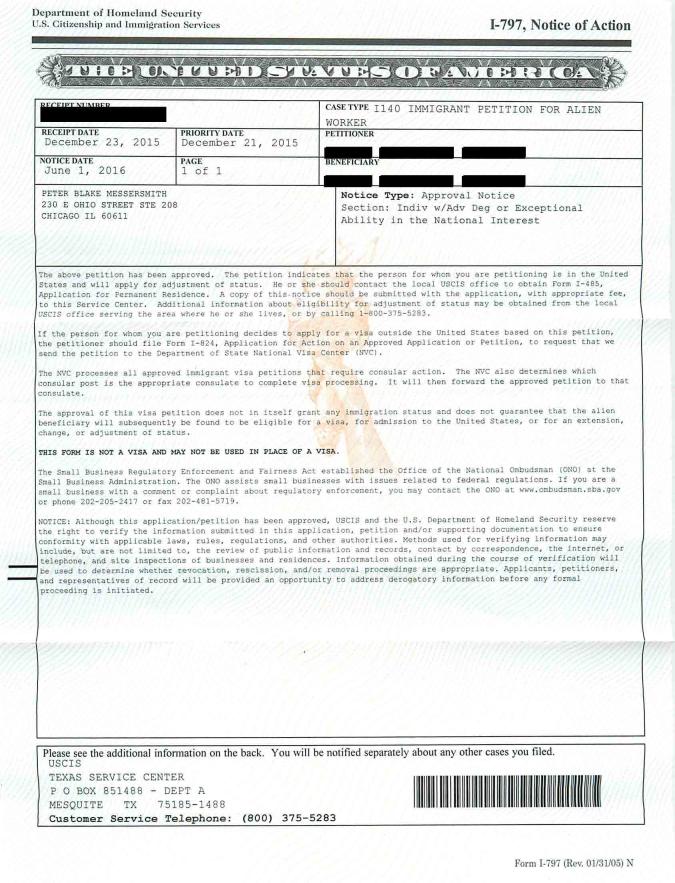
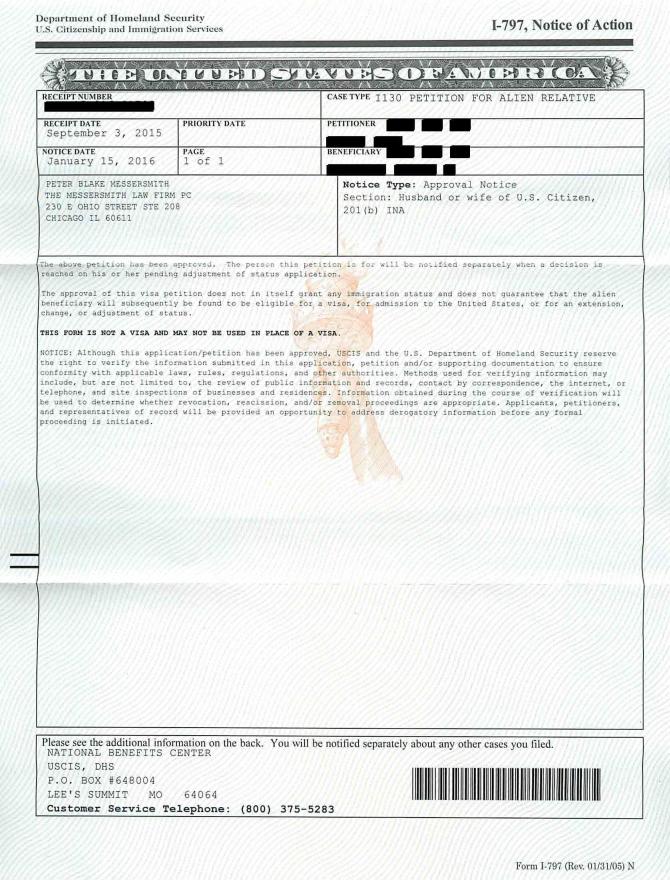
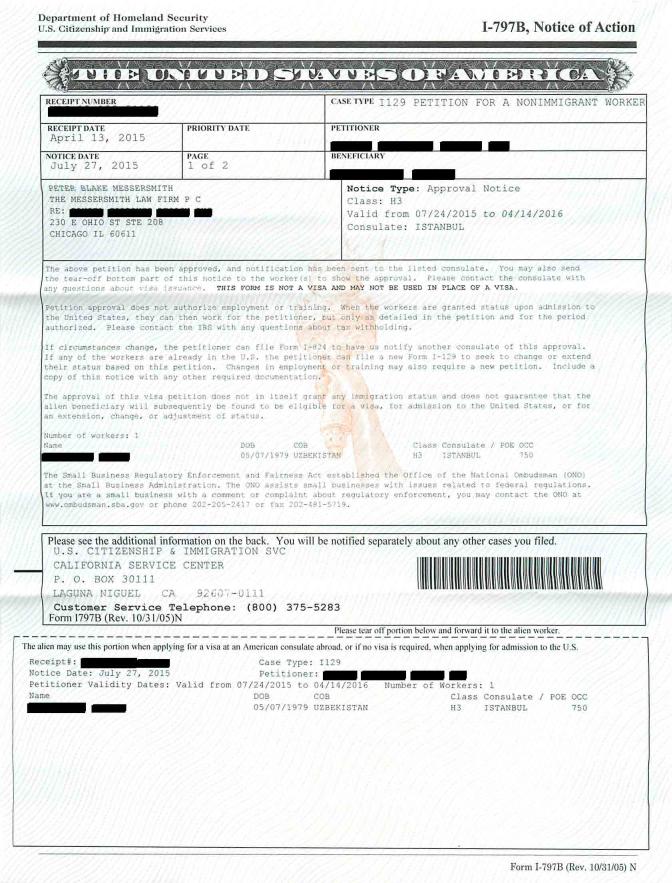
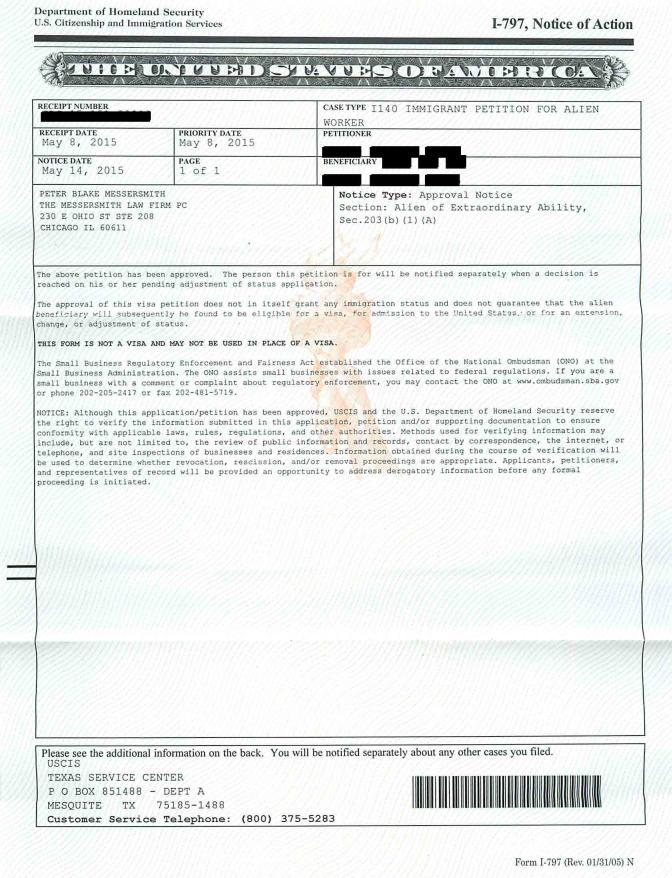
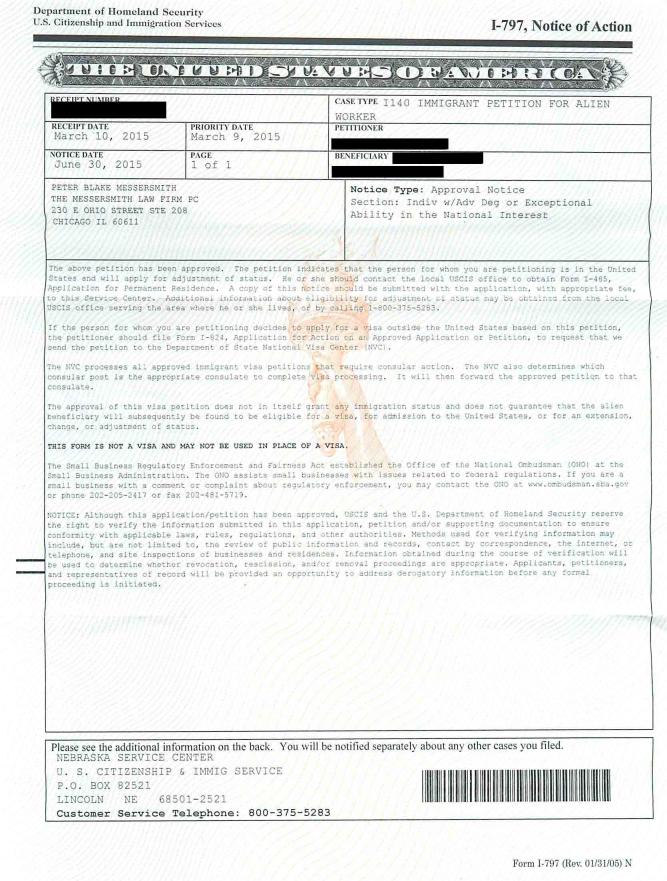
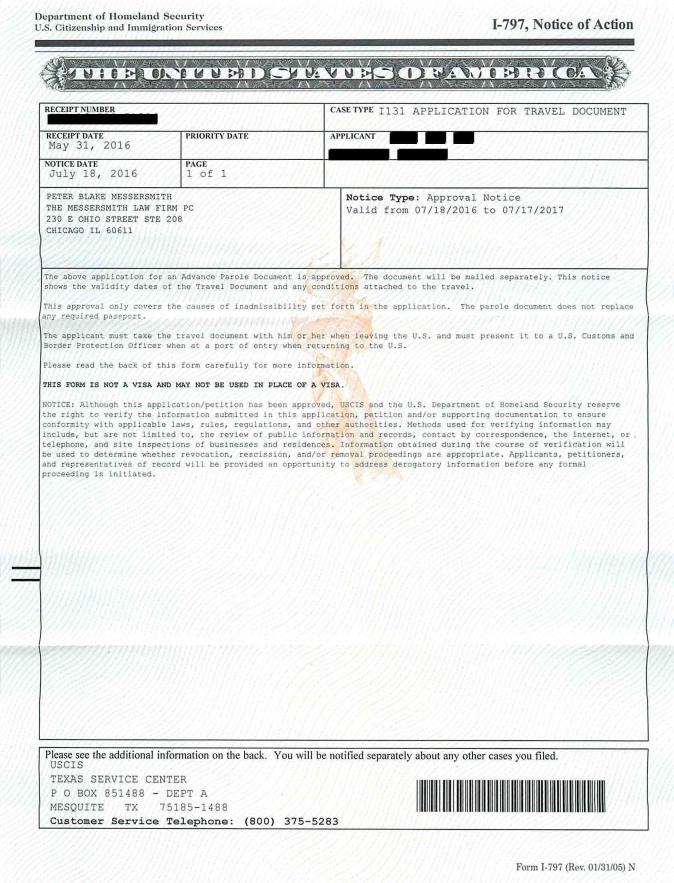
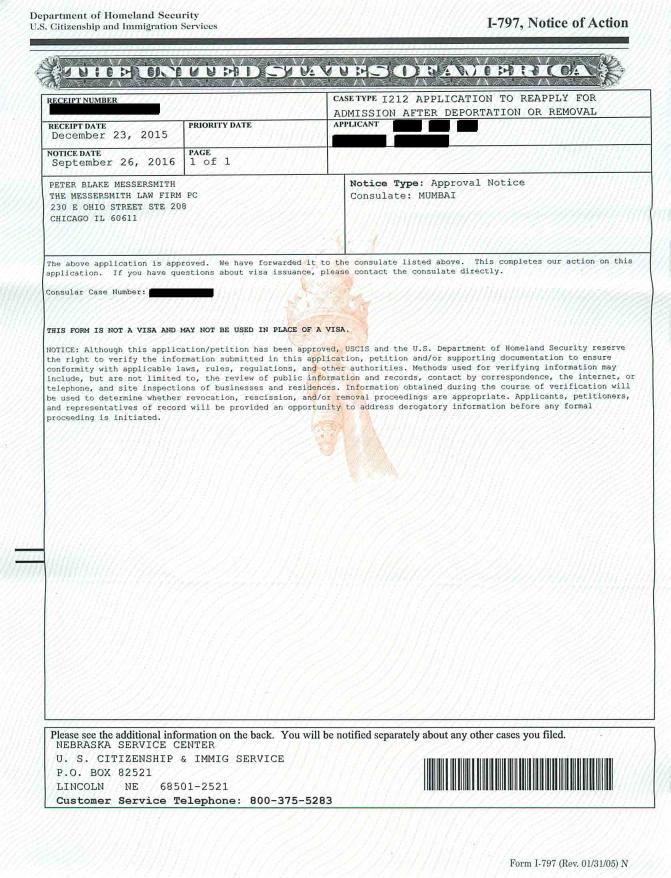
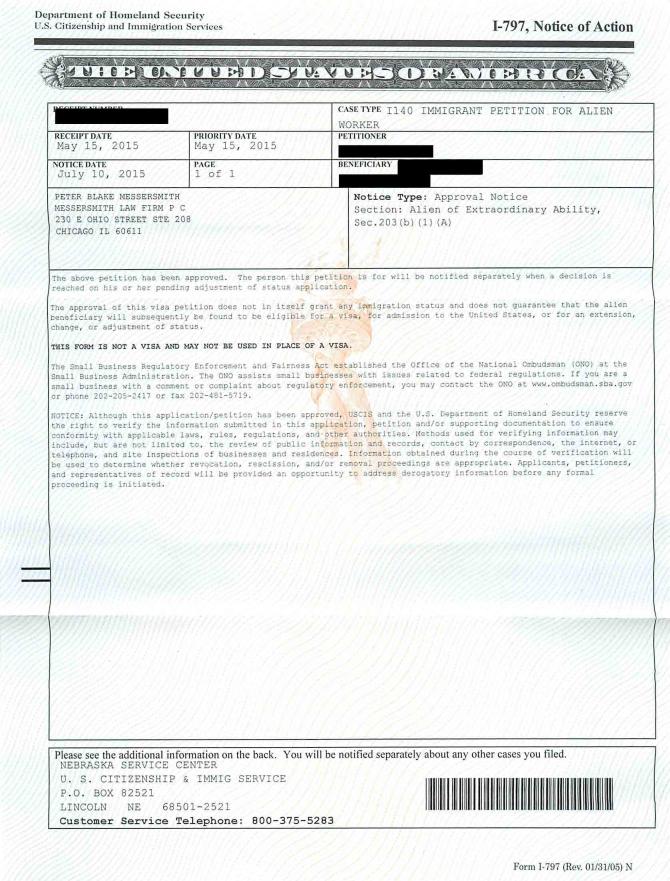
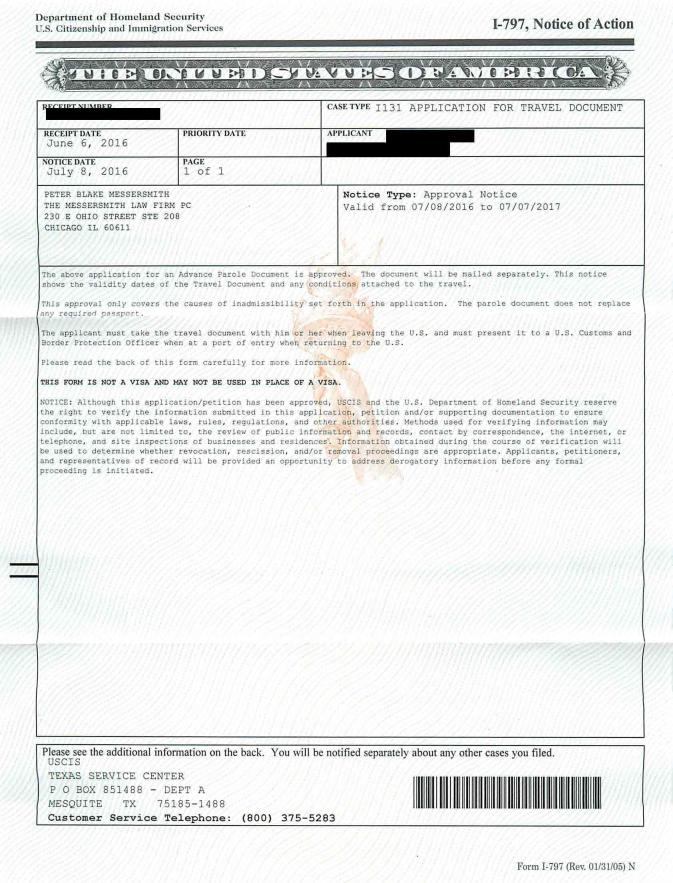
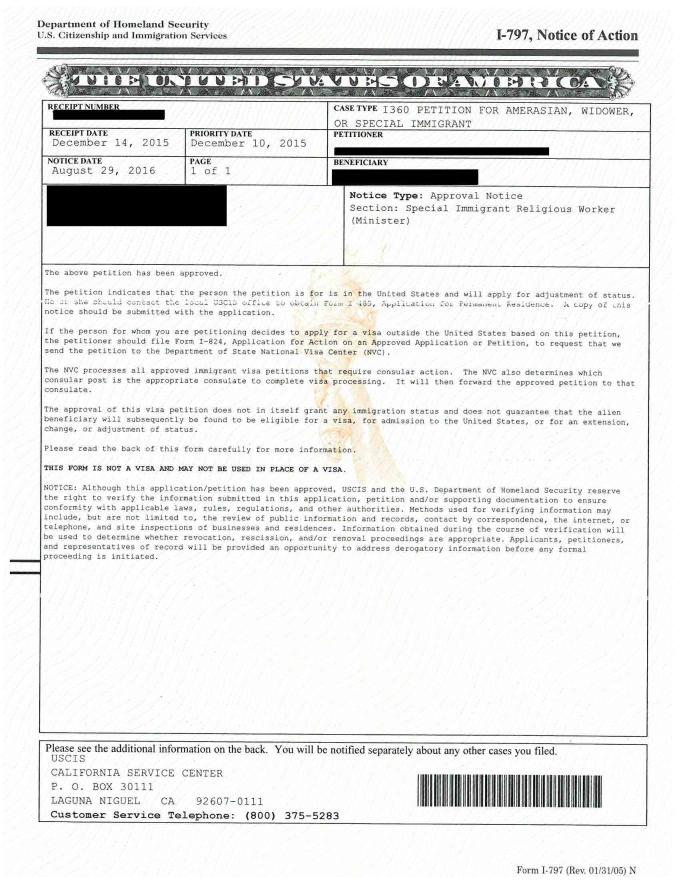
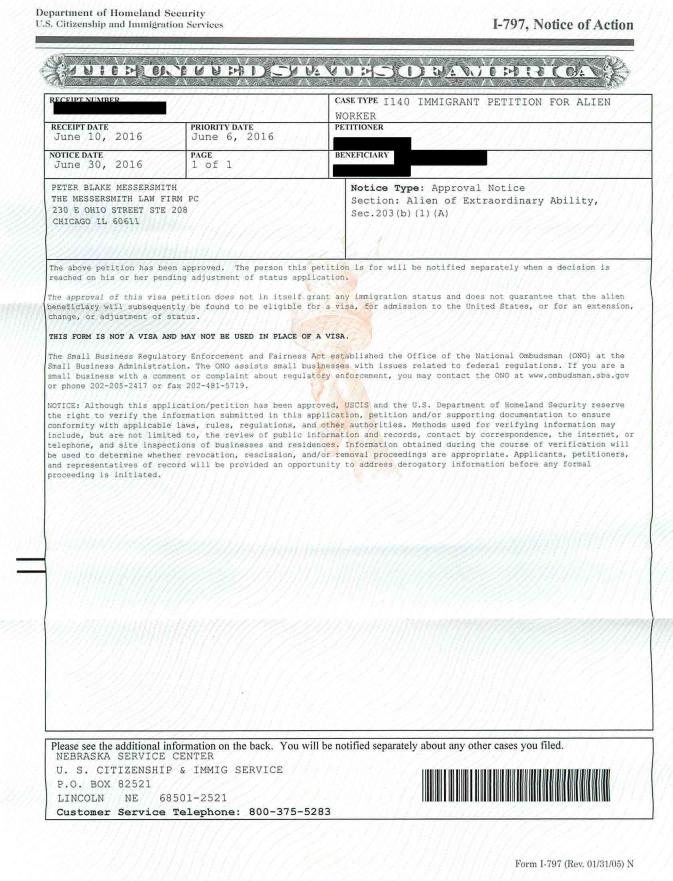
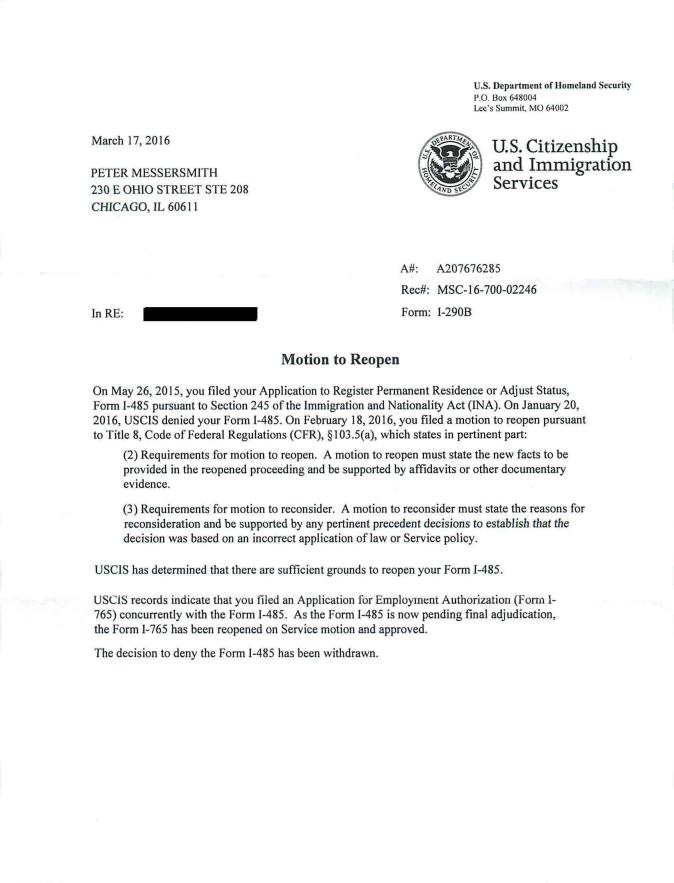
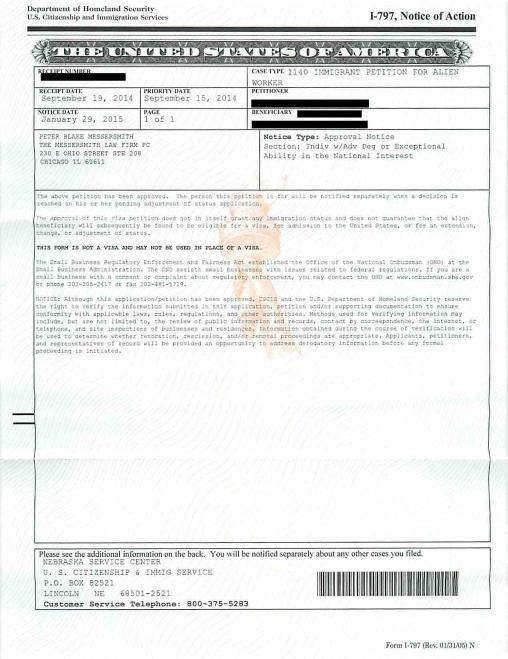
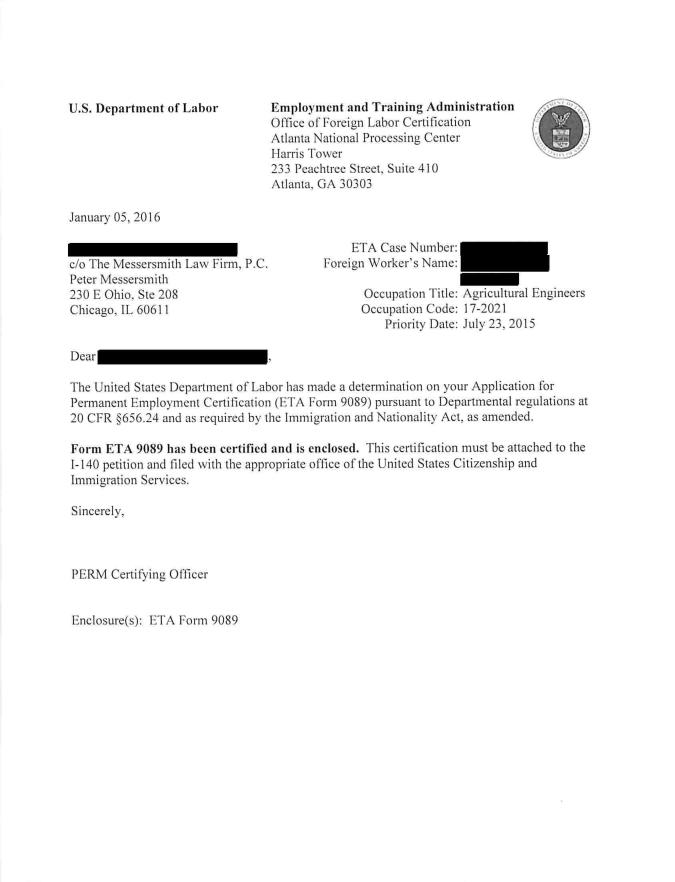
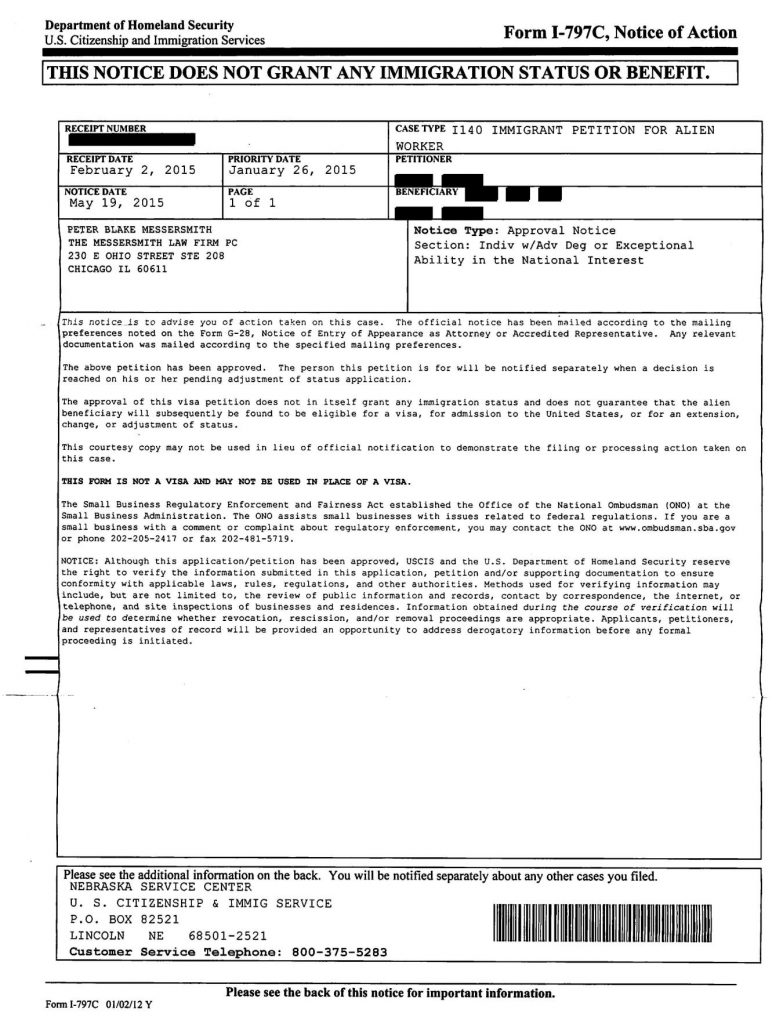
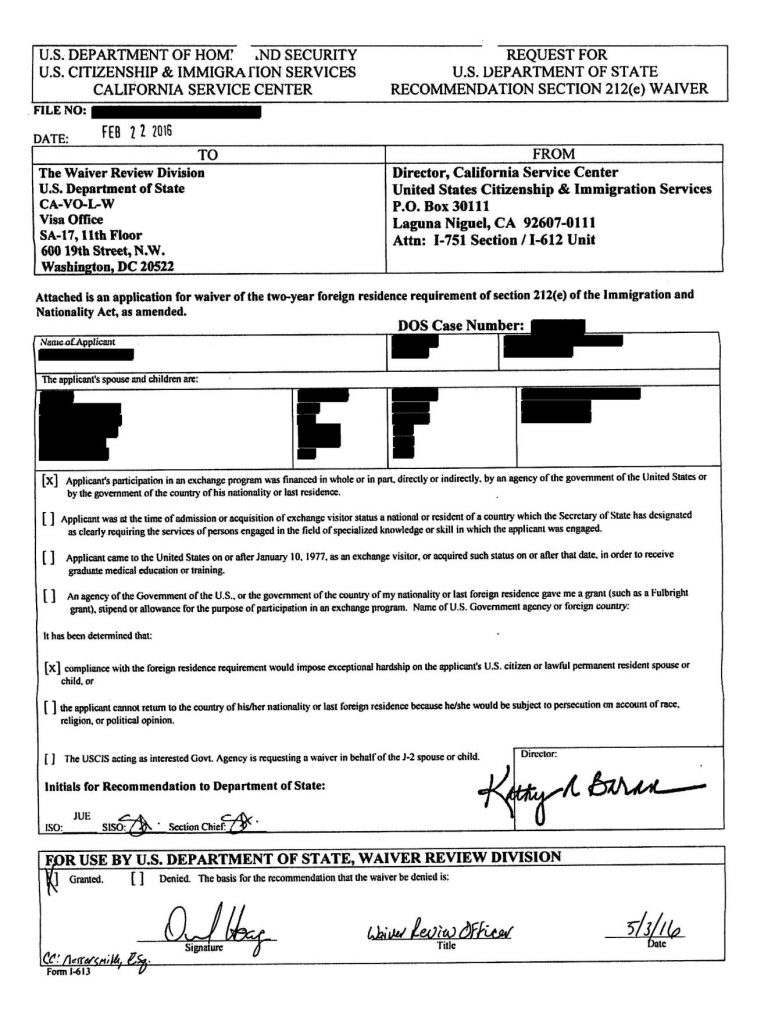
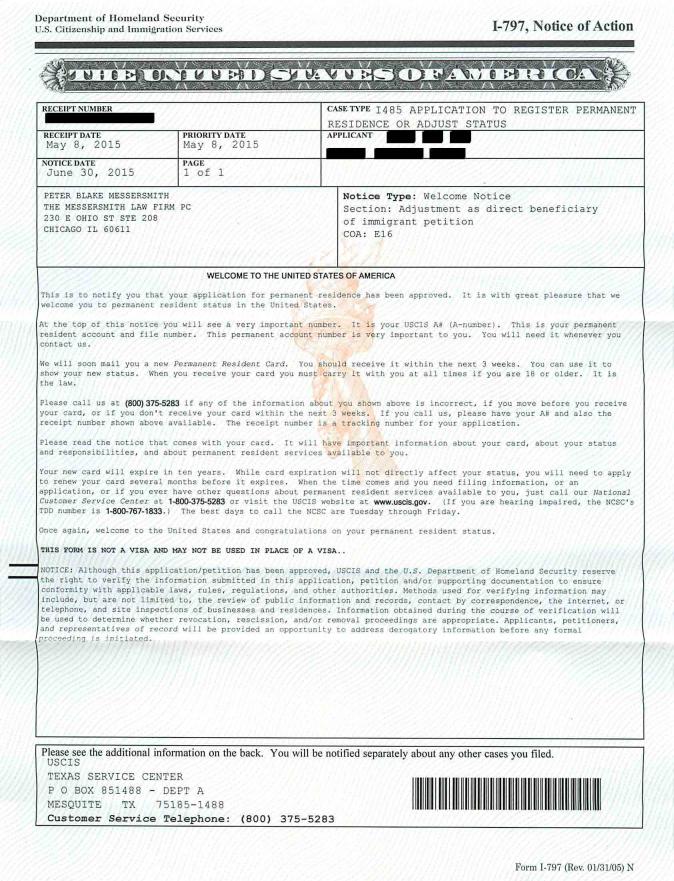
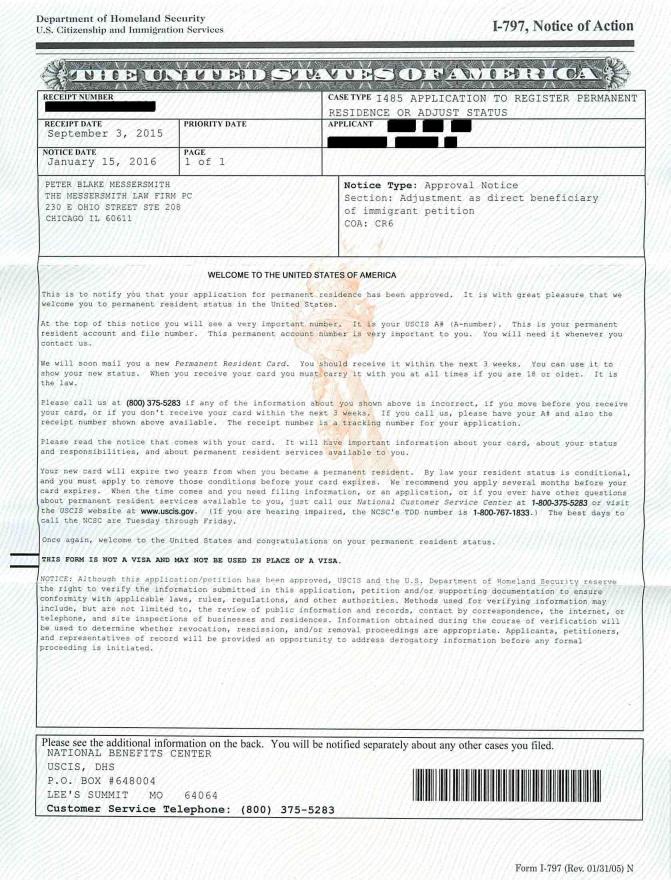
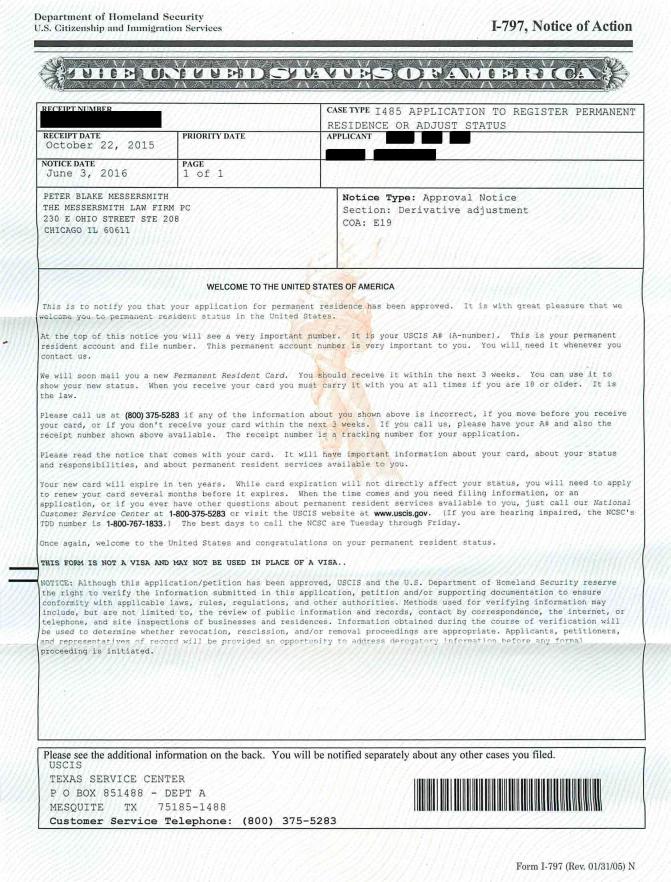
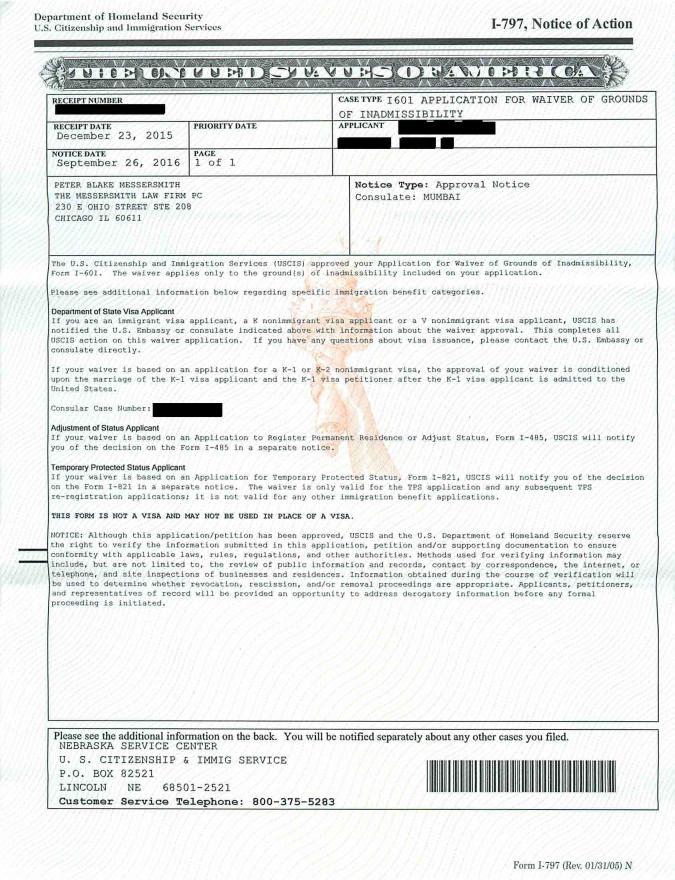
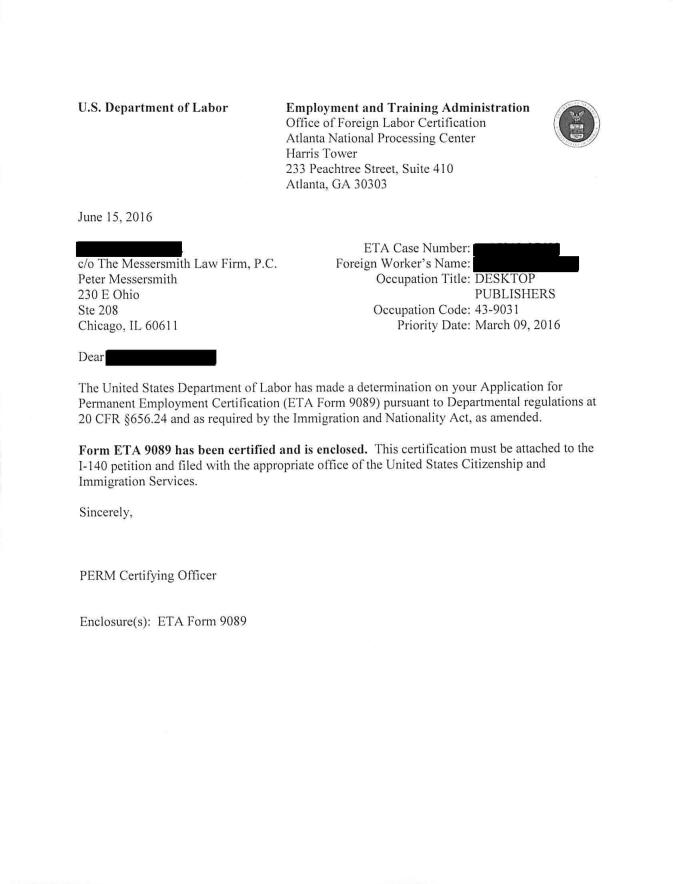
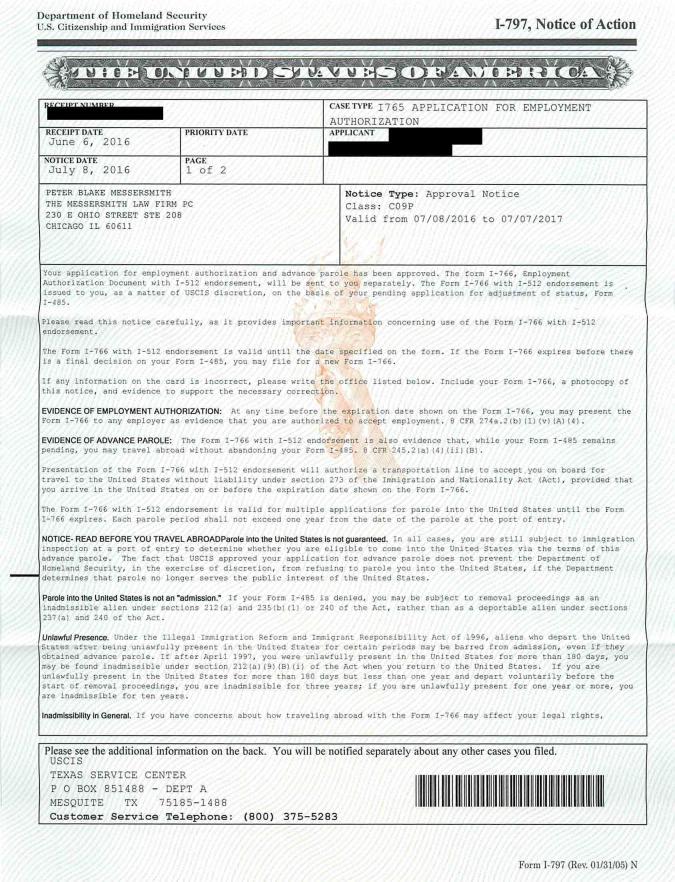
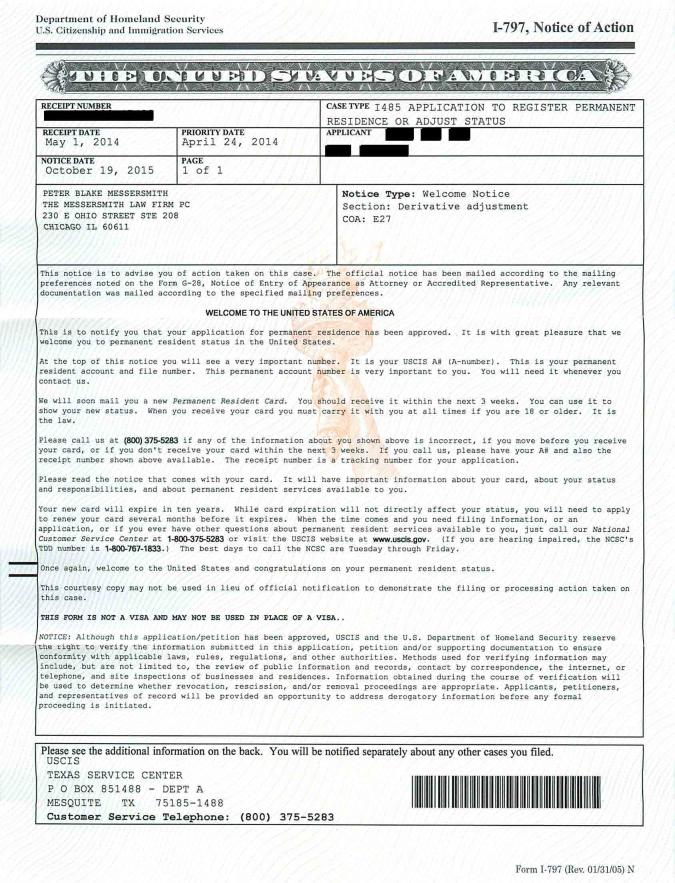
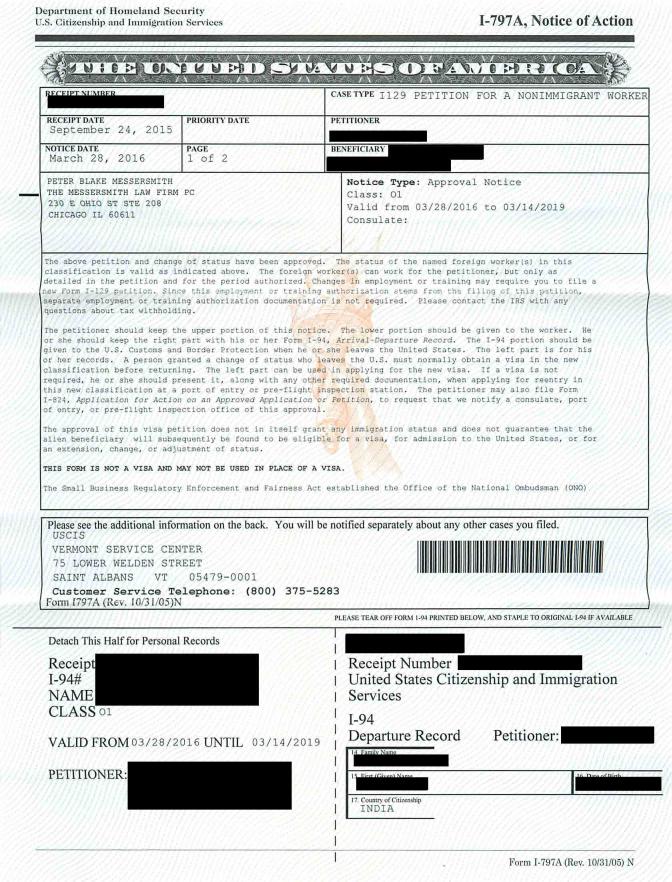
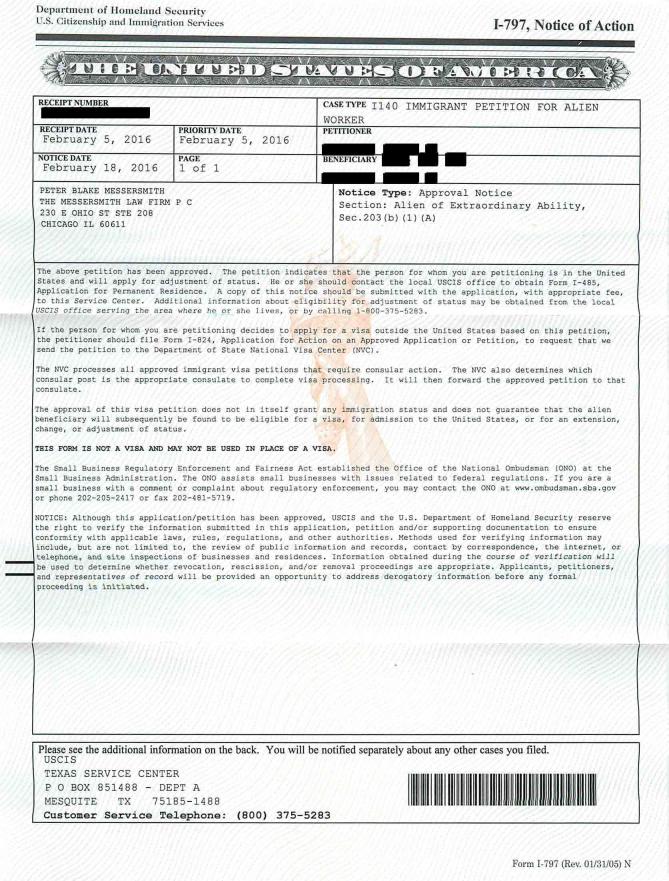
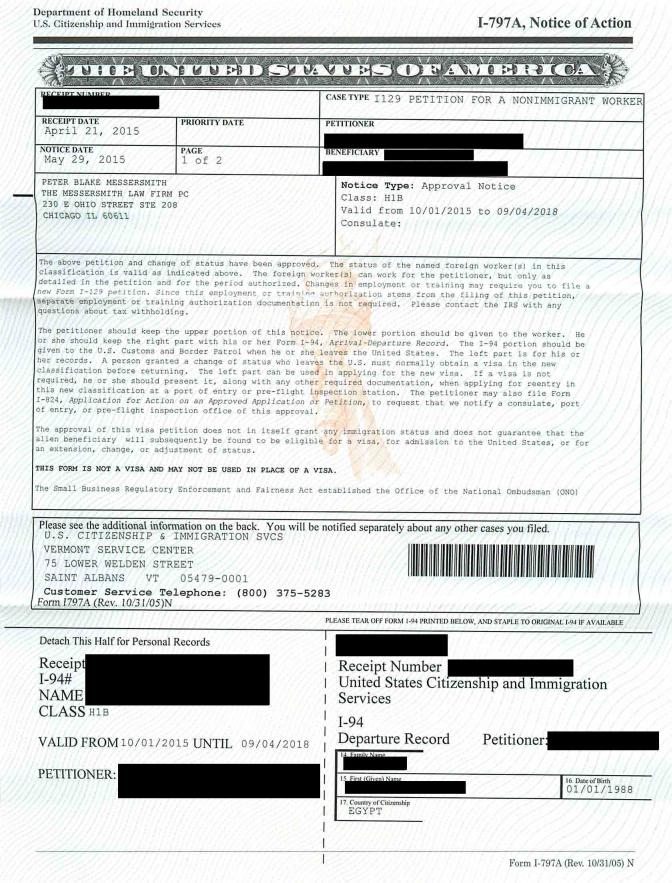
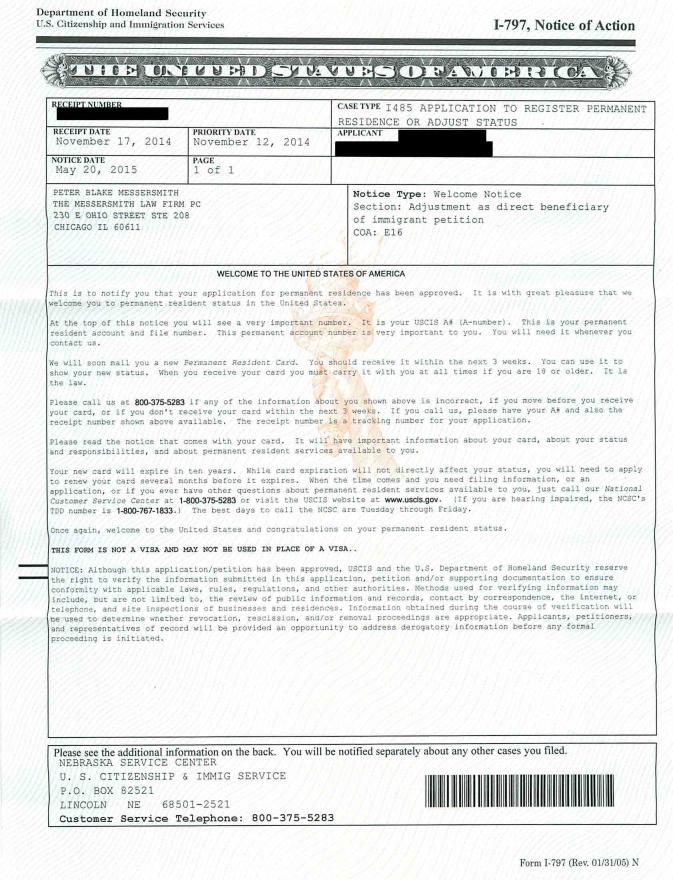
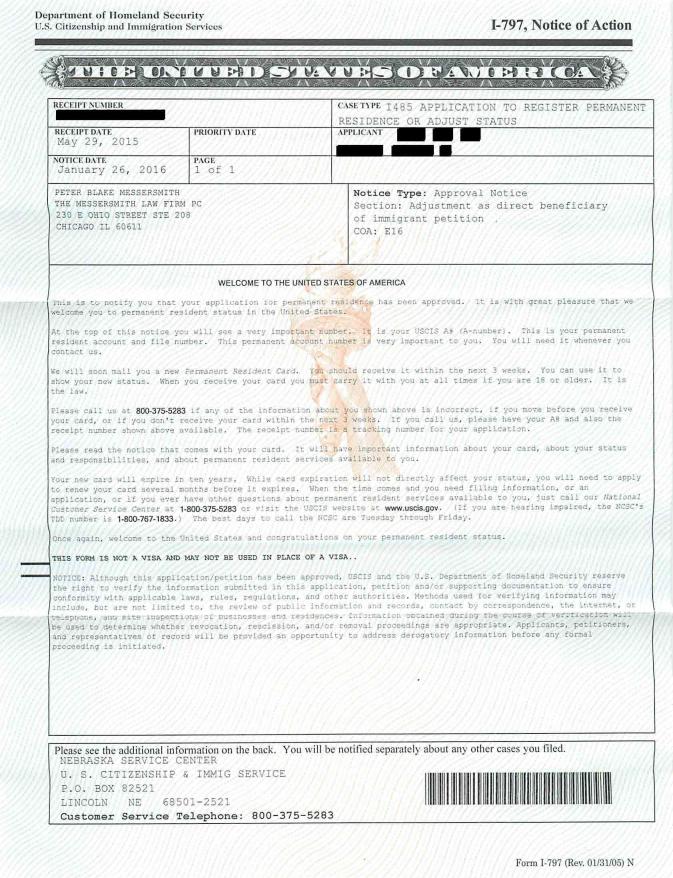
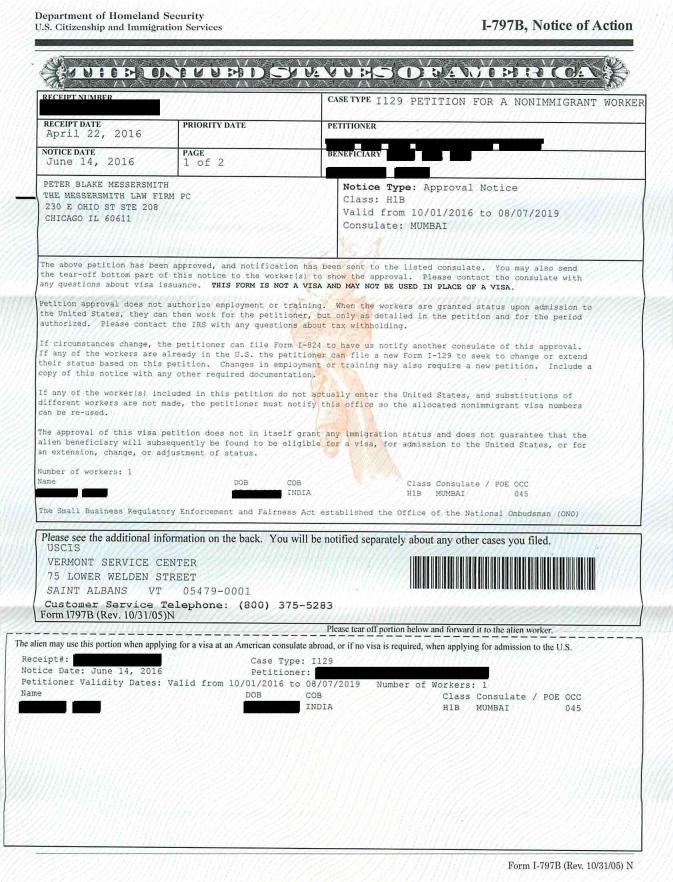
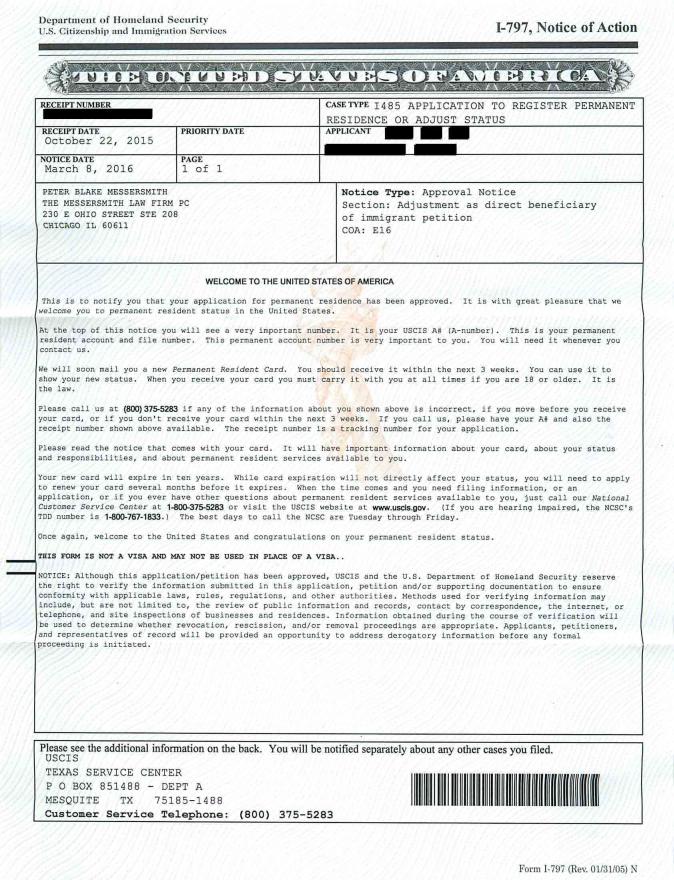
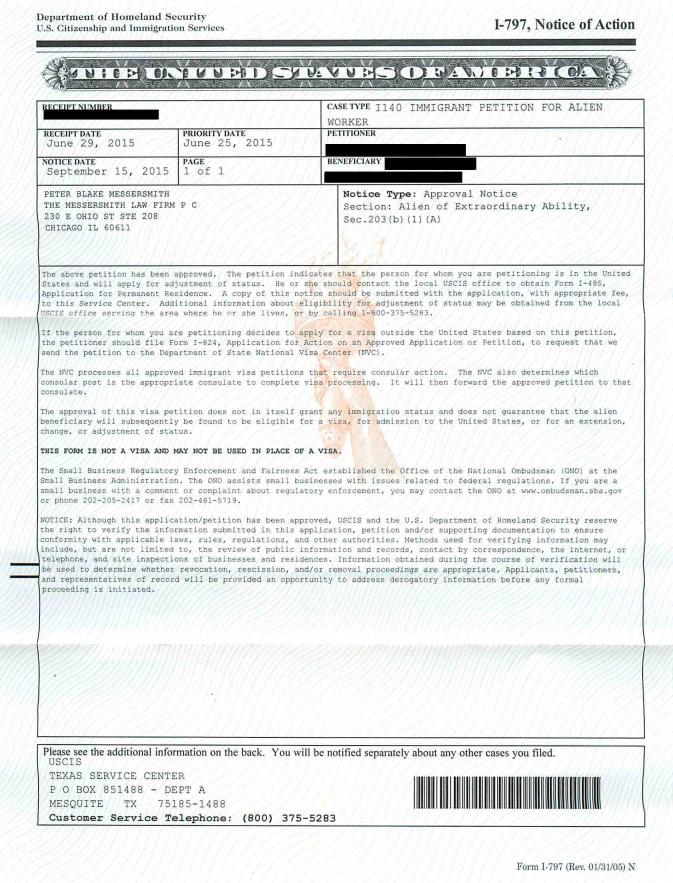
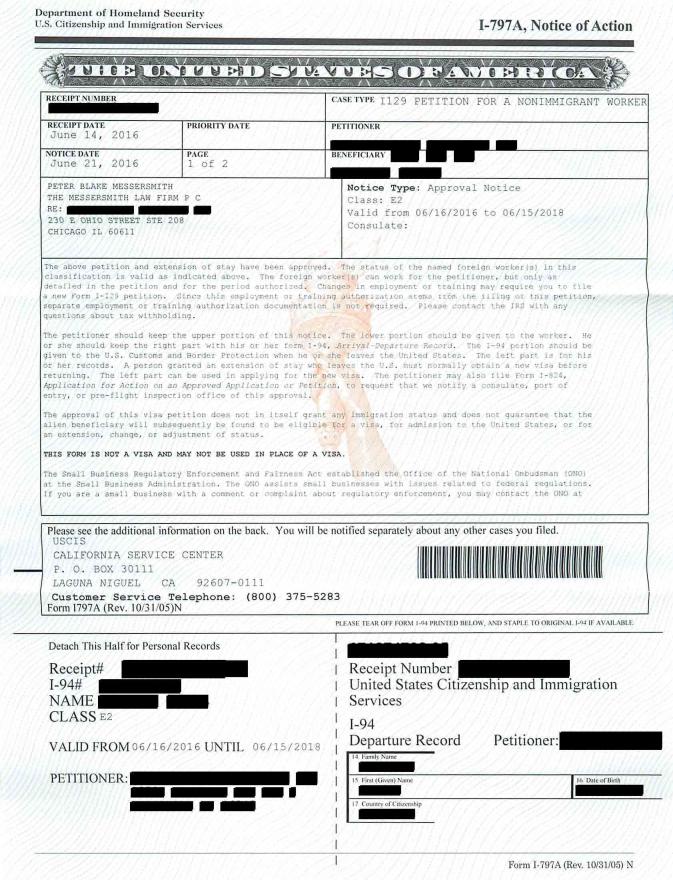
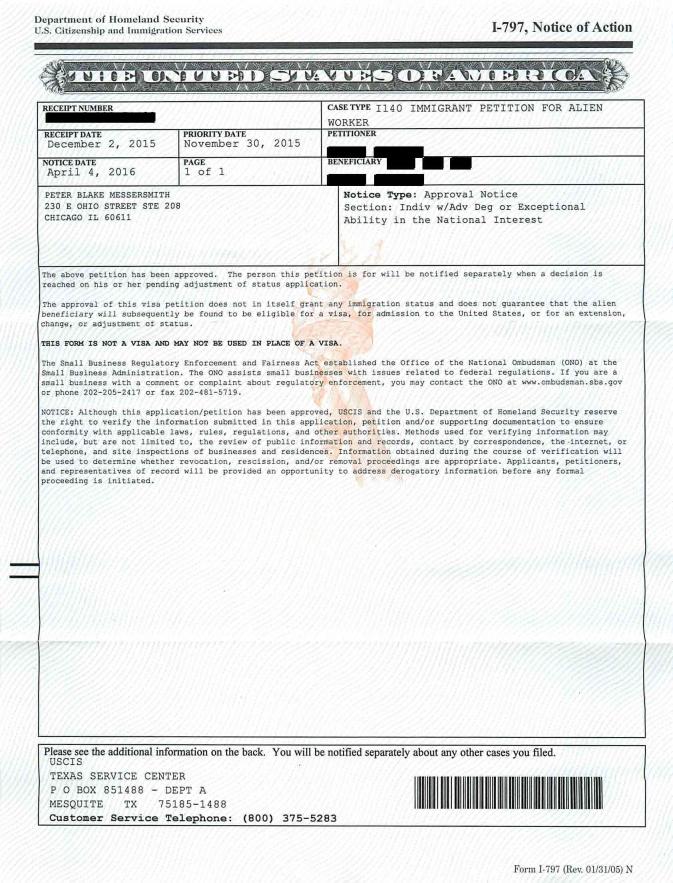
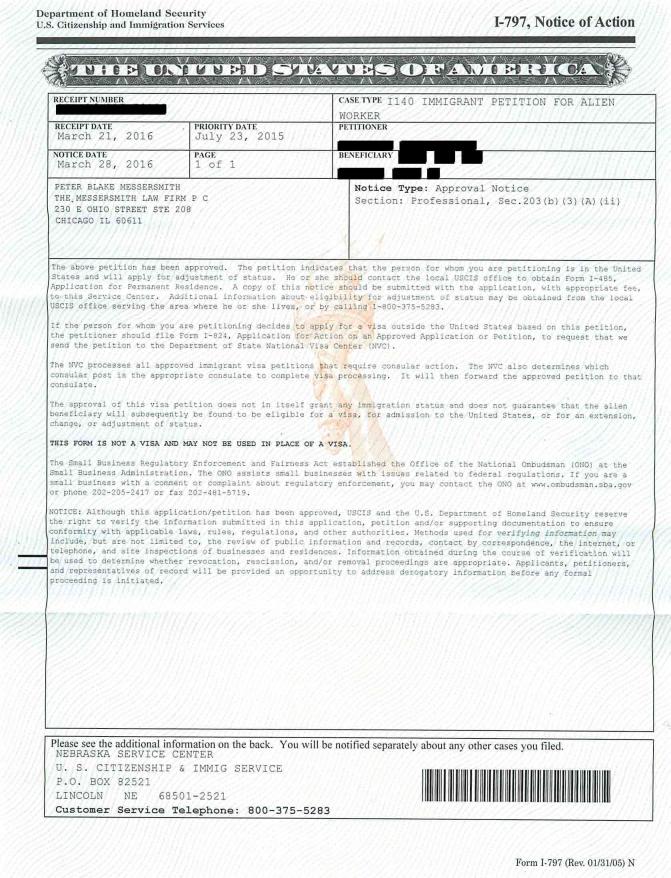
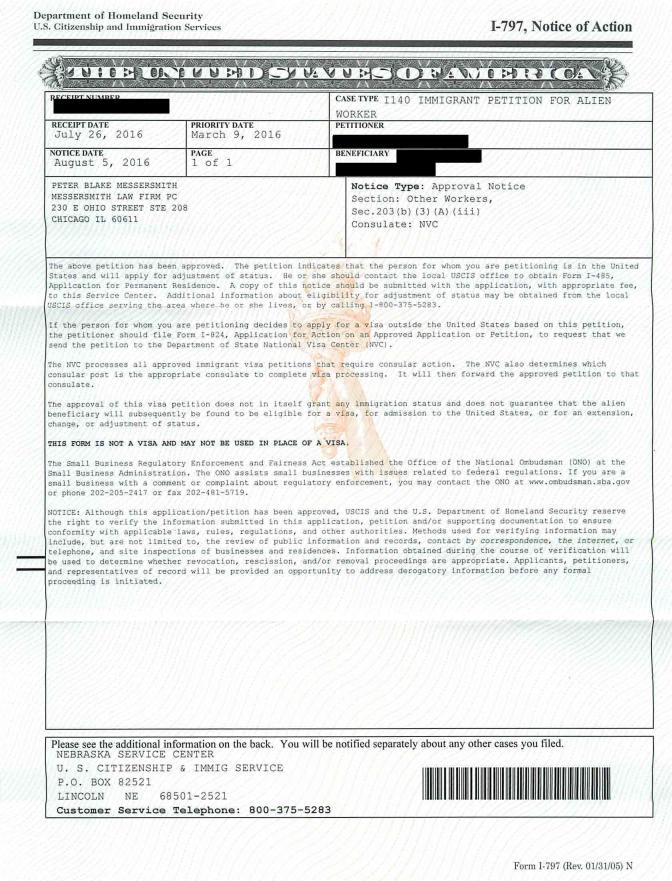
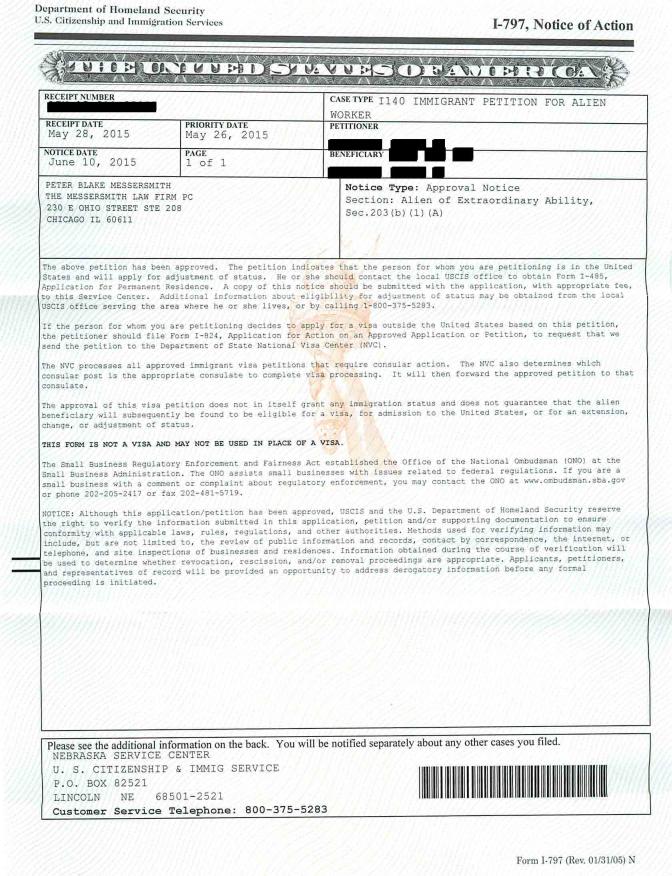
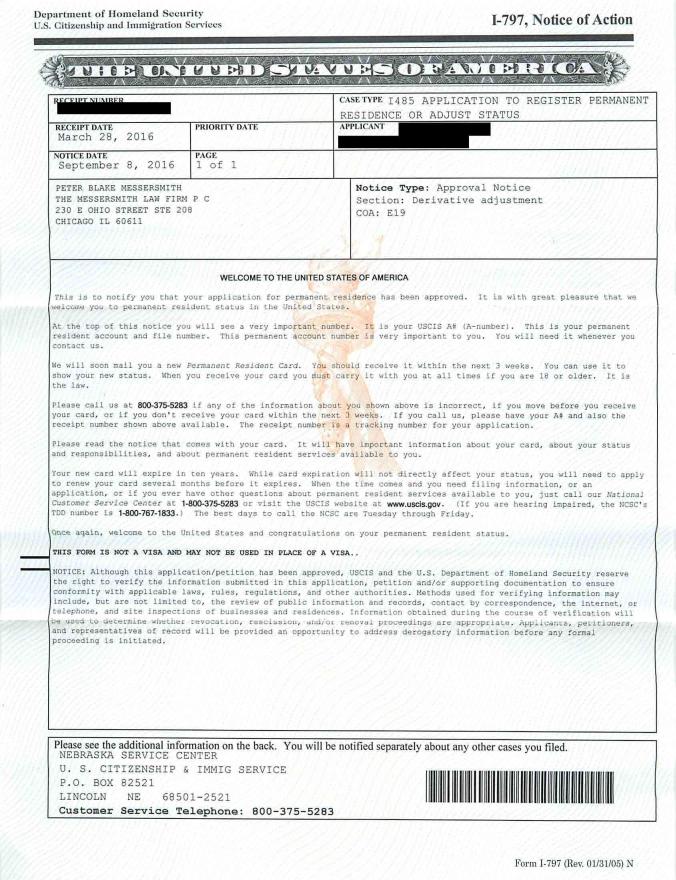
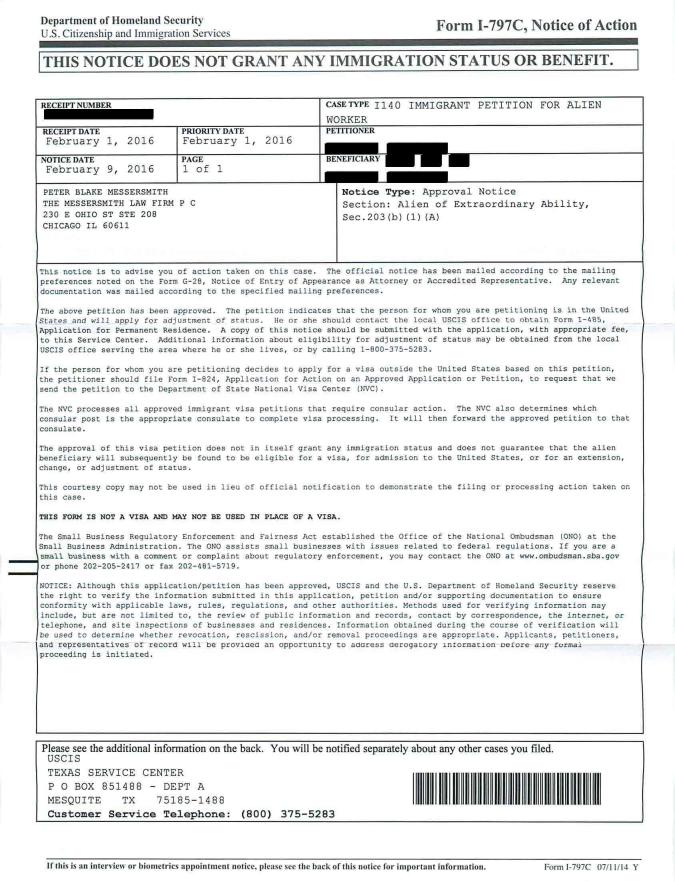
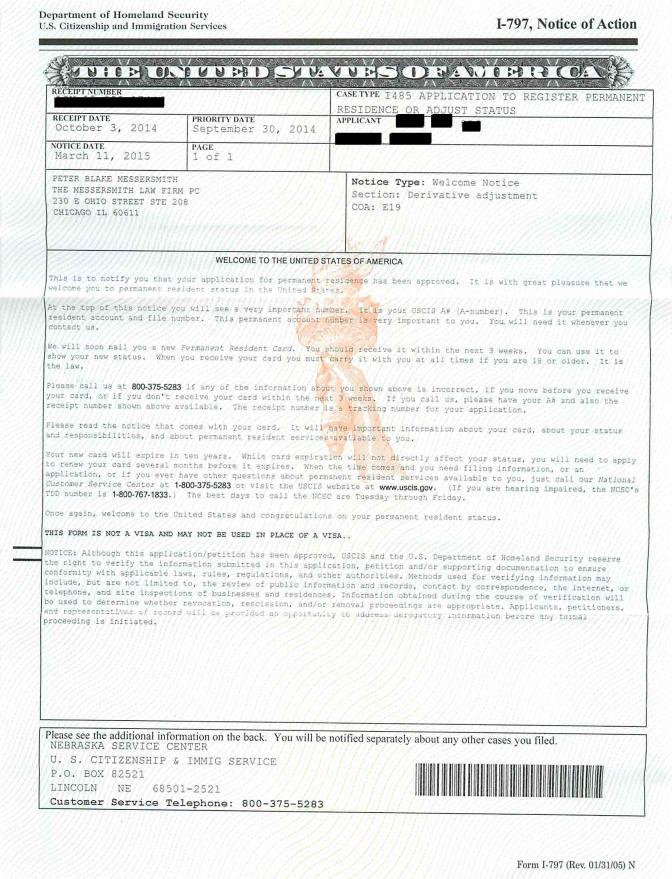
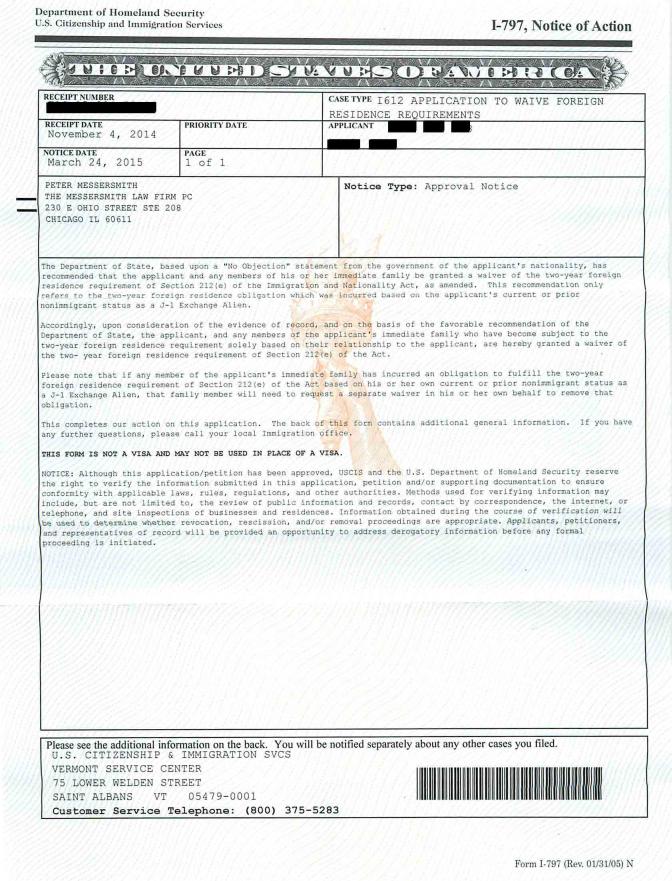
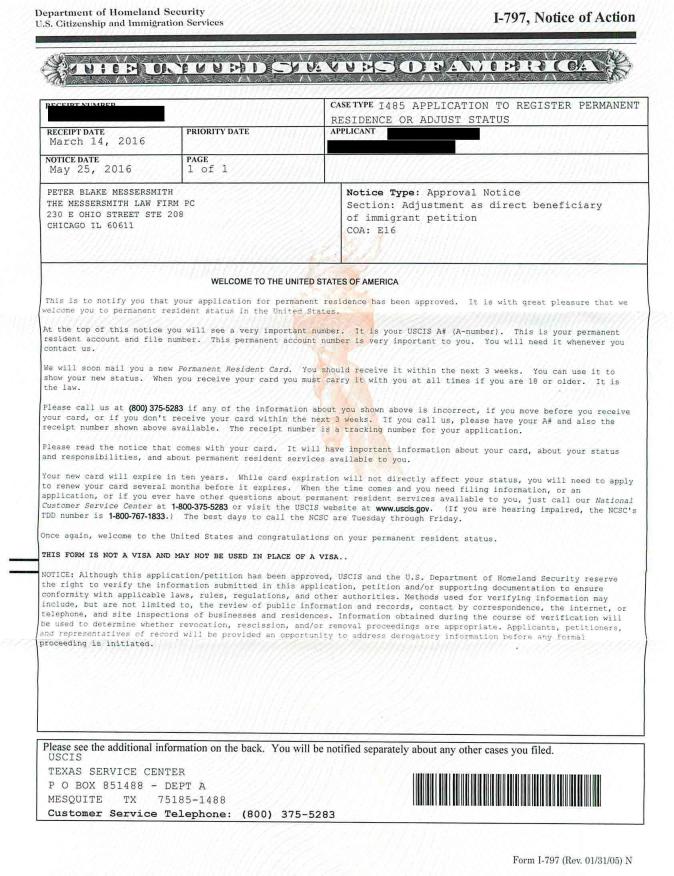
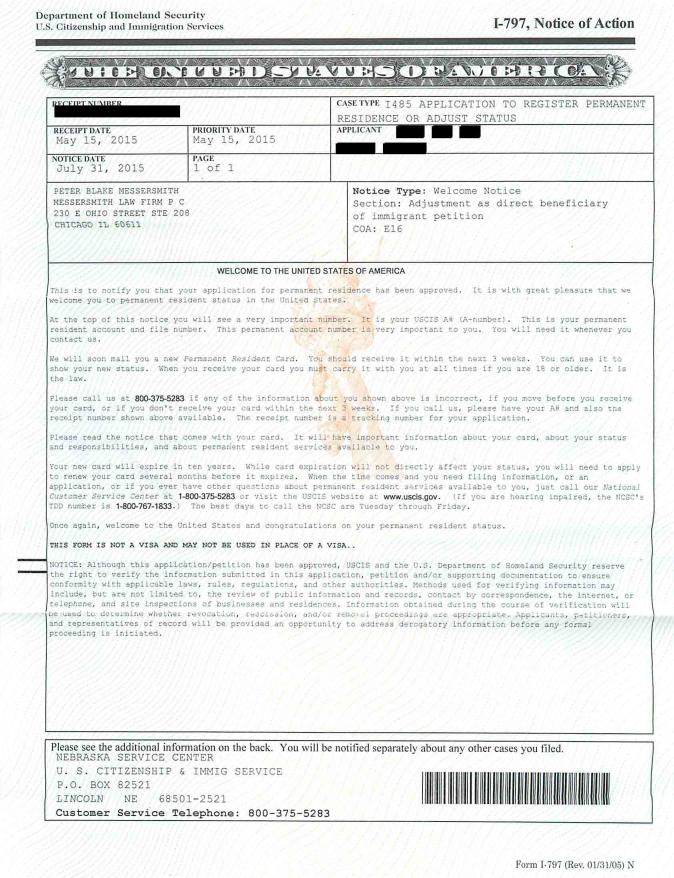
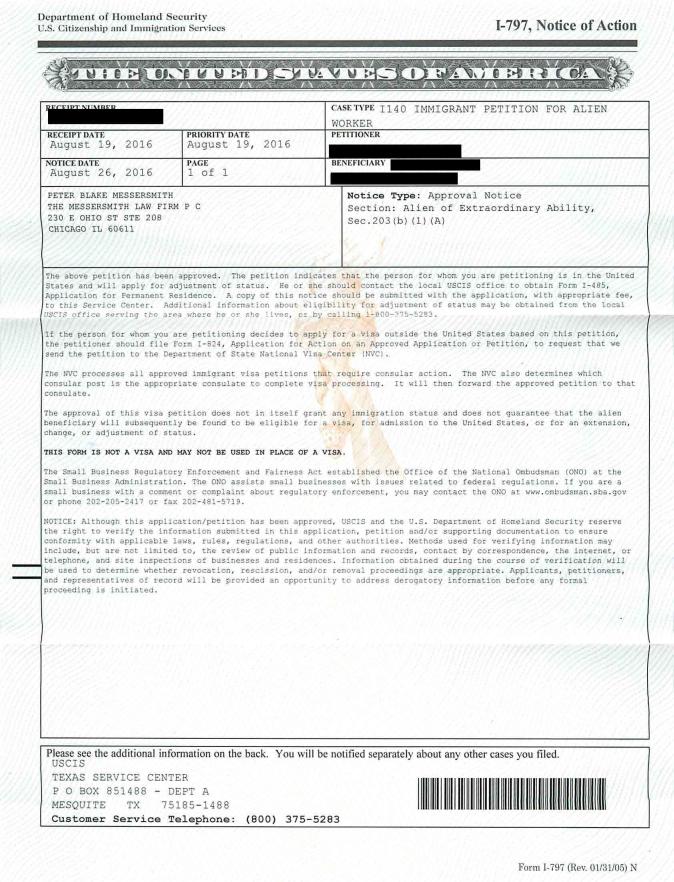
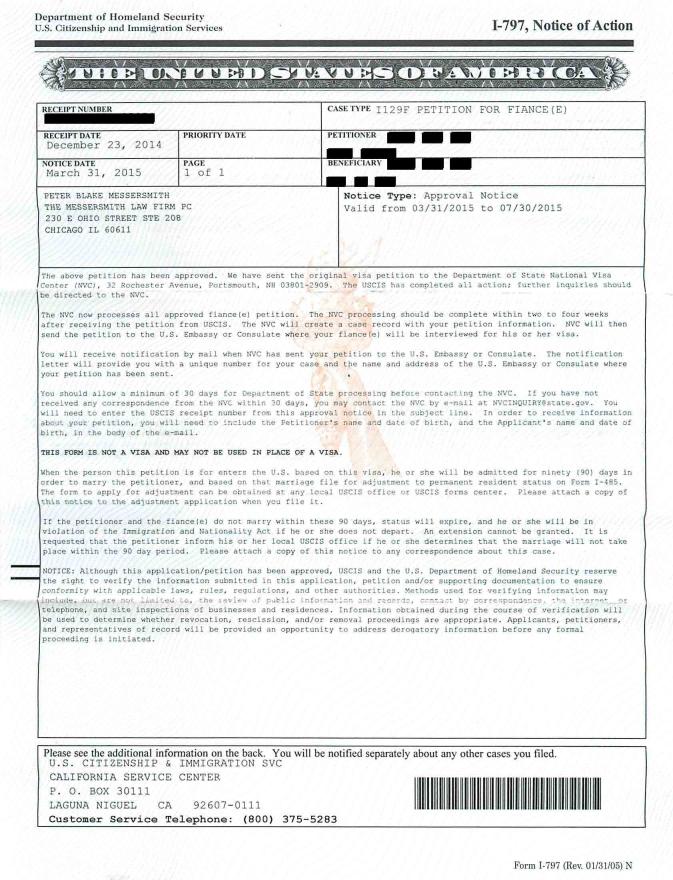
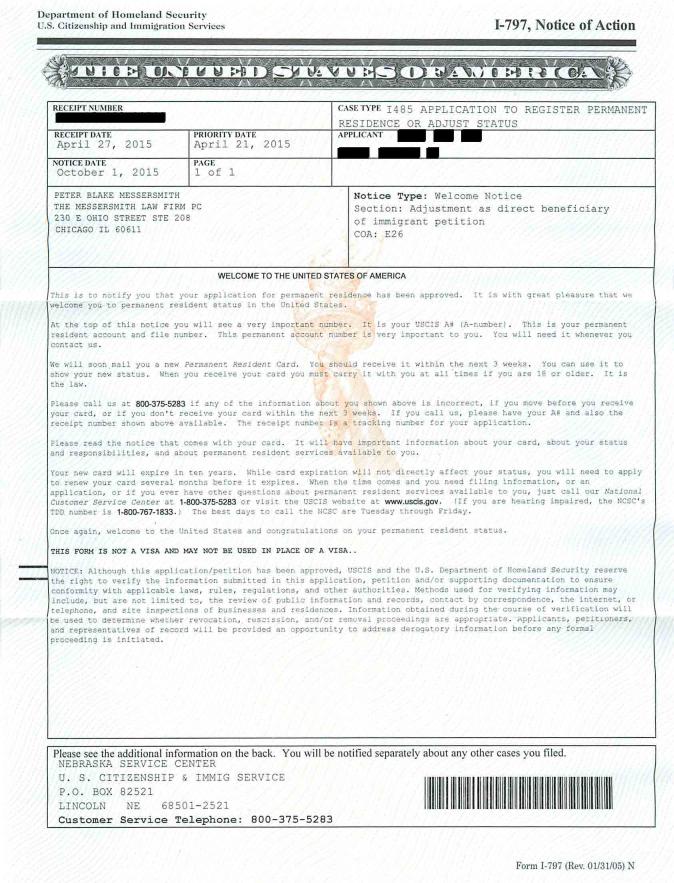
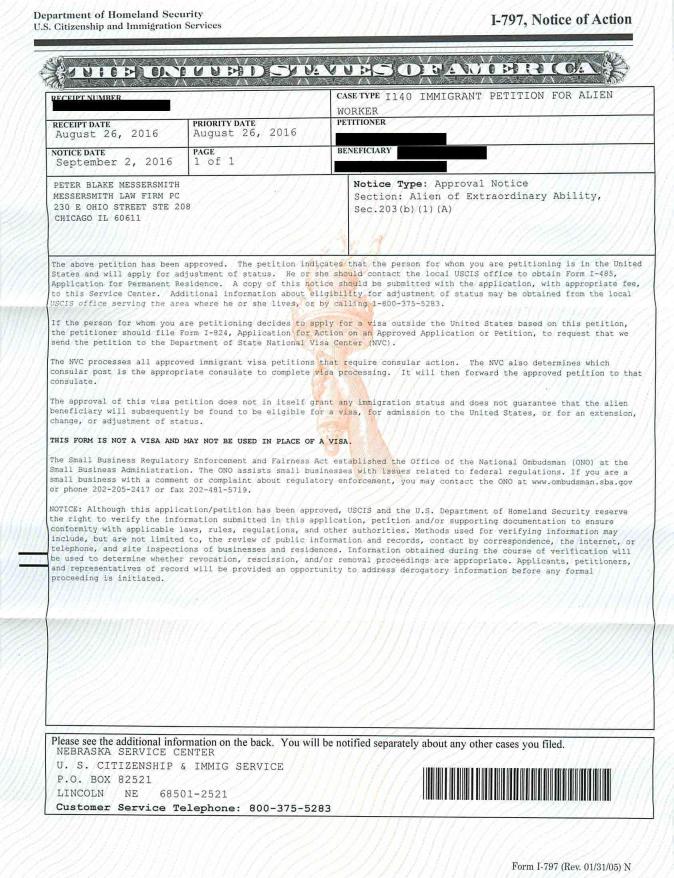
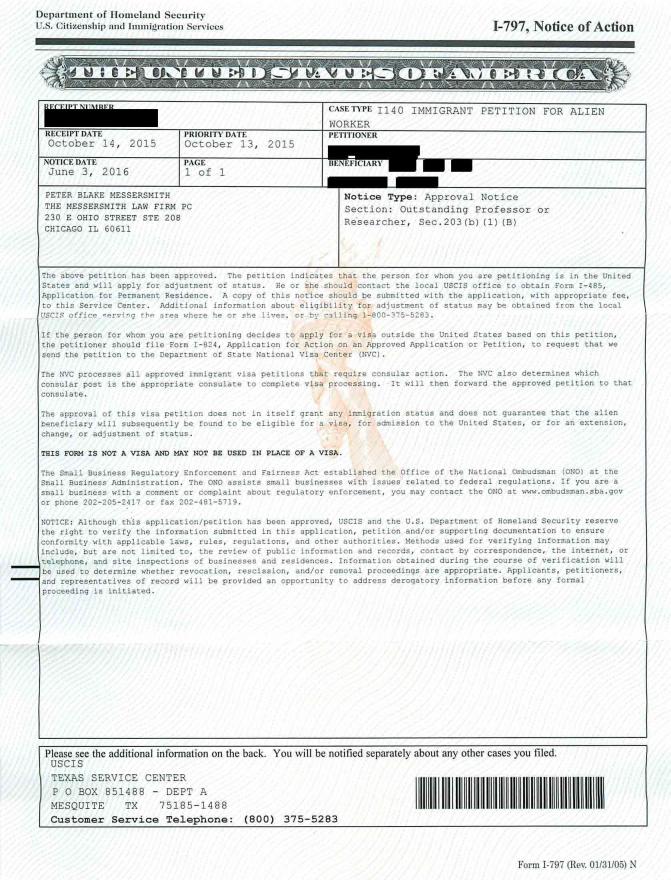
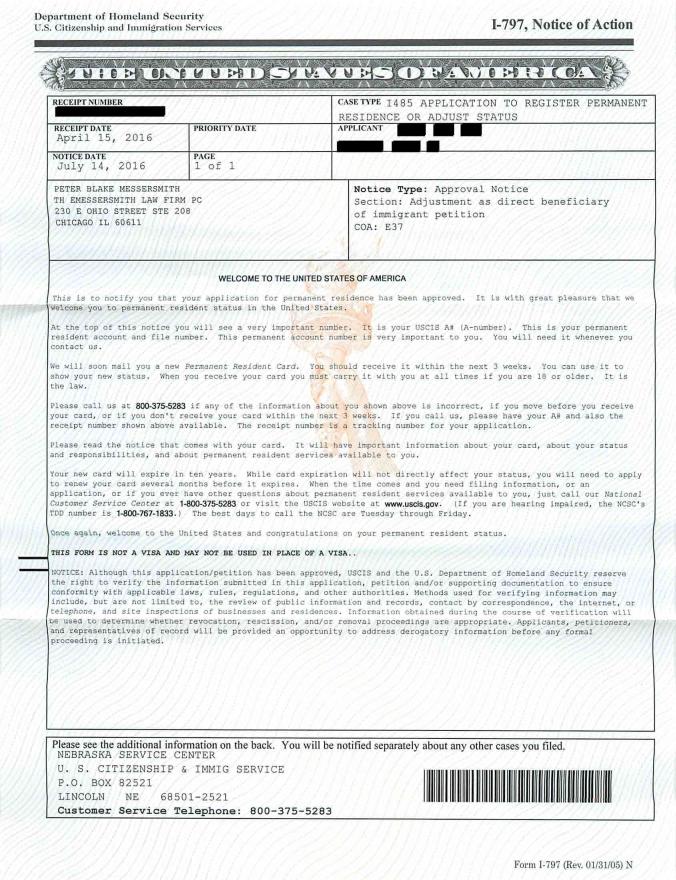
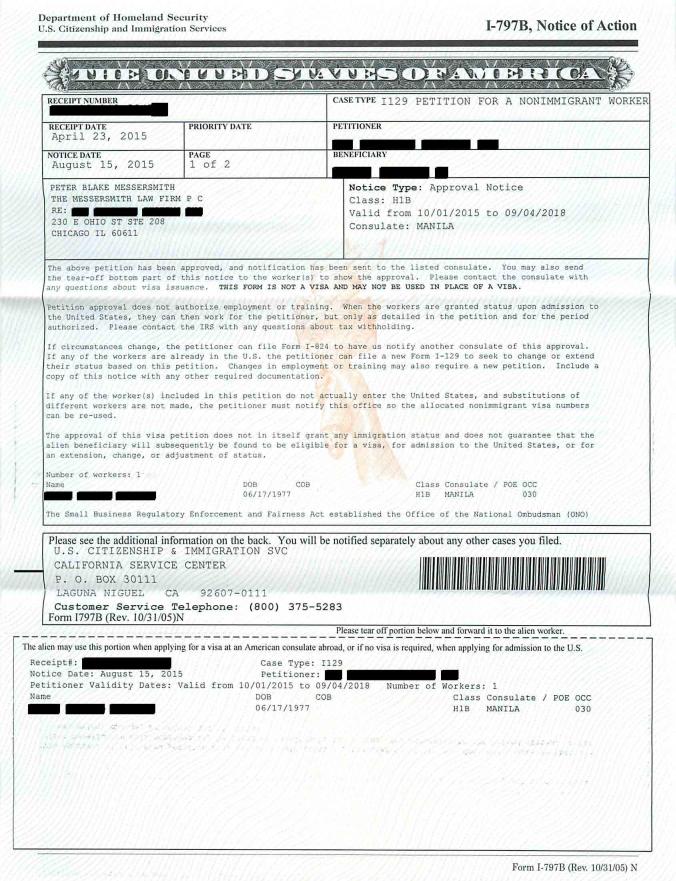
Scroll through fifty recent approval notices below or click here to view thousands.

Customer Testimonials

Real Testimonials from Past Clients