People often inquire about this issue as unlawful presence, INA 212a9B, 212a9B, Section 212a9B, the 3-year bar, the 10-year bar, or the I-601A provisional waiver. These are shorthand references to INA § 212(a)(9)(B), which can trigger a 3-year or 10-year inadmissibility bar after departure when a person has accrued more than 180 days (3-year bar) or one year (10-year bar) of unlawful presence.

Unlawful Presence (INA 212a9B / INA 212(a)(9)(B)) — 3-Year and 10-Year Bar
Unlawful Presence (INA 212a9B / INA 212(a)(9)(B)) — 3-Year and 10-Year Bar

What is a ground of inadmissibility?
In order for a foreign national to be admitted to the United States, he or she must be admissible. A foreign national can be deemed inadmissible to the United States by USCIS, CBP and a Consulate. If the foreign national is deemed inadmissible to the United States, he or she cannot enter without a waiver of inadmissibility or a determination that the inadmissibility charge was made in error.

212(a)(9)(B) Inadmissibility due to Unlawful Presence
Any foreign national who was unlawfully present in the US for more than 180 days is inadmissible for three years and if unlawfully present for one year, is inadmissible for ten years.
Any alien (other than an alien lawfully admitted for permanent residence) who was unlawfully present in the United States for a period of more than 180 days but less than 1 year, voluntarily departed the United States and again seeks admission within 3 years of the date of such alien’s departure or removal, or has been unlawfully present in the United States for one year or more, and who again seeks admission within 10 years of the date of such alien’s departure or removal from the United States is inadmissible.
No period of time in which an alien is under 18 years of age shall be taken into account in determining the period of unlawful presence in the United States.
No period of time in which an alien has a bona fide application for asylum pending shall be taken into account in determining the period of unlawful presence in the United States unless the alien during such period was employed without authorization in the United States.
No period of time in which the alien is a beneficiary of family unity protection shall be taken into account in determining the period of unlawful presence in the United States.
This section shall not apply to VAWA petitioners.
This section shall not apply to an alien who demonstrates that the severe form of trafficking was at least one central reason for the alien’s unlawful presence in the United States.

How to obtain a determination that the 212(a)(9)(B) ground of inadmissibility was incorrectly made.
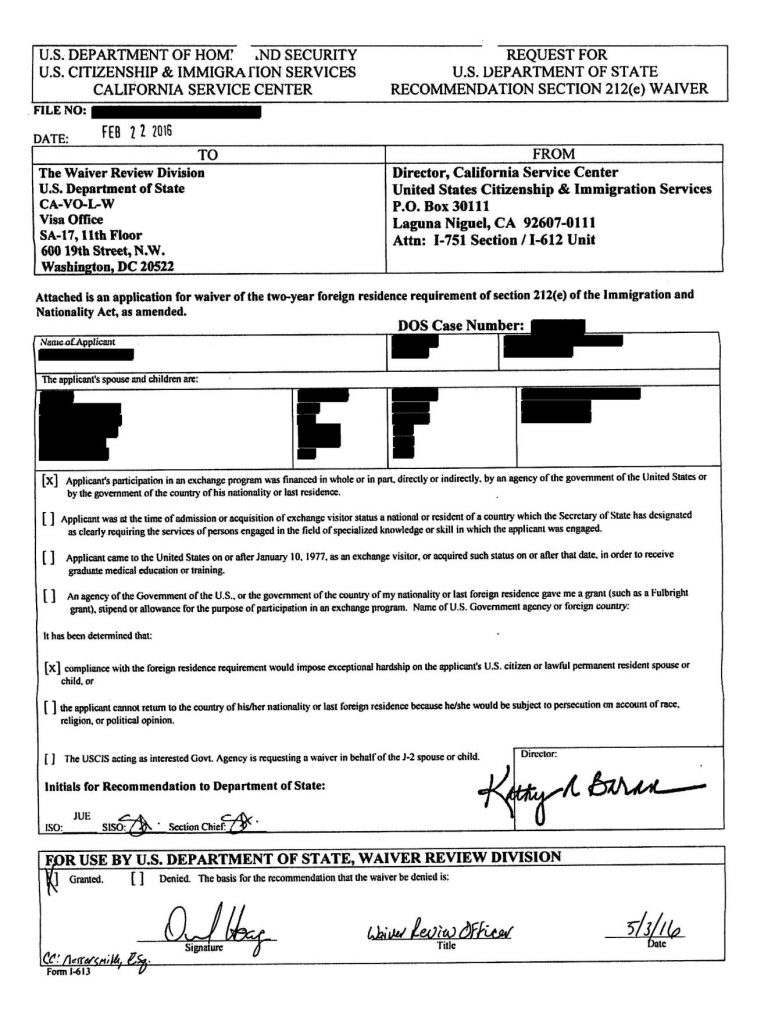
No matter which US government agency made the inadmissibility determination, each provides a method to dispute the determination, though each has drastically different processing times. We have achieved successful outcomes by petitioning the US Department of State where the determination was made by the Consulate in as little as 2 weeks. CBP quotes turnaround times of as little as 30 days and USCIS will not offer a time frame. In our experience, the more difficult the situation, the longer it will take to get resolved.
When unlawful presence starts (including F-1/J-1 “D/S” cases)
Unlawful presence is timeline-driven, and the start date can depend on a person’s status and records.
Common situations include:
- I-94 with a specific expiration date: unlawful presence generally starts after the authorized stay expires (if the person remains in the U.S.).
- F-1 or J-1 with “D/S” (duration of status): unlawful presence analysis can be more complex and often depends on status compliance and how the record is documented.
Because start-date determination is fact-specific, the best approach is to build a clean timeline using the I-94, status history, and any USCIS/CBP notices that affect authorized stay.
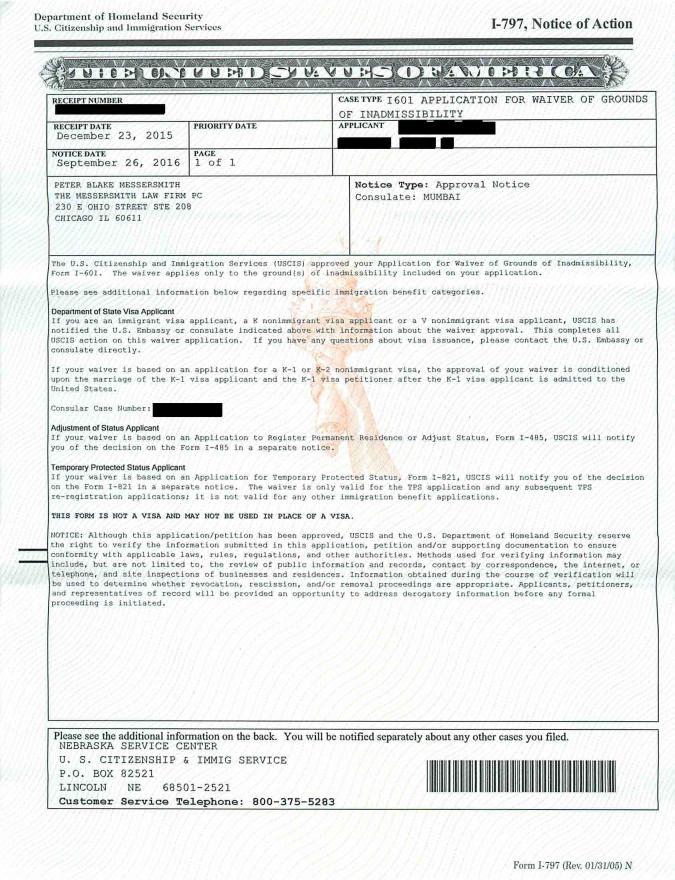
I-601A provisional unlawful presence waiver (INA 212(a)(9)(B)(v))
Many people ask about “I-601A” because it is the provisional waiver process commonly used to address the unlawful presence bar in certain immigrant visa cases. In general terms, the I-601A pathway is designed to let qualifying applicants seek a provisional waiver before leaving the United States for consular processing.
I-601A cases are typically built around:
- Confirming the only (or primary) inadmissibility issue is unlawful presence under INA 212(a)(9)(B)
- Showing a qualifying relative (usually a U.S. citizen or lawful permanent resident spouse or parent, depending on the case)
- Proving “extreme hardship” to the qualifying relative if the waiver is denied
- Submitting a clear timeline and well-organized evidence packet supporting hardship
Because eligibility is case-specific and other inadmissibility grounds can change strategy, the first step is usually a timeline review to confirm that an I-601A approach is appropriate.
Frequently asked questions about unlawful presence (INA 212a9B / 212(a)(9)(B))
What is unlawful presence under INA 212(a)(9)(B)?
Unlawful presence is time spent in the United States without authorization. INA 212(a)(9)(B) can trigger a 3-year or 10-year inadmissibility bar after departure when a person has accrued more than 180 days (3-year bar) or one year (10-year bar) of unlawful presence.
Does leaving the U.S. trigger the 3-year or 10-year bar?
In many cases, yes. The unlawful presence bars are commonly triggered by departure after the threshold amount of unlawful presence has accrued.
When does unlawful presence start?
It depends on the person’s status and records. For many people with an I-94 expiration date, it starts after the authorized stay expires. For “D/S” cases (for example certain F-1/J-1 situations), analysis can be more complex and is record-driven.
What is the I-601A provisional waiver?
The I-601A is the provisional unlawful presence waiver process used in certain immigrant visa cases to request a waiver before leaving the U.S. for consular processing, based on an extreme hardship showing to a qualifying relative.
Who is a qualifying relative for an unlawful presence waiver?
Qualifying relatives are defined by the statute and depend on the case posture. Many unlawful presence waiver cases are built around hardship to a U.S. citizen or lawful permanent resident spouse or parent.
What evidence helps with an extreme hardship waiver?
Medical, financial, family-impact, and country-conditions evidence can be important, along with a clear timeline and documentation supporting the qualifying relative’s hardship.
News Related to INA § 212(a)(9)(B)
| Date | Title | Details | ||
|---|---|---|---|---|
| January 24, 2025 | USCIS Policy Manual | U.S. Citizenship and Immigration Services (USCIS) updated its Policy Manual to provide detailed guidance on the inadmissibility of individuals who have accrued unlawful presence in the United States and subsequently departed. | ||
| September 19, 2024 | Department of State's Foreign Affairs Manual (FAM) | The Department of State's FAM offers guidance to consular officers on the inadmissibility of individuals who have accrued unlawful presence in the United States and subsequently departed. |